Main Navigation

Travelers searching for the "best time" to see Borobudur and Prambanan often get a one-size-fits-all answer that ignores two factors that actually shape the experience most: weather patterns and crowd density. A clear-sky day packed with three tour buses of school children feels very different from a slightly cloudy morning with the terraces nearly to yourself. This Borobudur Prambanan weather and crowd guide breaks down both variables month by month, so you can match your travel dates to the experience you actually want.
Indonesia's tropical climate means it is warm and humid year-round, so "good weather" is less about temperature and more about rain timing and cloud cover. Meanwhile, crowd levels swing dramatically based on school calendars, religious holidays, and even the day of the week. A traveler who only checks average rainfall charts might book a technically "dry" month that happens to coincide with the busiest school holiday of the year. For a broader overview of seasonal planning, our complete guide to the best time to visit Borobudur and Prambanan is a useful companion to this month-by-month breakdown.
The dry season brings the most predictable weather: low humidity relative to the rest of the year, minimal rainfall, and long stretches of clear skies ideal for photography. This reliability is exactly why it is also the busiest window. July and August overlap with European summer holidays and Indonesian school breaks, filling both temples with domestic and international visitors from mid-morning onward. Weekends in June and September can feel nearly as crowded. If dry season dates are your only option, arriving at gate opening is the single best way to avoid the midday surge.
Contrary to popular assumption, the Borobudur rainy season does not mean all-day downpours. A typical day starts with clear or partly cloudy skies from dawn until roughly 10 or 11 a.m., followed by building clouds through early afternoon, and often a concentrated shower between 1 and 4 p.m. that clears by evening. This pattern makes early morning and sunrise visits during rainy months surprisingly reliable, while also keeping crowds thinner since fewer tourists plan trips around perceived rain risk. December and around Eid are exceptions, as domestic holiday travel pushes numbers up regardless of weather.
Temperatures across Yogyakarta stay fairly consistent year-round, generally between 22°C at night and 31–33°C at midday, so the real variable is rainfall and cloud cover rather than heat. Here is a general pattern travelers can expect:
Prambanan crowd levels by month are influenced as much by the Indonesian school calendar as by weather. Mid-year school holidays (late June through mid-July), the Eid al-Fitr period, and the Christmas to New Year stretch reliably bring the largest domestic tour groups to both sites. Long weekends tied to national public holidays also cause noticeable one- or two-day spikes even in otherwise quiet months. If your travel dates are flexible, checking the Indonesian holiday calendar before booking flights can be just as important as checking rainfall charts.
For visitors combining both temples in one day, an efficient way to manage crowd timing is through a guided full-day itinerary such as the Borobudur and Prambanan all-inclusive day tour, which sequences visits to avoid the worst of the midday rush at each site.
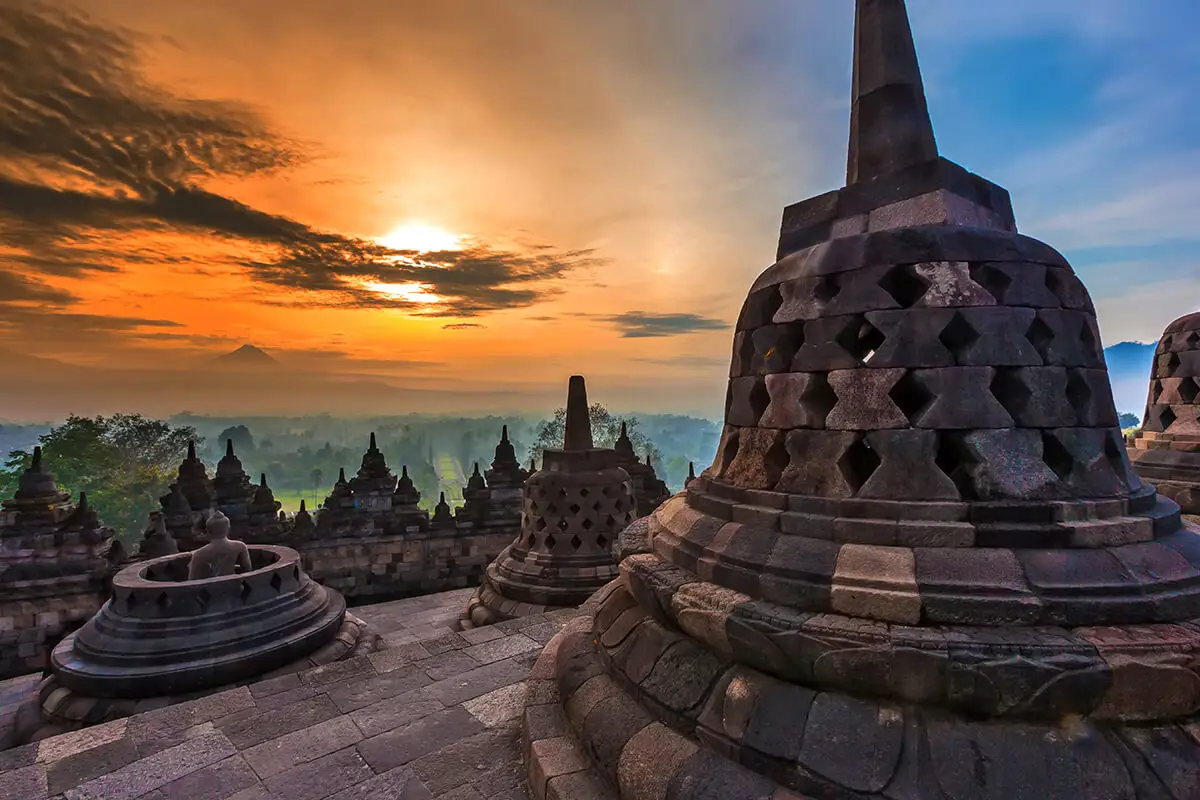
Regardless of season, time of day is the most controllable variable in your visit. Sunrise entry at Borobudur consistently offers the coolest temperatures, softest light, and thinnest crowds of the day. By mid-morning, tour buses arrive in waves, and by midday the heat combined with peak visitor density makes exploring far less comfortable. Prambanan follows a similar rhythm, with late afternoon and sunset offering a second quieter window as day-trip groups depart. Travelers wanting both benefits at once often choose a dedicated sunrise itinerary.
Once you understand the seasonal and daily patterns, building an itinerary becomes far easier. Shoulder months like April, September, and November combine reasonably dry weather with lower crowd density, making them a strong compromise for most travelers. If your trip extends beyond a single day, multi-day itineraries such as the 3-day Best of Yogyakarta tour or the more expansive 4-day Best of Yogyakarta tour allow flexibility to shift temple visits to the clearest, quietest available morning during your stay. For deeper site-specific planning, our Prambanan Temple guide to history, tickets, and best time to visit pairs well with this weather and crowd overview.
Rainy season mornings (October–April) are often quieter and just as clear as dry season days, since rain typically falls in the afternoon. Dry season guarantees more consistent sun but brings larger crowds, especially July, August and national holidays.
January, February and November tend to have the lowest visitor numbers because they fall outside Indonesian school holidays and the peak European summer travel window, even though occasional rain showers occur.
Light rain rarely cancels sunrise views, but heavy cloud cover can obscure the horizon. Checking a short-term forecast the night before and booking a flexible-date sunrise tour reduces the risk of a washed-out visit.
Early morning, right at gate opening or during a sunrise entry, sees the fewest visitors at both sites, while mid-morning to early afternoon draws the largest domestic and school group traffic.
Yes. Weekends consistently bring more local visitors to both temples year-round, so a weekday visit during shoulder months offers the best combination of good weather and low crowd density.
Ready to time your visit around clear skies and quieter terraces? Book the Sunrise Borobudur and Prambanan Temple tour with Ekaputra Tour and let our local guides handle the timing while you enjoy the view.