Main Navigation
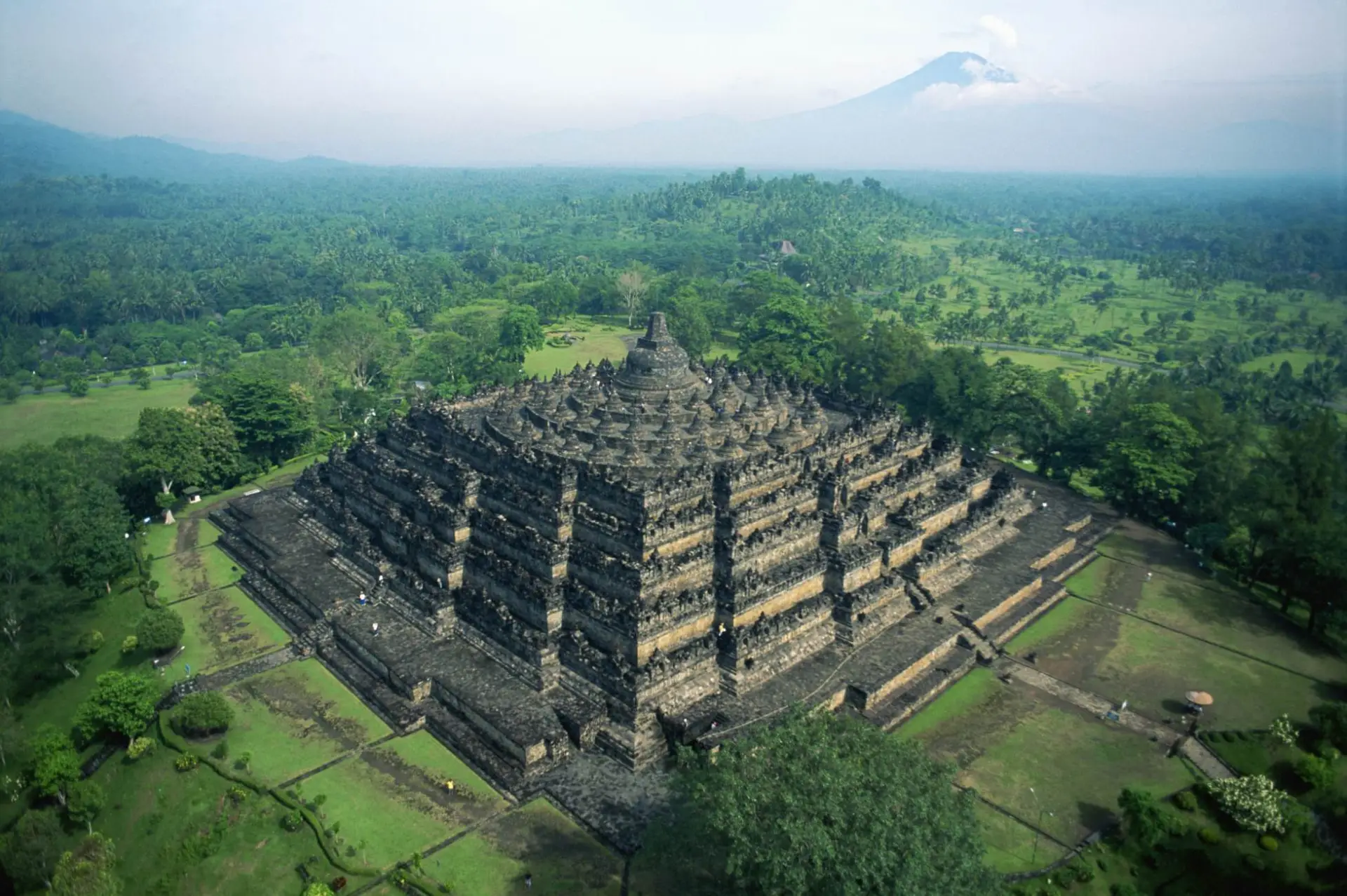
Choosing the best time to visit Borobudur and Prambanan can make the difference between a serene, light-filled morning among ancient stone stupas and a hot, hazy scramble through crowds of tour groups. These two UNESCO World Heritage Sites reward travelers who plan around Indonesia's weather patterns, local holidays, and even the position of the sun. This guide breaks down everything you need to know, month by month and hour by hour, so you can time your visit for maximum beauty and minimum hassle.
Both temples sit in the open, exposed to tropical sun and monsoon rains alike. Borobudur's massive stone terraces become uncomfortably hot by midmorning, while Prambanan's slender spires photograph best when the light is soft and low. Beyond weather, timing also affects ticket queues, photo opportunities without strangers in the frame, and the overall pace of your experience. A well-timed visit means cooler temperatures, clearer mountain views (including the volcanic peaks framing Borobudur), and a more contemplative atmosphere at these sacred sites.
Yogyakarta, home to both temples, follows a straightforward tropical pattern with two seasons rather than four. Understanding Borobudur weather by month helps you pack right and set expectations.
For Yogyakarta dry season travel, June through September is the sweet spot: consistently dry, comfortable temperatures in the mid-20s to low 30s Celsius, and excellent visibility for sunrise photography.
Weather is only half the equation. The Prambanan crowd calendar spikes dramatically during Indonesian school holidays and national celebrations. Expect the heaviest domestic tourist volume during Eid al-Fitr week, the Christmas-New Year school break, and mid-July to mid-August, when families travel in large groups. Weekends, particularly Saturday and Sunday, also draw significantly more local visitors than weekdays. If your schedule allows flexibility, aim for a Tuesday-to-Thursday visit outside these windows for a noticeably calmer experience at both sites.
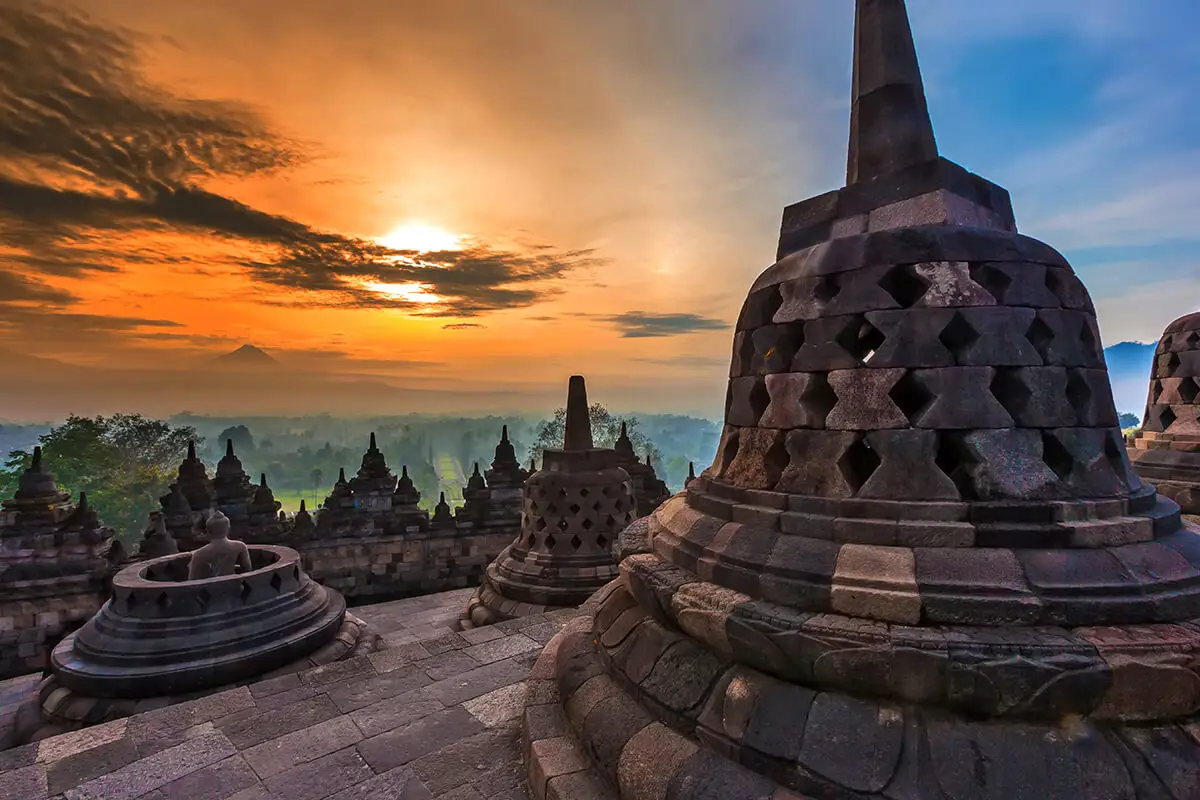
The Borobudur sunrise time shifts with the seasons. In November and December, the sun rises as early as 5:00 AM, while in June and July it appears closer to 5:40-5:45 AM. Tour operators adjust departure times accordingly, so always confirm pickup schedules when booking. For a deeper look at why this early start is worth the effort, see our dedicated guide on the sunrise Borobudur tour experience.
Unlike Borobudur, Prambanan is best experienced in the late afternoon. Its tall, pointed towers catch golden light beautifully as the sun descends, and the temperature drops from the midday peak. Midday visits mean intense heat with little shade, while sunrise at Prambanan, though possible, doesn't offer the same dramatic silhouette effect as sunset. For ticket details, opening hours, and more on choosing your visit window, our complete Prambanan visitor guide covers everything.
Most travelers successfully visit both temples in a single, well-paced day. The classic sequence starts with Borobudur at sunrise, when light and temperature are both at their best, followed by breakfast, a rest period during the hottest midday hours, and then a drive to Prambanan for a late-afternoon, golden-hour finish. This rhythm avoids the harshest sun while capturing each temple at its most photogenic moment.
If you'd rather have the logistics handled for you, a guided sunrise-to-sunset itinerary removes the guesswork around timing, transport, and ticket lines, letting you focus entirely on the experience.
Travelers wanting to extend their trip beyond the temples might also consider pairing this itinerary with the 3-day Best of Yogyakarta tour or the more immersive 4-day Yogyakarta journey, both of which build in flexible timing around the temples, the Sultan's Palace, and nearby caves.
During peak season (July-August and major holidays), book sunrise tickets and transport at least two to three weeks in advance, as morning slots at Borobudur are limited. Off-peak travelers (November-March, excluding Christmas week) enjoy more flexibility and often better rates on accommodation, though it's still wise to reserve guided tours ahead of time to lock in preferred pickup times. Regardless of season, arriving at your hotel lobby on time for a 3:30 or 4:00 AM pickup is essential, since Borobudur's gates open early specifically for sunrise ticket holders.
June and early September tend to offer the best balance: dry, clear mornings for sunrise and fewer domestic holidaymakers than the July-August peak.
Not entirely. Rainy season (November to March) brings short afternoon downpours, but mornings are often clear enough for sunrise, and you'll face far smaller crowds.
Sunrise ranges from about 5:00 AM in November-December to roughly 5:40-5:45 AM in June-July, so tour departure times are adjusted seasonally.
Yes, Saturdays and Sundays draw significantly more local visitors than weekdays, so a Tuesday-to-Thursday visit is noticeably calmer at both sites.
Most travelers do Borobudur at sunrise when light and temperature are best, then move to Prambanan in the late afternoon for a golden-hour finish.
Eid al-Fitr week, the Christmas-New Year school break, and mid-July to mid-August school holidays see the heaviest domestic tourist volume at both temples.
Ready to time your visit perfectly? Book the Sunrise Borobudur & Prambanan Temple tour with Ekaputra Tour and let our experienced guides handle the schedule, so all you need to do is watch the sun rise over ancient stone.