Main Navigation
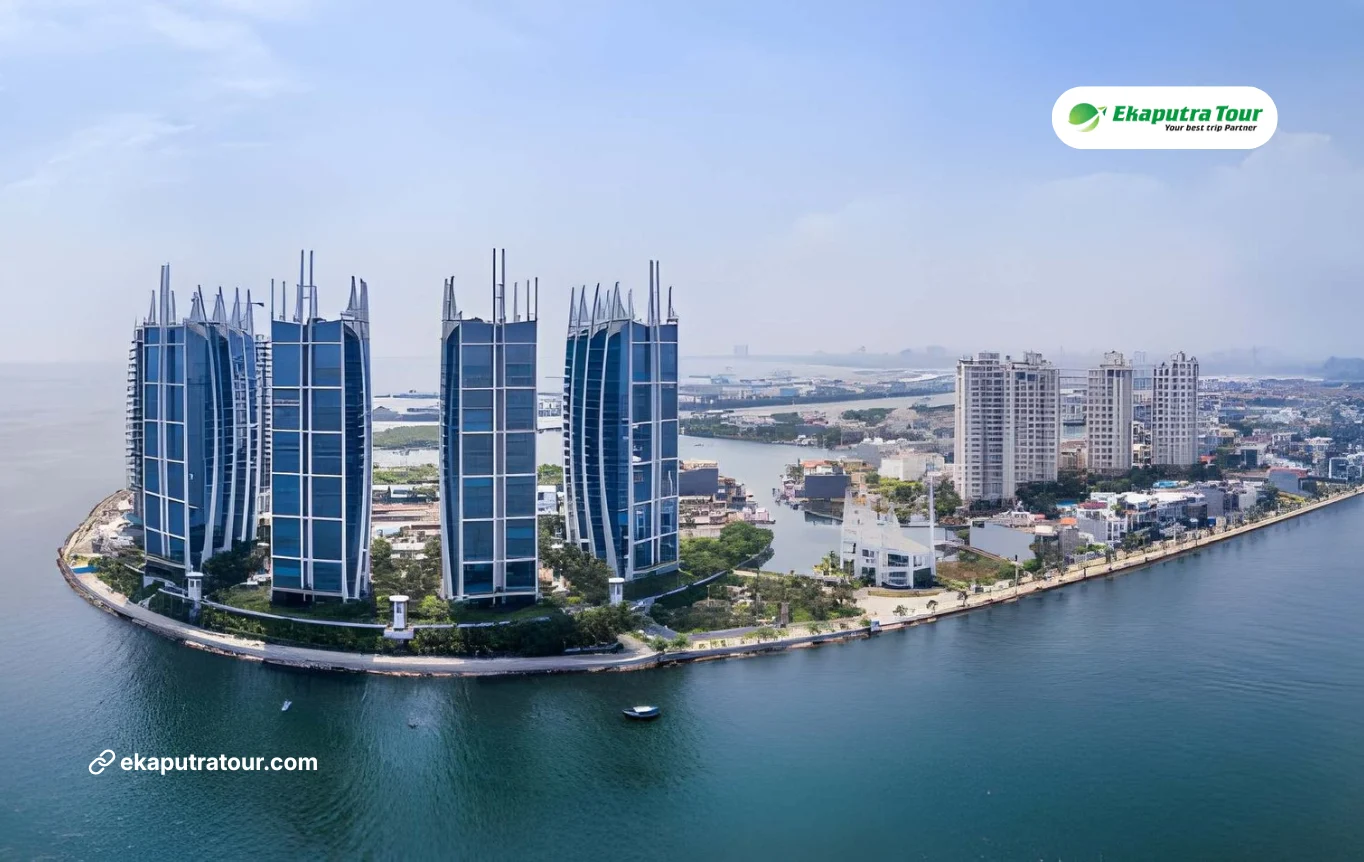
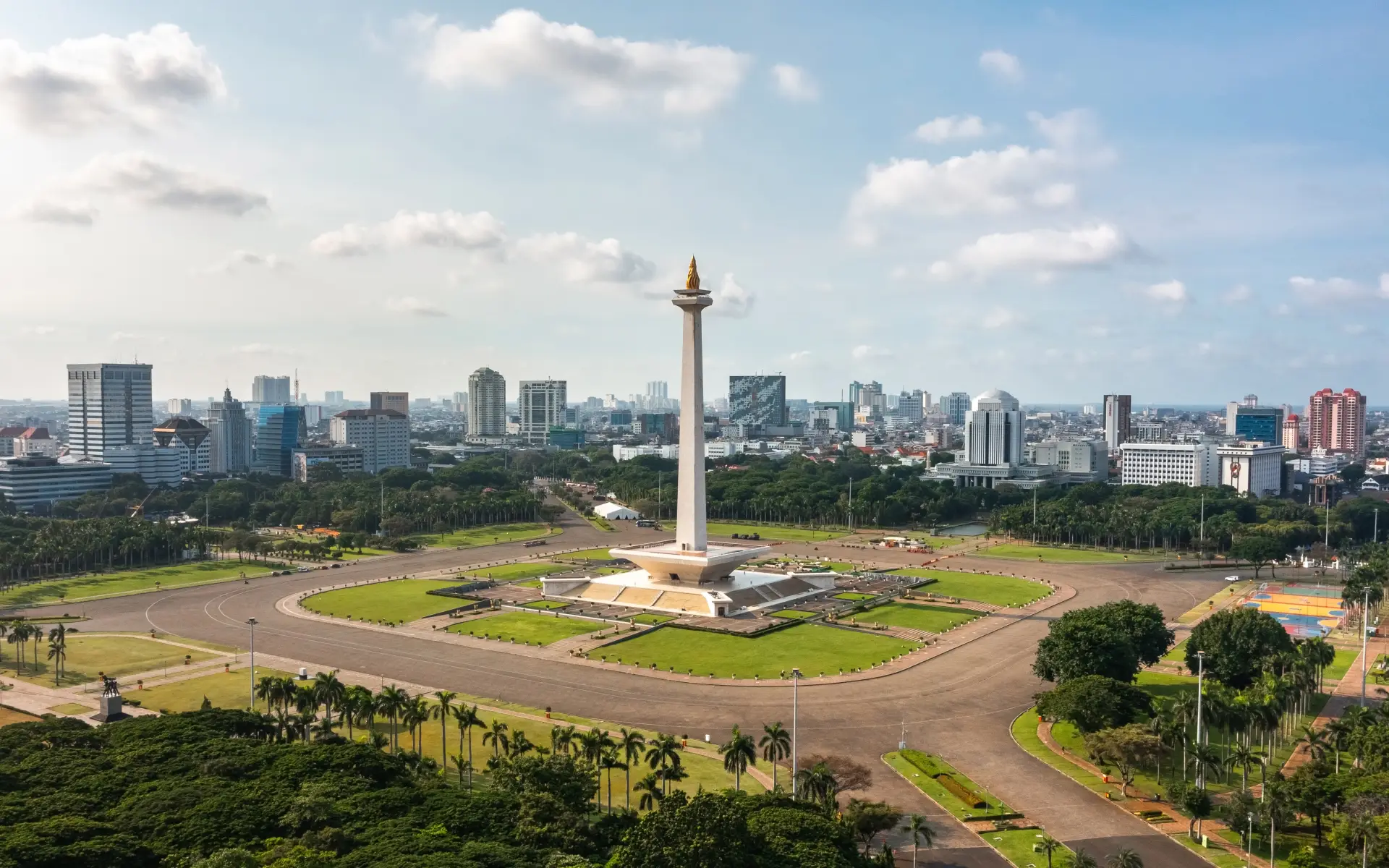
While everyone else is stuck in traffic trying to get to a mall or circling Monas for the third time, the northern coast of Jakarta is sitting there quietly, doing its thing.
Old wooden ships. A harbor that has been running for centuries. Islands with clear water less than an hour away by speedboat. And almost no tourists in sight.
If you are looking for things to do in Jakarta that actually feel different from every other big city, the waterfront along the bay and northern coast is where you need to go.
The honest answer is that North Jakarta does not look great in photos from the main road. It is industrial, a little chaotic, and nothing about it screams "tourist destination" from the outside. But that is exactly the point.
Once you get past the main road and actually walk down to the docks, the whole atmosphere changes. You are standing next to ships the size of buildings that have just sailed in from Kalimantan or Sulawesi.
Workers are hauling cargo by hand the same way their grandparents did. And somewhere in the background, between the masts and the rigging, you can see the Jakarta skyline sitting behind it all.
It is the kind of scene that makes you stop and think about how old this city actually is, and how much of it is still very much alive.
If Jakarta had a birthplace, Sunda Kelapa would be it.
This harbor has been operating since before the Dutch arrived in 1619. Traders from China, India, and Arabia were passing through here long before Batavia had a name.
And while the rest of Jakarta has been torn down and rebuilt a dozen times since then, Sunda Kelapa keeps running. Same dock. Same kind of boats. Same rhythm.
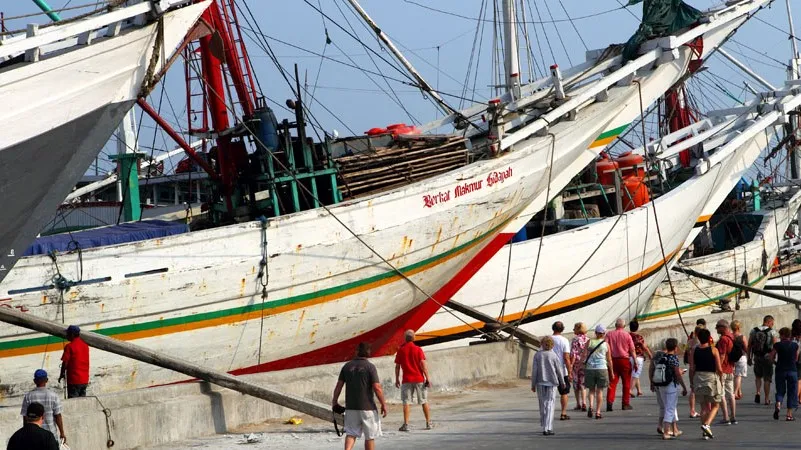
The ships you see here are Phinisi schooners, traditional wooden sailing vessels built by craftsmen in South Sulawesi.
They are enormous up close, and they carry actual cargo between the islands of the Indonesian archipelago on a daily basis. This is not a museum replica or a heritage tourism prop.
These boats are working vessels, and the people on them are working sailors.
Walk along the dock in the early morning and you will see crews hauling goods by hand, captains doing paperwork on deck, and families who live onboard going about their morning routines.
It is completely uncommercialized and completely real.
The entrance fee is around IDR 2,000 to 5,000. For that price, you get access to one of the most visually striking and historically significant spots in all of Southeast Asia.
A few tips before you go:
Just a short walk from the dock, there are two spots that people consistently say they did not expect to enjoy as much as they did.
Museum Bahari sits inside a row of 17th-century Dutch warehouses that used to store spices, coffee, and all the goods that made this region one of the most commercially valuable places on earth during the colonial era.
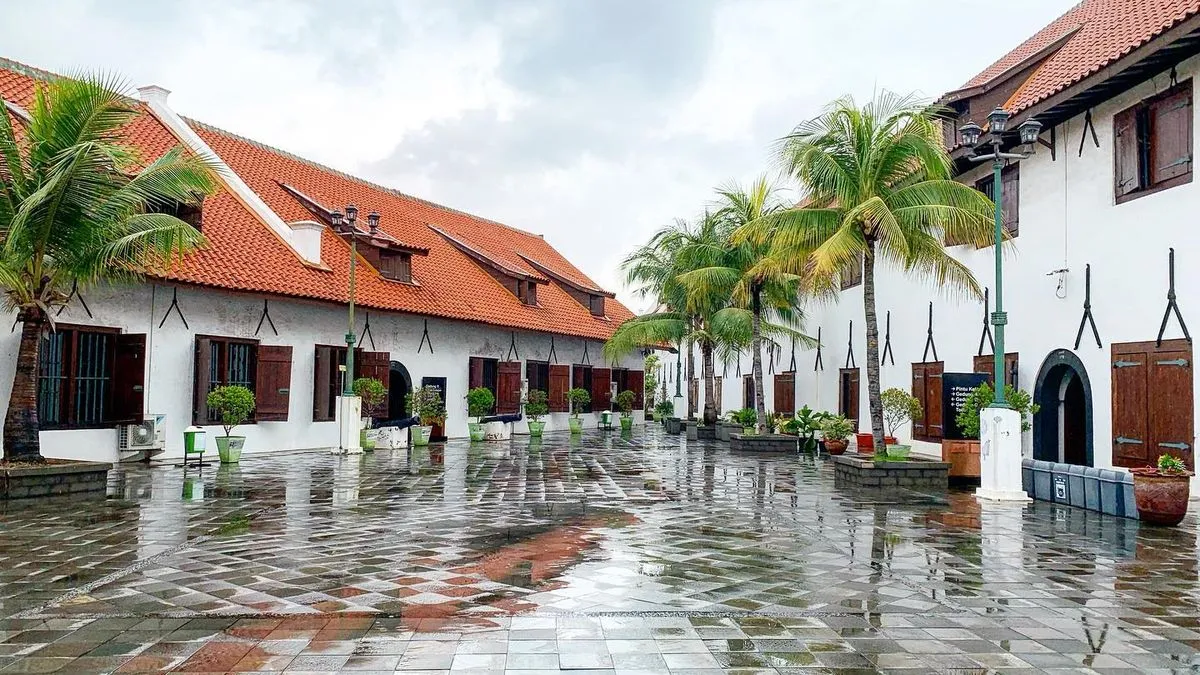
The buildings alone are worth a look. Inside, you get the full story of Indonesia's relationship with the sea, from the traditional boat types to the old trade routes to the navigational tools sailors used before GPS was a concept anyone could imagine.
Behind the museum, the Syahbandar Tower gives you something you cannot get anywhere else on this stretch of coast: an elevated view of the still-active Sunda Kelapa harbor.
From up there, with the working port spread out below you and the Jakarta skyline visible in the distance, the whole historical picture clicks into place in a way that walking around at ground level never quite manages.
One ticket covers both. It is worth every rupiah.
A few kilometers east of Sunda Kelapa, the coastline opens up into Ancol Jakarta Bay City, which is a completely different kind of waterfront experience.
Ancol is big, modern, and built for recreation. There is a theme park, beaches, hotels, an oceanarium, a marina, and a boardwalk where you can just walk along the bay and watch the water.
It does not have the historical weight of Sunda Kelapa, but that is not what it is trying to do.

For most travelers, Ancol serves two main purposes. The first is as a place to unwind in the late afternoon, grab some food by the water, and watch the sun go down over the bay.
The second is as the main departure point for anyone heading to Pulau Seribu.
The Marina Ancol ferry terminal is where almost all speedboats to the islands depart from, so if the islands are on your list, you will be passing through here anyway.
Here is something that surprises a lot of people: within the administrative boundaries of Jakarta, there are over a hundred islands sitting in the Java Sea, with beaches, coral reefs, and water clear enough to see the bottom.
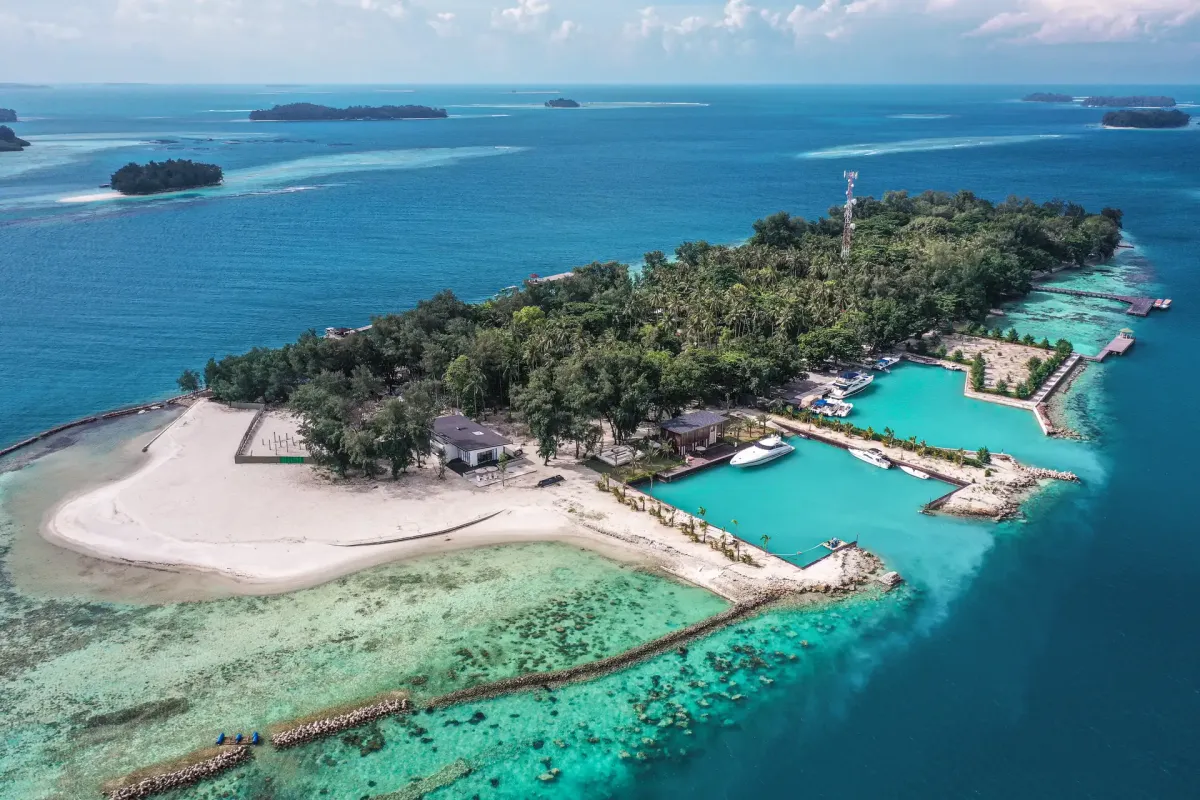
Kepulauan Seribu, which translates to the Thousand Islands (there are actually about 110 of them), stretches north from the bay and ranges from popular day-trip destinations to remote private resort islands where the only sound you hear is the ocean.
For a one-day trip from Jakarta, these are the islands most worth your time:
Pulau Tidung is the most popular for good reason. There is a long bridge connecting two parts of the island that everyone seems to end up jumping off into the water below.
The snorkeling is solid, the village has good food and bicycle rentals, and the whole place has a laid-back energy that is a hard contrast to the city you left that morning.
The speedboat ride from Marina Ancol takes around 50 to 60 minutes.
Pulau Pari is quieter than Tidung and has a beach called Pantai Pasir Perawan that is genuinely beautiful by any standard. If you want to actually relax rather than socialize, Pari is the better choice.
Pulau Bidadari is the closest island to the marina, about 30 minutes away, which makes it the easiest option if you are short on time or traveling with people who are not keen on long boat rides.
It is more resort-oriented but still gives you that island feeling without a half-day of travel.
Pulau Pramuka is where the administrative center of the archipelago is located, and it also has a sea turtle conservation site that is genuinely worth visiting.
If the combination of culture and nature appeals to you more than pure beach time, Pramuka is worth considering.
The islands are best from April through October when the sea is calmer and the water visibility is at its best for snorkeling.
Speedboats from Marina Ancol start departing around 7:00 AM, and most one-day tours wrap up in the late afternoon.
The northern coast works best as a west-to-east journey, starting at the harbor in the morning and making your way toward Ancol as the day goes on. Here is how a solid day looks:
| Time | Where |
| 7:00 AM | Sunda Kelapa at sunrise for the dock and photos |
| 8:30 AM | Museum Bahari and Syahbandar Tower |
| 10:00 AM | Quick stop at Kota Tua (10 minutes away by car) |
| 12:00 PM | Lunch near the old town area |
| 2:00 PM | Head to Ancol for the waterfront walk |
| 4:00 PM | Sunset along the Ancol boardwalk |
If Pulau Seribu is on the itinerary, treat it as its own day. Trying to do the harbor, the museums, and a full island trip in one go is going to feel like you rushed everything and properly experienced nothing.
North Jakarta is not the most tourist-friendly area to navigate on your own, mostly because the connection between Kota Tua, Sunda Kelapa, and Ancol is not well served by public transport and the traffic can be genuinely unpredictable.
The cleanest solution is a private driver or a guided tour. Ekaputra Tour's Jakarta City Tour packages cover the northern coast stops alongside the Kota Tua highlights, with an English-speaking guide who knows the area well and can handle the logistics while you focus on actually seeing the place.
If you would rather go independently, Gojek and Grab work fine in this part of the city. The Transjakarta bus network reaches the Kota Tua area, and from there it is a short ride north to the harbor.
Nothing that will ruin your trip if you miss it, but useful to know:
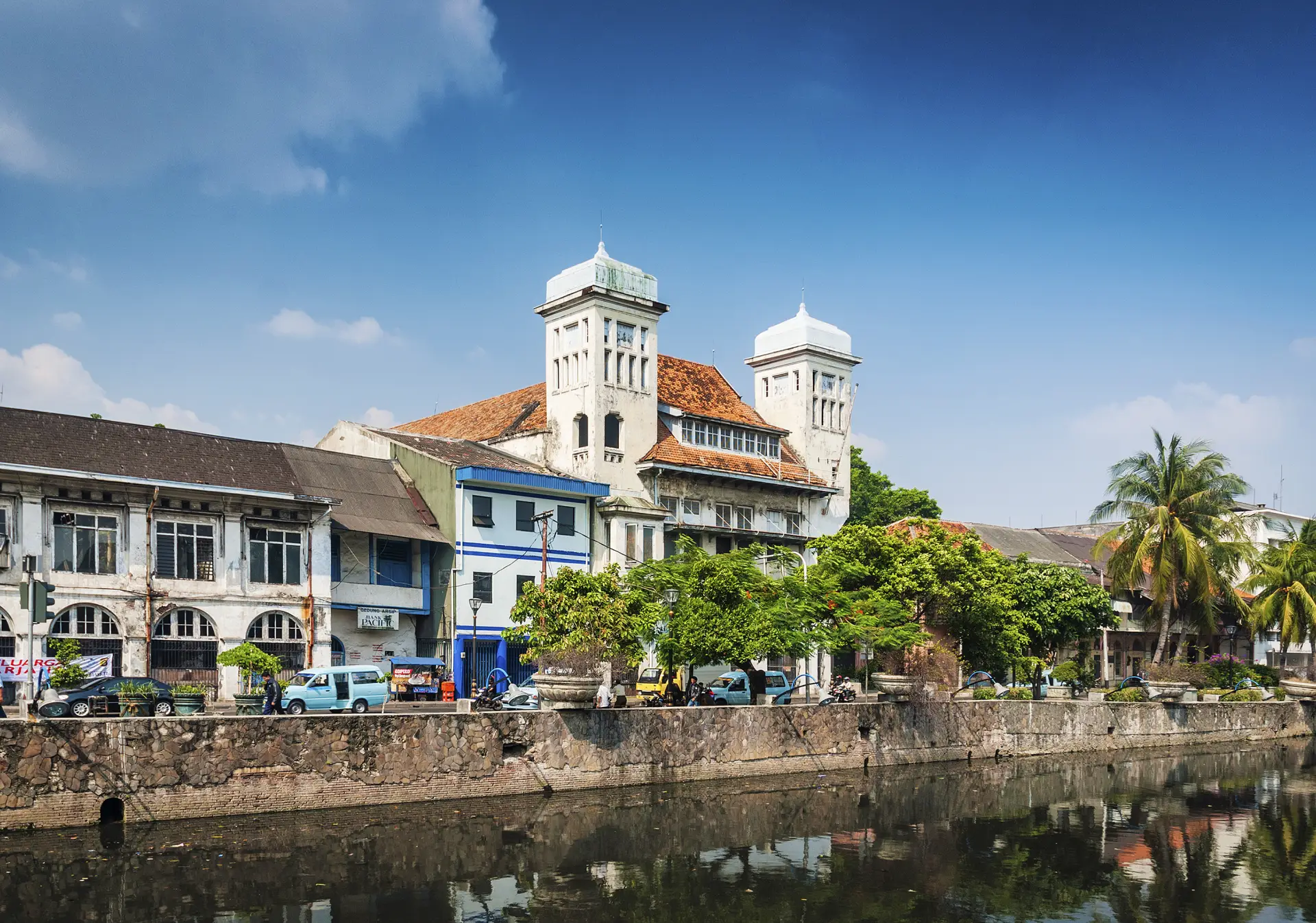
If you have already visited Kota Tua and want to understand why the old town looks and feels the way it does, walking down to Sunda Kelapa is the answer. Everything connects.
For travelers who want all of this without the hassle of figuring out the logistics on their own, Ekaputra Tour's Jakarta City Tour puts it together into a single organized day.
Private transport, English-speaking guide, and an itinerary that actually makes sense given the geography of the city. It is a good way to see a part of Jakarta that most visitors completely miss.