Main Navigation
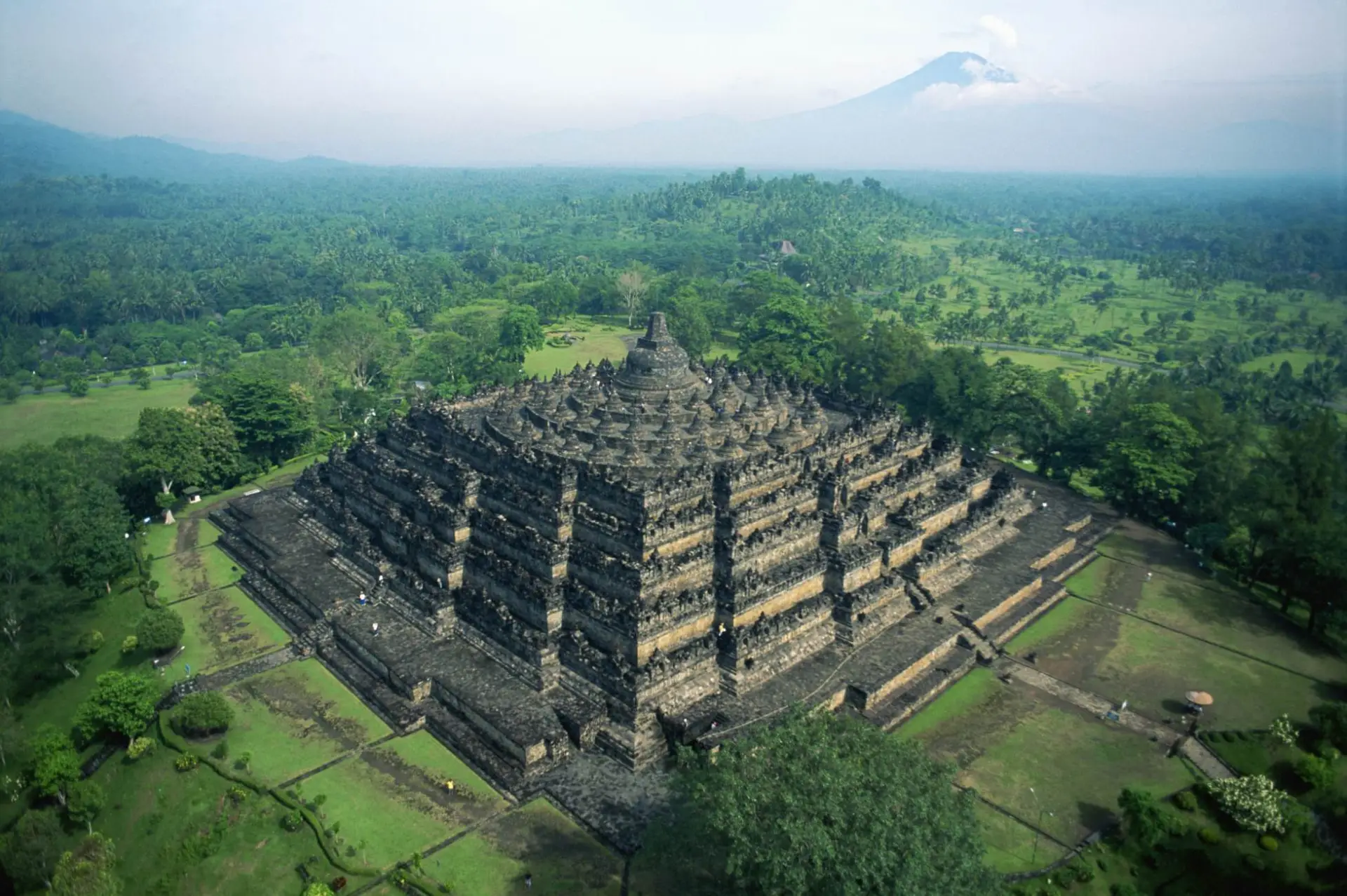
Most travelers arrive in Central Java with one destination in mind: Borobudur. But just a few kilometers away lie two smaller, older, and quietly fascinating sites that complete the story of this ancient Buddhist landscape. Mendut and Pawon Temple are often overlooked, yet they hold the key to understanding why Borobudur was built where it was, and how pilgrims once experienced it.
Historians and archaeologists have long noted that Borobudur, Pawon, and Mendut sit in an almost perfectly straight line, stretching roughly 3 kilometers from east to west. This alignment is not considered coincidental. Many scholars believe these three temples were part of a single ritual pilgrimage route used by Buddhist monks and devotees during the Sailendra dynasty in the 9th century.
The order of the visit matters too. Traditionally, pilgrims would begin at Mendut, pause at Pawon, and finish their spiritual journey at Borobudur, the grandest and most symbolically complete structure of the three. Together, they represent a narrative journey from earthly existence toward enlightenment, making this temple trail near Borobudur one of the most historically rich walks in Java.
Built around 824 CE by King Indra of the Sailendra dynasty, Mendut Temple predates Borobudur itself. Inside its modest yet elegant structure sits an extraordinary highlight: a 3-meter-tall stone statue of Buddha Vairocana, flanked by Bodhisattva Avalokitesvara and Vajrapani. Unlike many temple statues in Central Java, this Buddha sits in an unusual posture, with both feet resting on the ground rather than the typical lotus position, a detail that continues to intrigue art historians.
Local legend adds another layer of intrigue. According to Javanese folklore, Mendut Temple is linked to a giant named Mendang Kamulan, said to have guarded the area in ancient times. While the story leans more toward myth than documented history, it reflects how deeply embedded this site is in local memory and oral tradition, well beyond its academic significance.
If Mendut is the storyteller of this trio, Pawon is the enigma. Considerably smaller than both Mendut and Borobudur, Pawon Temple's exact original purpose remains debated among historians. Some believe it once served as a resting place for royal ashes, while others argue it functioned purely as a transitional shrine along the pilgrimage path.
What makes Pawon worth the stop isn't grandeur, it's atmosphere. Its compact structure, intricate stone carvings, and quiet surroundings make it feel like a hidden pause button between two much larger sites. For travelers exploring Buddhist temples in Central Java, Pawon offers a rare, unhurried moment to appreciate craftsmanship without the crowds.
Visiting both temples is refreshingly simple. Mendut Temple sits about 3 kilometers east of Borobudur, while Pawon is roughly 1.75 kilometers away along the same road. Because they're positioned in a nearly straight line, most visitors combine them into a single short detour before or after seeing Borobudur itself.
Entrance tickets for both sites are separate from the main Borobudur ticket, but they're very affordable, making this an easy and budget-friendly addition to any Central Java itinerary.
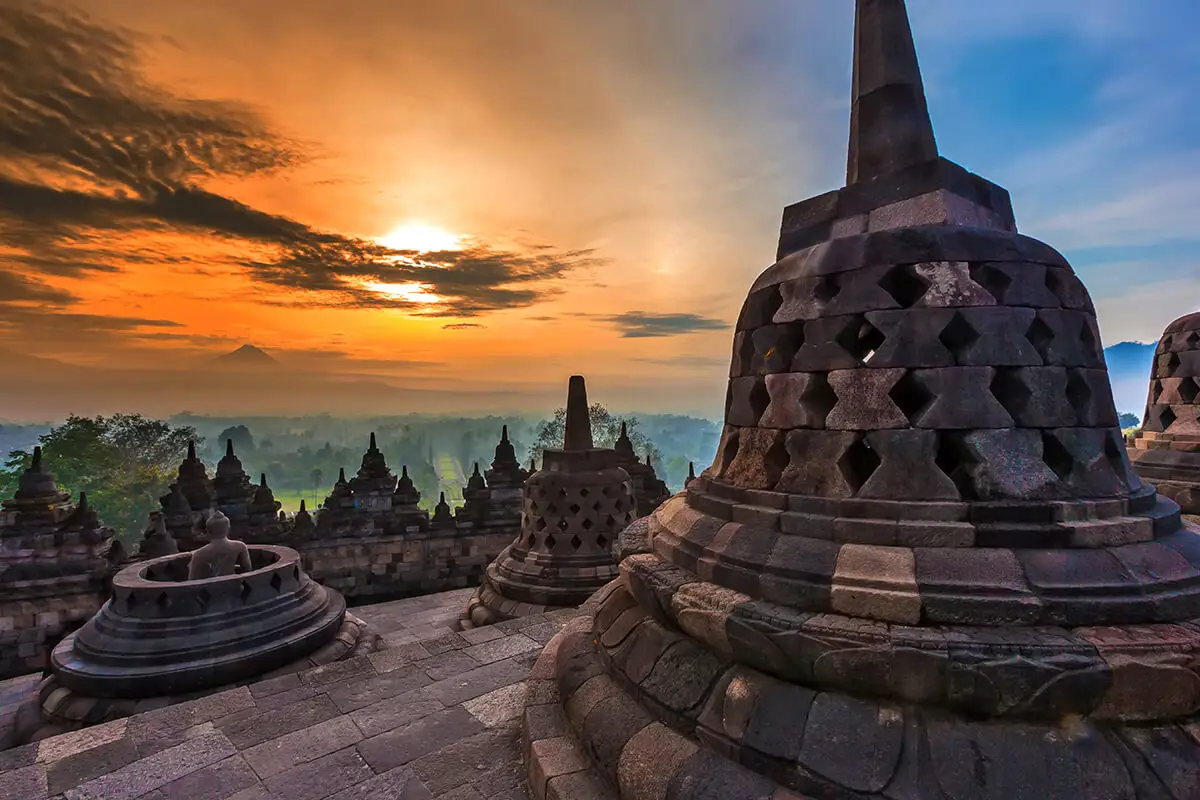
Early morning remains the best window for visiting both temples, ideally before the midday heat sets in. Many travelers pair this stop with a Borobudur sunrise experience, visiting Mendut and Pawon either right before or after watching the sun rise over the main temple. If you're curious why so many visitors prioritize the early hours at Borobudur, our guide on why the early start is worth it explains the experience in more detail.
It's easy to see why Mendut and Pawon get overlooked. Borobudur's scale simply dominates most itineraries, and many day-tour packages focus exclusively on the main temple and Prambanan. But skipping these two sites means missing the context that makes Borobudur's story complete.
Because they receive far fewer visitors, both temples offer a calmer, more reflective experience. You'll likely have long stretches of quiet to admire the carvings, take photos without crowds, and simply absorb the historical weight of the site, something increasingly rare at major heritage destinations in Java.
For travelers who want the full experience without the logistics headache, joining a guided tour is by far the easiest option. A knowledgeable guide can explain the symbolic relationship between the three temples, point out architectural details easy to miss on your own, and manage timing so you're not rushing between stops.
Both of these itineraries can be tailored to include a stop at Mendut and Pawon, allowing you to experience the complete ancient pilgrimage route in one seamless day. If you're planning a longer stay in the region, the 4-day Best of Yogyakarta tour also offers plenty of flexibility to weave in these hidden gems alongside other cultural highlights.
No, they require separate, very affordable entrance tickets and are not part of the main Borobudur ticket package.
Mendut Temple is about 3 kilometers east of Borobudur, while Pawon sits roughly 1.75 kilometers away, along the same road.
Most visitors need only 15-20 minutes at each site, so budget around 30-45 minutes total including travel between them.
A guide isn't required, but one helps explain the temples' symbolic connection to Borobudur and details easy to miss on your own.
Early morning is ideal, before the day heats up and before or after a Borobudur sunrise visit, when both sites are calm and cool.
Yes, they fit well into a full-day Yogyakarta itinerary that also includes Borobudur and Prambanan, since they're along the same route.
Ready to explore the complete ancient pilgrimage route in one unforgettable day? Book the Sunrise Borobudur & Prambanan Temple tour with Ekaputra Tour and let our guides show you the hidden stories behind Mendut and Pawon along the way.