Main Navigation
Jakarta is easy to visit. Jakarta is hard to actually experience.
Most tourists spend a few days here, hit the spots on Google Maps, and leave with a quiet feeling they cannot quite name.
Not disappointment. Something closer to incompleteness, like they were handed a book but only got to read the back cover.
That feeling has a cause. It is almost always the same one: they explored Jakarta without someone who actually knows it.
Jakarta does not reveal itself to strangers. Not because it is unwelcoming, but because the most interesting parts of it were never designed to be found.
Think about what that actually means in practice:
None of this appears on any map. It lives in the memory of people who grew up here, walked these streets before they were a tourist destination, and know which gates are worth opening.
A local guide does not just take you to places. They take you to places that are otherwise inaccessible, not physically, but informationally. Without local knowledge, you simply do not know they exist.
One of the consistent surprises tourists report after a guided Jakarta city tour is how often the most memorable moment involves something that looked completely unremarkable from the outside.
A building with peeling paint. A narrow alley that appears to lead nowhere. A side entrance most visitors walk past.
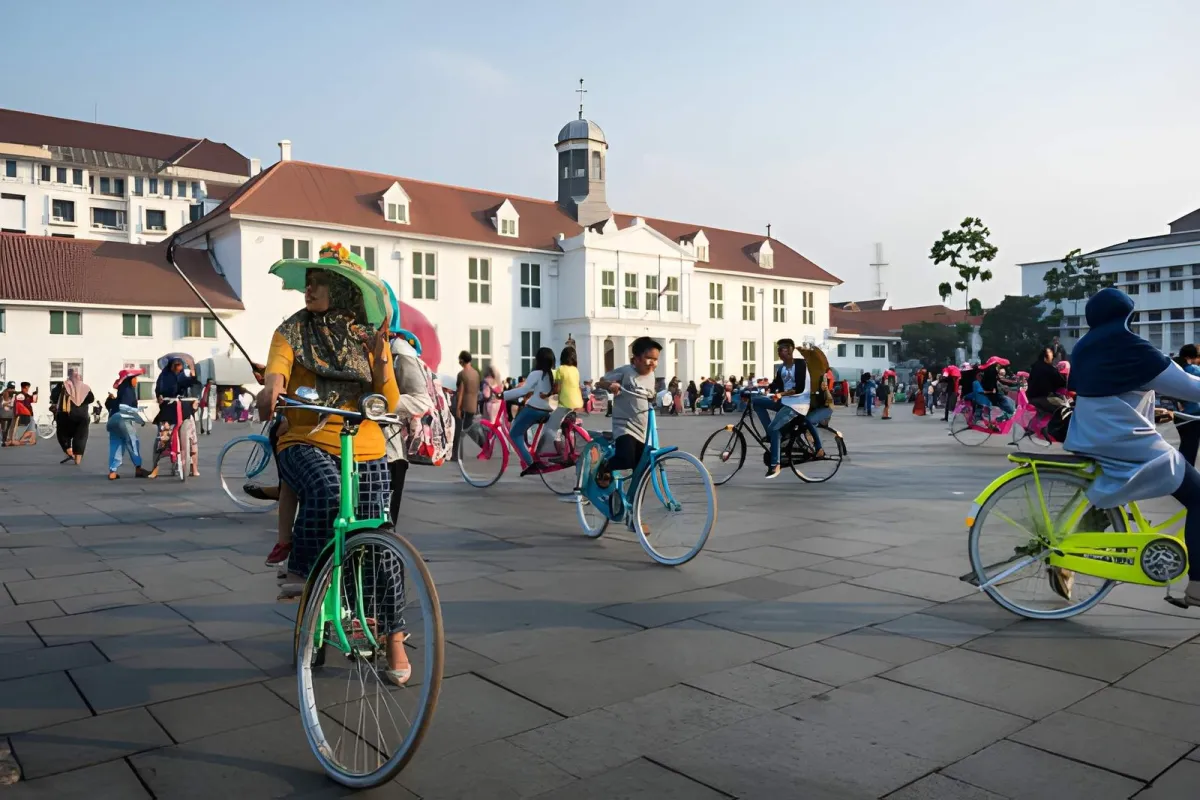
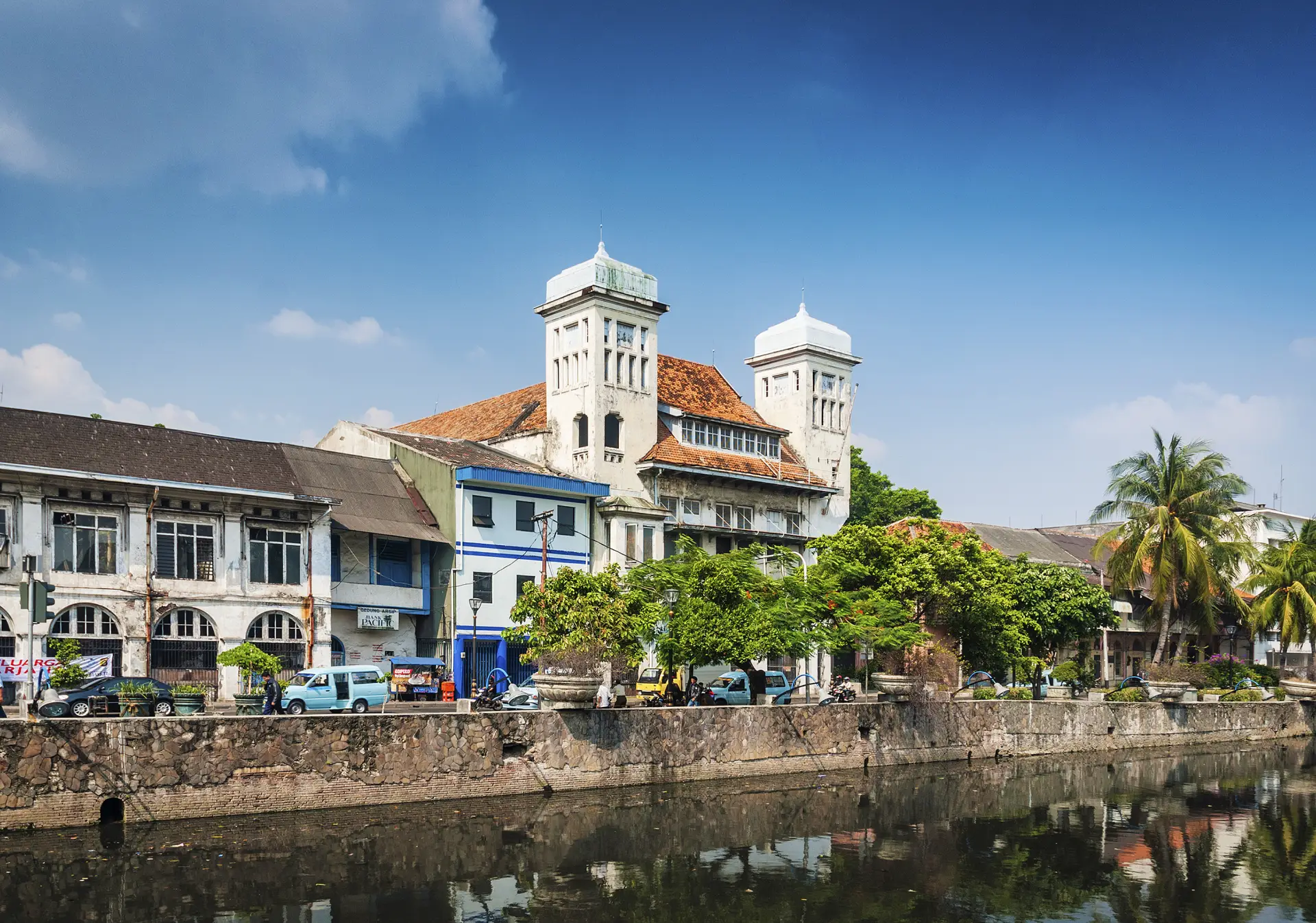
Take Kota Tua. That peeling building is a former VOC trading post where spice cargo from across the archipelago was processed during the height of the Dutch colonial trade monopoly.
The discoloration at its base is not neglect. It is salt corrosion from flood water that has been rising incrementally for two centuries.
The drainage canals alongside the road were engineered by the Dutch in the 1700s and are still functional today. The old town hall visible from where you are standing dates back to 1627.
None of this is on a plaque. A local guide carries it because they have been told it, lived near it, and explained it to enough people to know exactly which detail stops someone in their tracks.
That is the difference between looking at a building and actually seeing it.
At Istiqlal Mosque, the largest mosque in Southeast Asia, most visitors come for the architecture.
The dome, the marble interiors, the capacity for over 120,000 worshippers at once. All of it is worth seeing.
But there is a tunnel underneath the mosque complex connecting Istiqlal directly to Jakarta Cathedral next door.
It takes about ten seconds to walk through. Without context, it is just a covered passage.
With a local guide, it becomes one of the more quietly significant things you encounter in Jakarta.
The tunnel was built deliberately, as a physical symbol of the relationship between Islam and Christianity in a country of 270 million people across hundreds of distinct ethnicities.
Understanding that decision changes how the entire visit to both buildings feels.
This pattern repeats across the whole day:
A translation app handles words. A local guide handles everything underneath them.
Jakarta's food scene is one of the best in Southeast Asia. The version most tourists experience is a fraction of what is actually there.
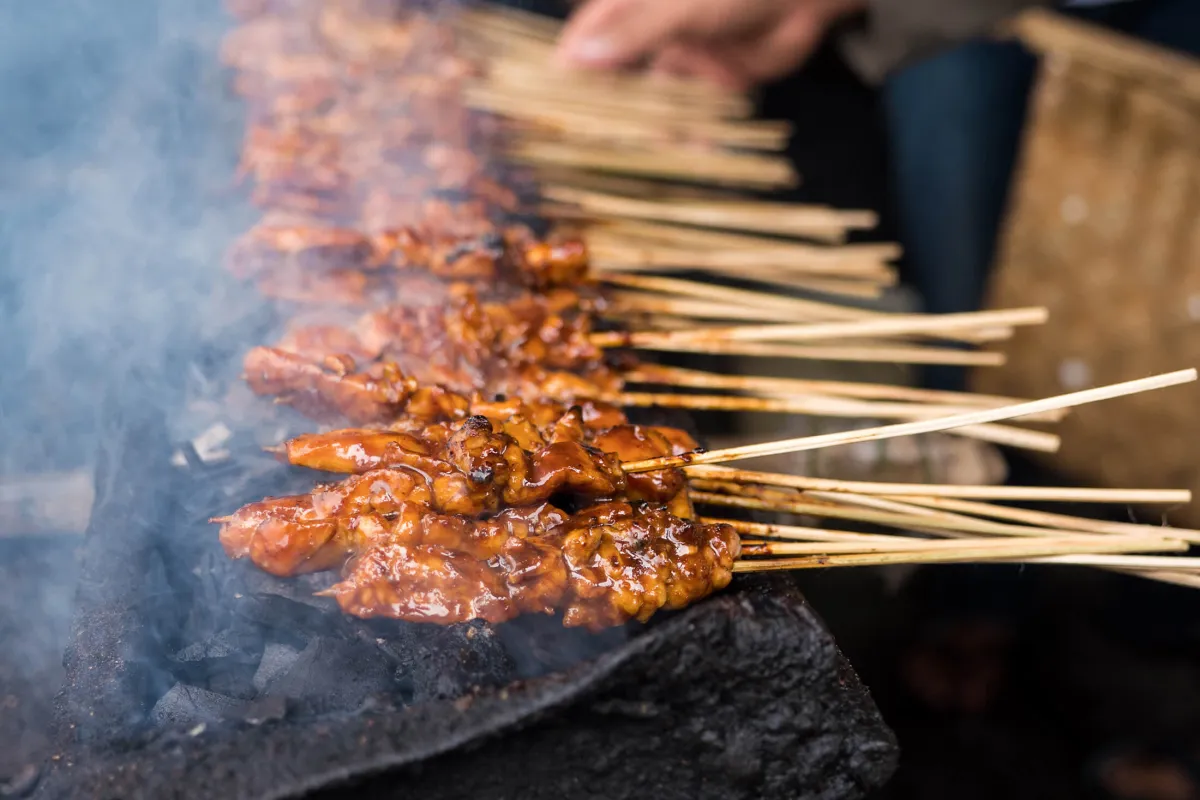
Restaurants with English menus and locations that appear in the top results when you search near a landmark are designed for people who do not know where else to go. They are fine. They are also not where locals eat.
The places locals eat do not need signage because their regulars already know the address.
They have been in the same location for decades, sometimes generations, and the food reflects that continuity in a way that a place that opened eighteen months ago simply cannot.
A Jakarta local guide knows:
The gap between the food you find on your own and the food a guide takes you to is wide enough that many visitors describe it as a completely different city.
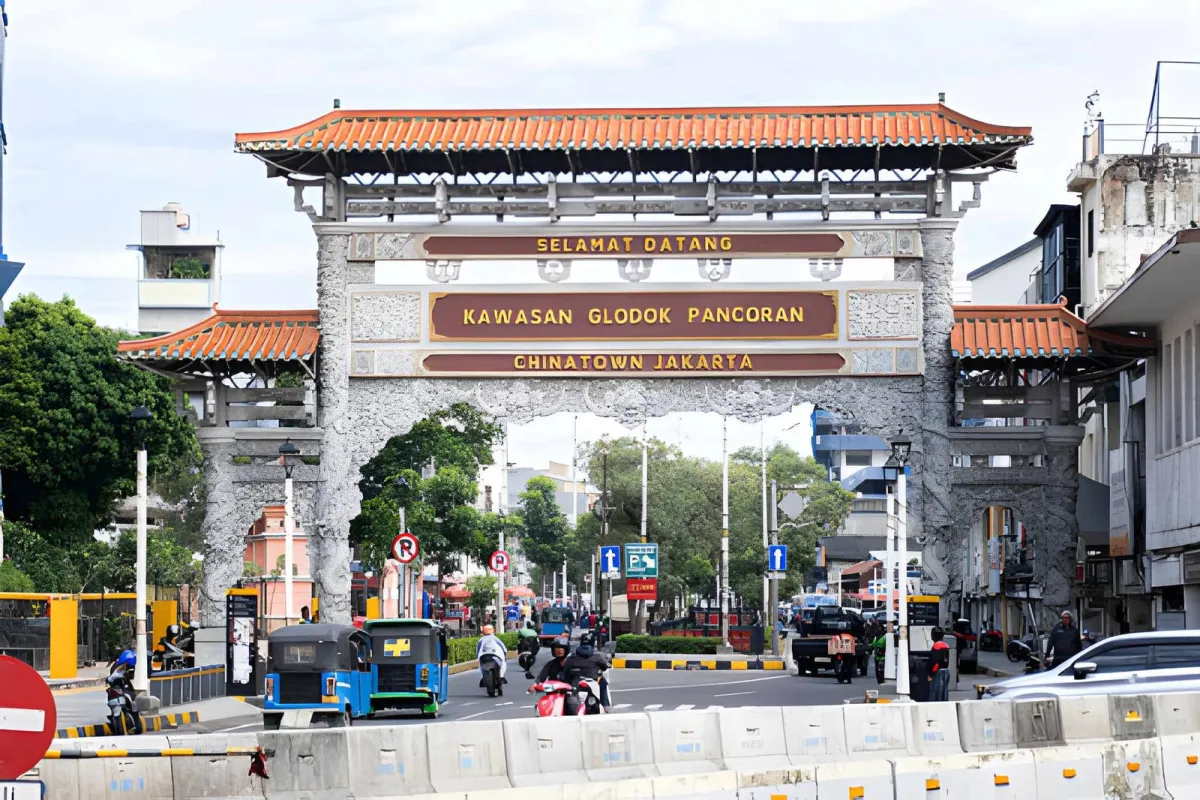
Jakarta is not the same city at 7am and at noon. Glodok on a regular Tuesday and during Cap Go Meh celebrations are barely comparable.
Istiqlal outside prayer times versus during Friday prayers are two entirely different atmospheres.
A local guide builds the itinerary around these rhythms because they know them intuitively:
This is information that does not exist in any travel article. It lives with people who are in and around these places regularly. The only way to access it is through someone who is.
Most people who do a guided tour of Jakarta say a version of the same thing afterward: they did not just see more places. They understood what they were seeing.
That understanding is what separates a city that felt like a checklist from one that stays with you.
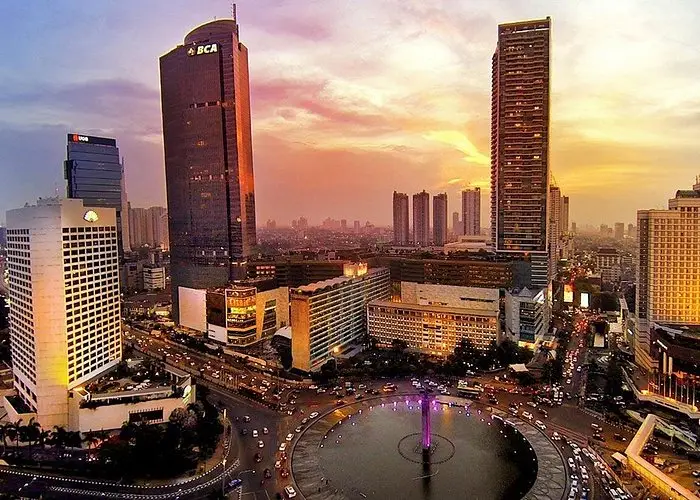
Jakarta has 300 years of layered history, a population of 30 million, and neighborhoods shaped simultaneously by Dutch colonialism, Chinese migration, Islamic culture, and post-independence Indonesian identity.
There is a lot to understand. Very little of it is written in English on a sign you can photograph and move on from.
A Jakarta local guide is the reason some people leave feeling like they got the full version of the city, and others leave with that quiet, unnameable sense that something was there they never quite reached.
If you are planning a trip and want to make sure you are in the first group, start with the right guide.
Ekaputra Tour offers Jakarta city tours and private Jakarta tours with local guides who have grown up in and around the neighborhoods they cover.
Not a fixed script, but genuine local knowledge applied to wherever your curiosity takes you.