Jakarta Travel Guide: Everything Changed After the Capital Moved

Jakarta Travel Guide: Everything Changed After the Capital Moved

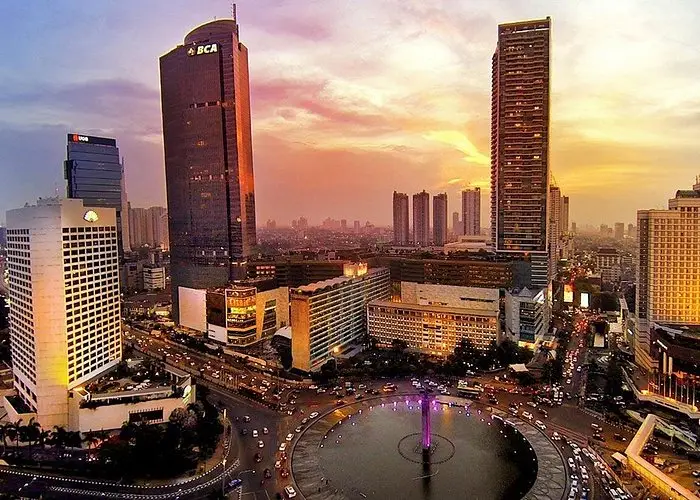
Yes, Jakarta is absolutely worth visiting in 2026. While the government officially moved key functions to IKN Nusantara in Kalimantan, Jakarta remains Indonesia's largest city, its economic powerhouse, and its undisputed cultural and culinary capital.


The city is now called DKJ (Daerah Khusus Jakarta) and is undergoing a massive infrastructure transformation β€” including MRT expansion, new toll roads, and the Whoosh high-speed train. For tourists, almost nothing negative has changed. In fact, several things have gotten better.


Wait β€” Jakarta Is No Longer the Capital?


Let's address the elephant in the room.


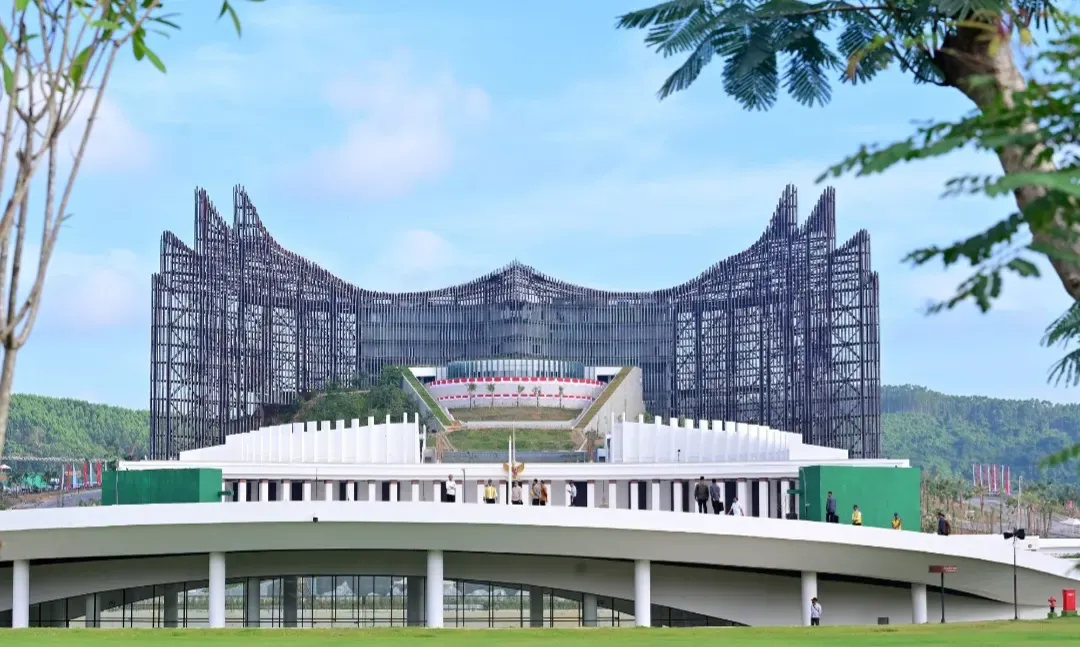
On February 15, 2024, Indonesia's parliament officially passed the law designating IKN Nusantara β€” a brand-new city being built from scratch in East Kalimantan, on the island of Borneo β€” as the nation's new capital.


Jakarta Travel Guide: Everything Changed After the Capital Moved - Ekaputra


By 2026, the transition is still gradual. Here's what has actually happened:


  1. Some government ministries have begun relocating staff to Nusantara.
  2. The Presidential Palace in Nusantara has been inaugurated, though the President still spends significant time in Jakarta.
  3. Embassies remain in Jakarta. None have moved.
  4. The business world β€” banking, startups, media, multinational headquarters β€” is 100% still in Jakarta.


What Jakarta Is Called Now


Officially, Jakarta's status changed from DKI Jakarta (Daerah Khusus Ibukota β€” "Special Capital Region") to DKJ (Daerah Khusus Jakarta β€” "Special Region of Jakarta"). The word "Ibukota" (Capital) was dropped.


But here's the truth that matters to you as a traveler:


Jakarta didn't lose its identity. It lost a title. The soul of the city β€” the food, the chaos, the history, the culture β€” is still here. All 11 million people are still here.


So, Is Jakarta Worth Visiting in 2026?


Absolutely. Here's why.


1. The Food Capital Never Moved


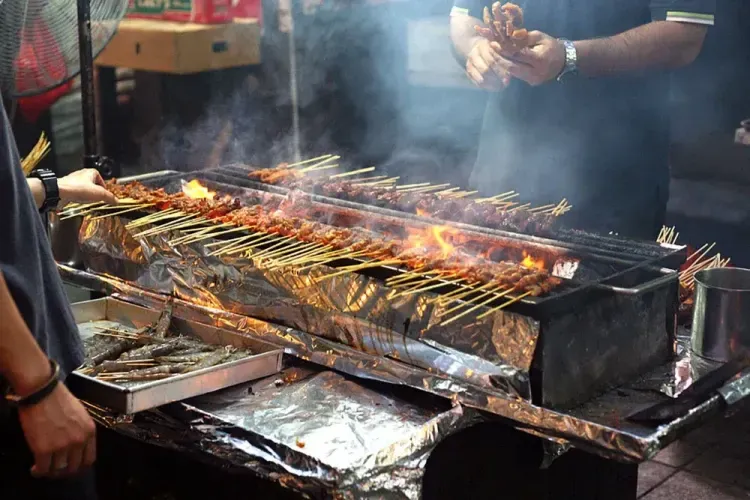
No government decree can relocate Nasi Goreng Kambing Kebon Sirih, a street stall that has been flipping goat fried rice since the 1960s. No presidential palace in Borneo changes the fact that Jakarta has the most diverse food scene in Southeast Asia.

Jakarta Travel Guide: Everything Changed After the Capital Moved - Ekaputra


In 2026, Jakarta's culinary landscape is thriving:


  1. Pecenongan Street is still the Martabak (stuffed pancake) capital of the world.
  2. Glodok's Kopi Es Tak Kie, a Chinese-Indonesian coffee shop operating since 1927, still serves its legendary iced coffee.
  3. South Jakarta's specialty coffee scene has exploded, with roasters like Tanamera and Common Grounds now rivaling Melbourne and Tokyo.
  4. Michelin Guide Indonesia continues to spotlight Jakarta restaurants, putting the city firmly on the global gastronomic map.


Our Recommendation: If you visit Jakarta and only do one thing, eat. Take our Culinary Night Tour and taste what no capital relocation can take away.


2. The History Is Embedded in the Ground


Jakarta's history isn't stored in government filing cabinets that can be shipped to Borneo. It's in the streets, the walls, the canals, and the graves.

Jakarta Travel Guide: Everything Changed After the Capital Moved - Ekaputra


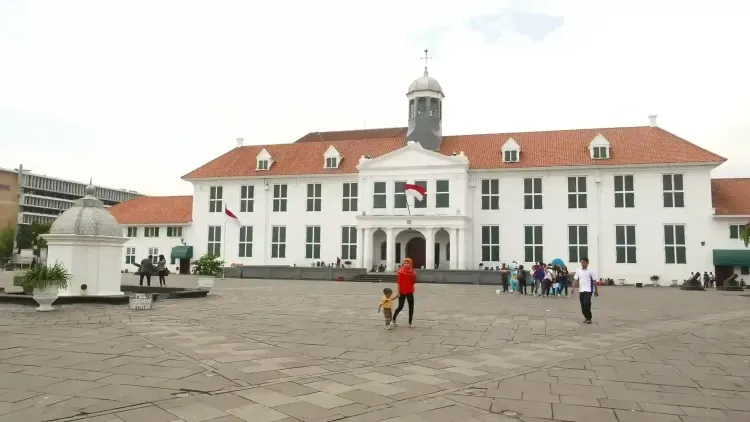
  1. Kota Tua (Old Town) still stands as a living monument to the VOC (Dutch East India Company) era, with the same cobblestones, the same Cafe Batavia, and the same haunted warehouse district.
  2. Glodok (Chinatown), the oldest Chinatown in Southeast Asia, still has temples from the 1600s where incense has burned continuously for centuries.
  3. Menteng, the leafy colonial district where a young Barack Obama once went to school, still has its Dutch-era villas and tree-lined boulevards.
  4. Istiqlal Mosque and Jakarta Cathedral, standing face-to-face as a symbol of Indonesian religious tolerance, are both still here, and the "Tunnel of Friendship" connecting them (completed in 2021) is now one of the most photographed spots in the city.


Our Recommendation: History doesn't relocate. Neither should your visit. Explore it with our Jakarta Heritage Tour.


3. The Infrastructure Actually Got Better


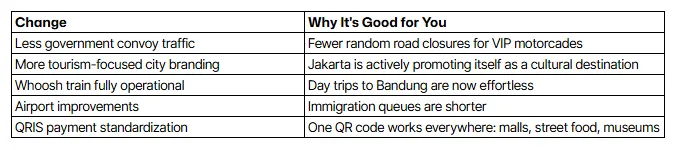
Here's the irony: the capital move has accelerated Jakarta's infrastructure development, because the city is being repositioned as a global business and tourism hub rather than a bureaucratic center.


What's New in 2026:


Jakarta Travel Guide: Everything Changed After the Capital Moved - Ekaputra


The Construction Warning (Be Honest)


We wouldn't be your trusted guide if we didn't tell you this:


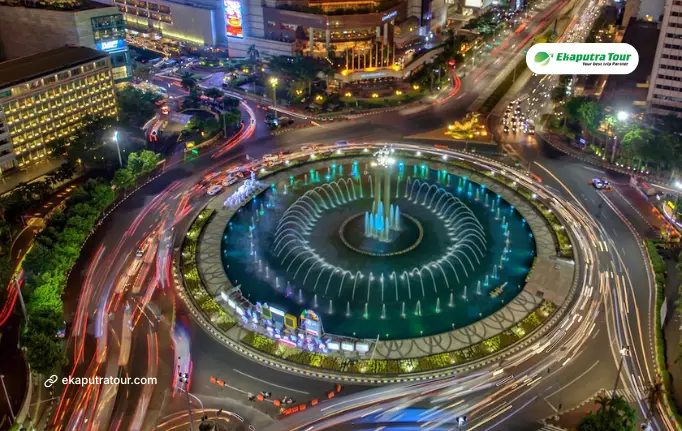
The MRT Phase 2 construction between Bundaran HI and Kota Tua is causing significant traffic disruption in 2026.


Roads around Harmoni, Sawah Besar, and Mangga Besar are frequently partially closed.


Standard ride-hailing apps (Grab/Gojek) often route you straight into these bottlenecks because their GPS data isn't always updated for temporary road closures.


This is exactly why having a local driver who physically knows the back roads is not a luxury. It's a necessity.

What Actually Changed for Tourists (The Honest List)


Things That Got Better


Jakarta Travel Guide: Everything Changed After the Capital Moved - Ekaputra


Things That Got Harder


Jakarta Travel Guide: Everything Changed After the Capital Moved - Ekaputra


Things That Did NOT Change


  1. Visa policy: Visa-free and Visa-on-Arrival for 90+ countries. No change.
  2. Currency: Indonesian Rupiah (IDR). No change.
  3. Language: Bahasa Indonesia. English widely spoken in tourist areas. No change.
  4. Religion/Culture: Jakarta remains the diverse melting pot it has always been. No change.
  5. Safety: Jakarta remains as safe as any major Asian city (Bangkok, KL, Manila). Standard precautions apply. No change.


Is Jakarta Safe in 2026?


Yes. But let's be specific, because "safe" means different things to different travelers.


For Solo Travelers:


Jakarta is safe for solo travelers, including solo female travelers, in tourist areas and commercial districts (Menteng, Sudirman/SCBD, Senopati, Kemang, Kota Tua during daytime).


Standard big-city rules apply: don't flash expensive jewelry in crowded markets, use reputable transport (Bluebird taxis, Grab/Gojek, or a private guide), and stay aware of your surroundings.


For Families:


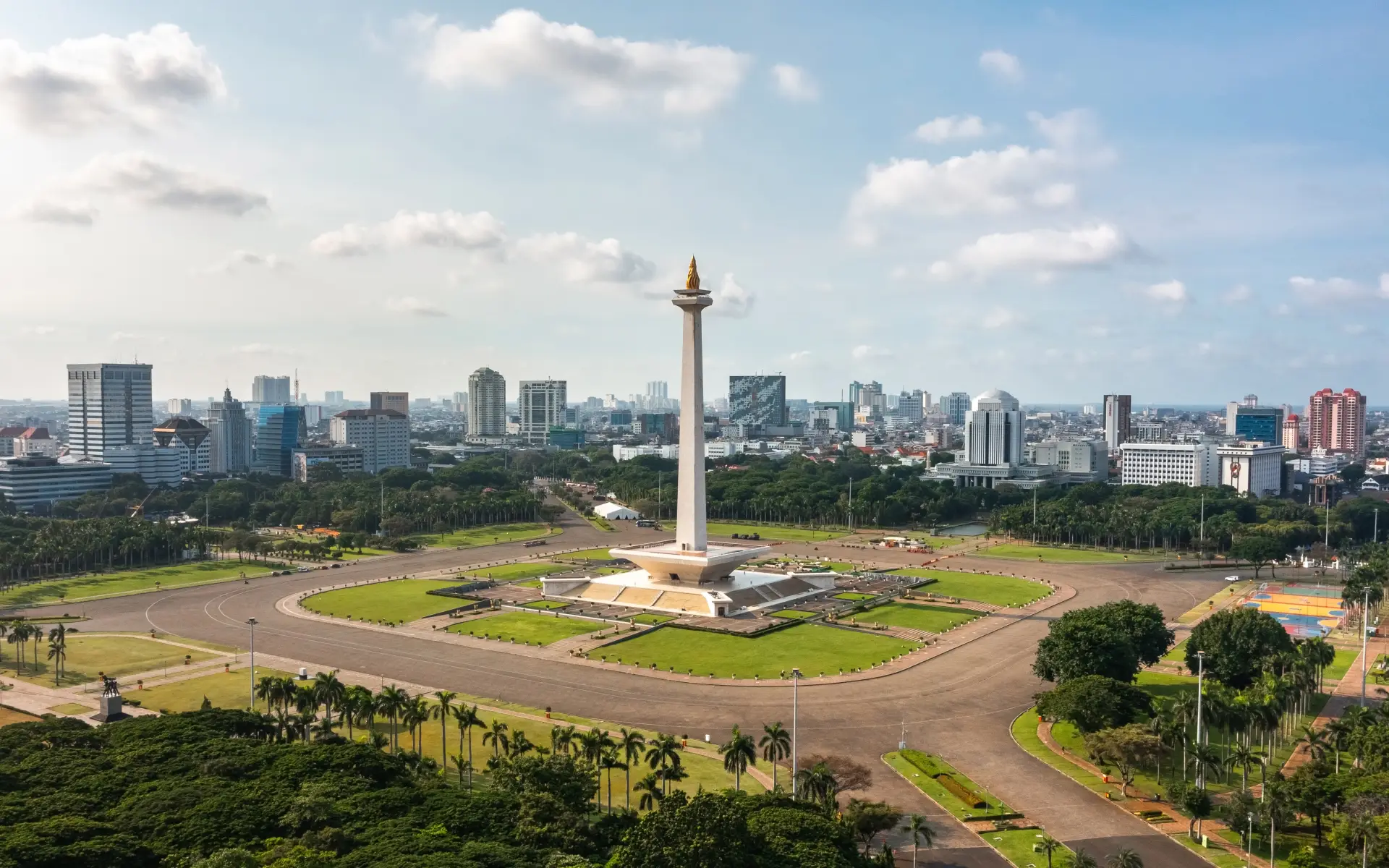
Very safe. Malls are world-class and family-friendly. Monas (National Monument) has a large park area for kids. The concern is heat and traffic, not crime.


For Seniors:


Safe, but physically challenging without a private vehicle. Sidewalks are uneven. Public transport is crowded. A private car with an english speaking driver & guide is strongly recommended.

Common Scams to Watch For:


  1. Taxi meter "broken": Only use Bluebird (blue taxis) or app-based rides. Or better yet, use us.
  2. "Free" tour guides at Monas: They offer to "help" then demand payment. Politely decline.
  3. Money changer short-changing: Use bank ATMs or official money changers in malls.


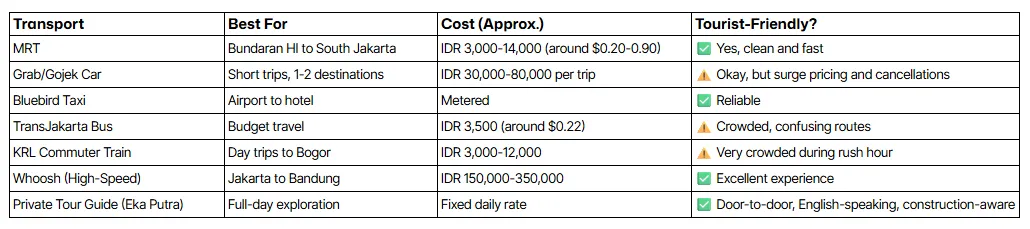
How to Get Around Jakarta in 2026


Jakarta Travel Guide: Everything Changed After the Capital Moved - Ekaputra


The Real Talk About Transport


Here is what no travel blog will tell you:


Google Maps travel times in Jakarta are lies. Google says "Monas to Kota Tua: 15 minutes." The reality in 2026, with MRT construction, is 40-60 minutes by car. We know this because we drive it every single day.


Using a ride-hailing app for a full day of touring means:


  1. Waiting 5-15 minutes for each pickup
  2. Risking driver cancellations (common when destination involves heavy traffic)
  3. Paying surge pricing during rain (which is daily from October to March)
  4. Having a driver who doesn't speak English and doesn't know the history of what you're seeing
  5. A private guide eliminates all of this. One car. One person who knows the routes, the stories, and the shortcuts.


Jakarta Didn't Die. It Evolved.


The international headlines about the capital move created a narrative that Jakarta was being "abandoned." The opposite happened.


Without the burden of being the political center, Jakarta is leaning into what it has always been best at:


  1. The food capital of a 17,000-island archipelago
  2. The business engine of Southeast Asia's largest economy
  3. The cultural melting pot where Javanese, Sundanese, Chinese, Betawi, Arab, and dozens of other cultures collide in the most delicious, chaotic, and beautiful way


The government moved to Borneo. The soul of Indonesia stayed in Jakarta. And we're still here, ready to show it to you.


Ready to See the 2026 Jakarta?


We are Eka Putra Tour, a local Jakarta guide service that has been navigating this city's chaos, beauty, and hidden corners since day one.


Book Your 2026 Jakarta Tour. WhatsApp Us Now.

.Zyf
Written by

.Zyf

Writer Β· Thinker Β· Night Owl

The less you know, the better you sleep.

logo
logo

We’re Number One Travel Adventure Company

It is a long established fact that a reader will be distracted the readable content of a page when looking at layout the point of using lorem the is Ipsum less normal distribution of letters.

Contact Us