Main Navigation
Few day trips from Jakarta pack in as much visual variety as a route that takes you from a milky volcanic lake to a swaying suspension bridge and finally into a steaming hot spring pool. This kawah putih suspension bridge hot spring day trip has become one of the most requested itineraries for travelers who want more than a single stop and a long drive home. If you are still deciding between routes, this Kawah Putih day trip routes and costs guide is a useful companion piece before you commit.
Kawah Putih on its own is worth the drive, but the surrounding highlands of Ciwidey and South Bandung happen to sit close to a scenic bridge crossing and a set of natural hot spring pools. Grouping them together makes sense logistically since they are within a manageable driving distance of each other, and it makes sense experientially too. You move from the cool, sulfur-scented air of the crater to open-air views on the bridge, then wind down with a warm soak that eases any stiffness from a day of walking. It is a satisfying rhythm: see something dramatic, do something a little adventurous, then relax.
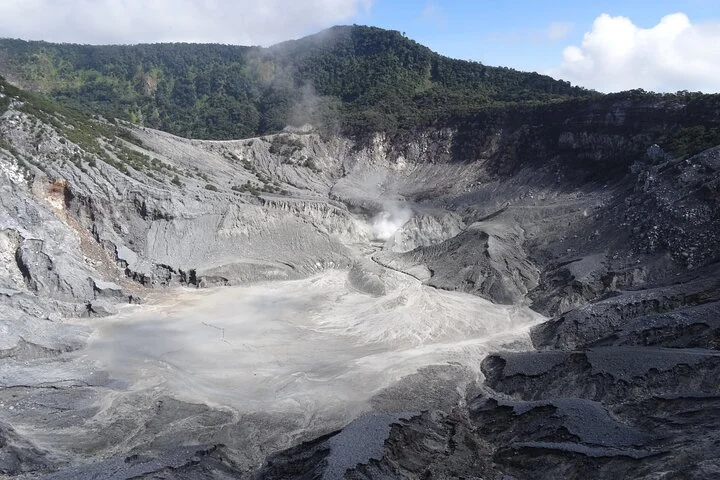
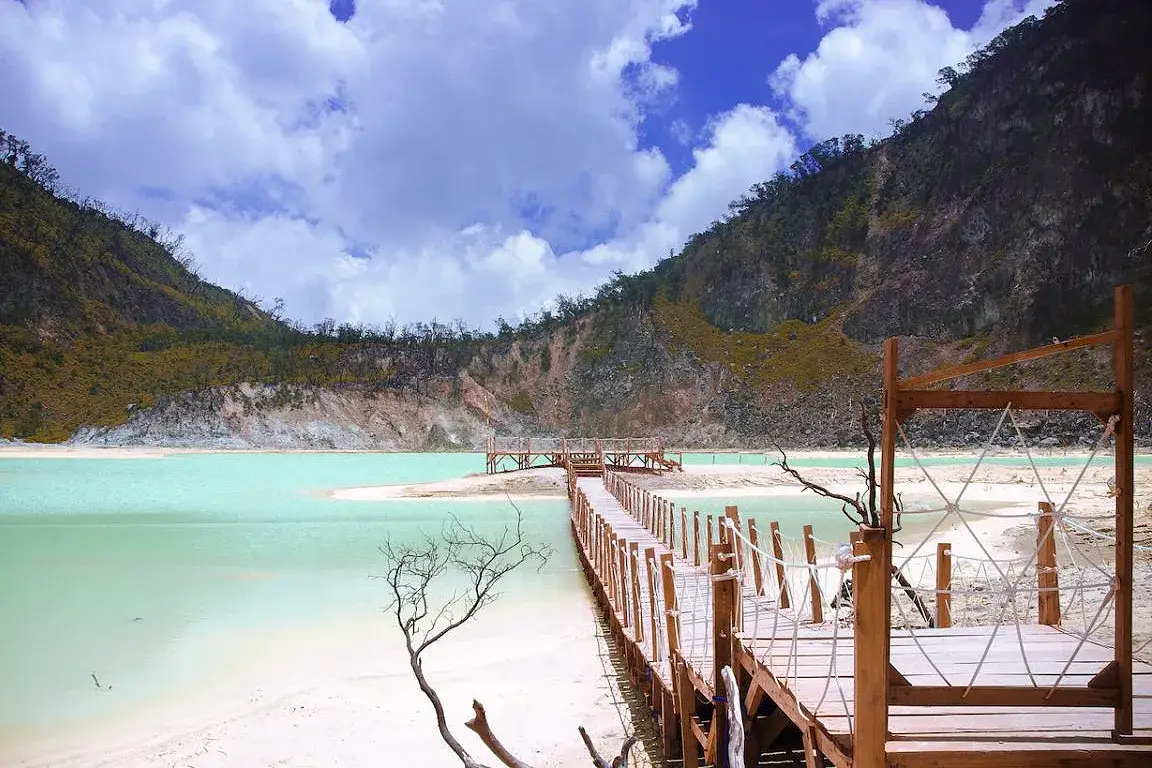
Kawah Putih sits at high altitude, so expect cooler temperatures than Jakarta or central Bandung, even at midday. The crater lake itself shifts color depending on sunlight and mineral activity, ranging from pale turquoise to a more milky white. A shuttle or short walk brings you down to the lakeshore, where wooden boardwalks let you get close to the water without stepping on unstable ground. The smell of sulfur is noticeable near the edge, more so on still, windless mornings, and most visitors find the scene worth a few minutes of mild discomfort. Photos here tend to look best in the first few hours after opening, before crowds and haze build up.
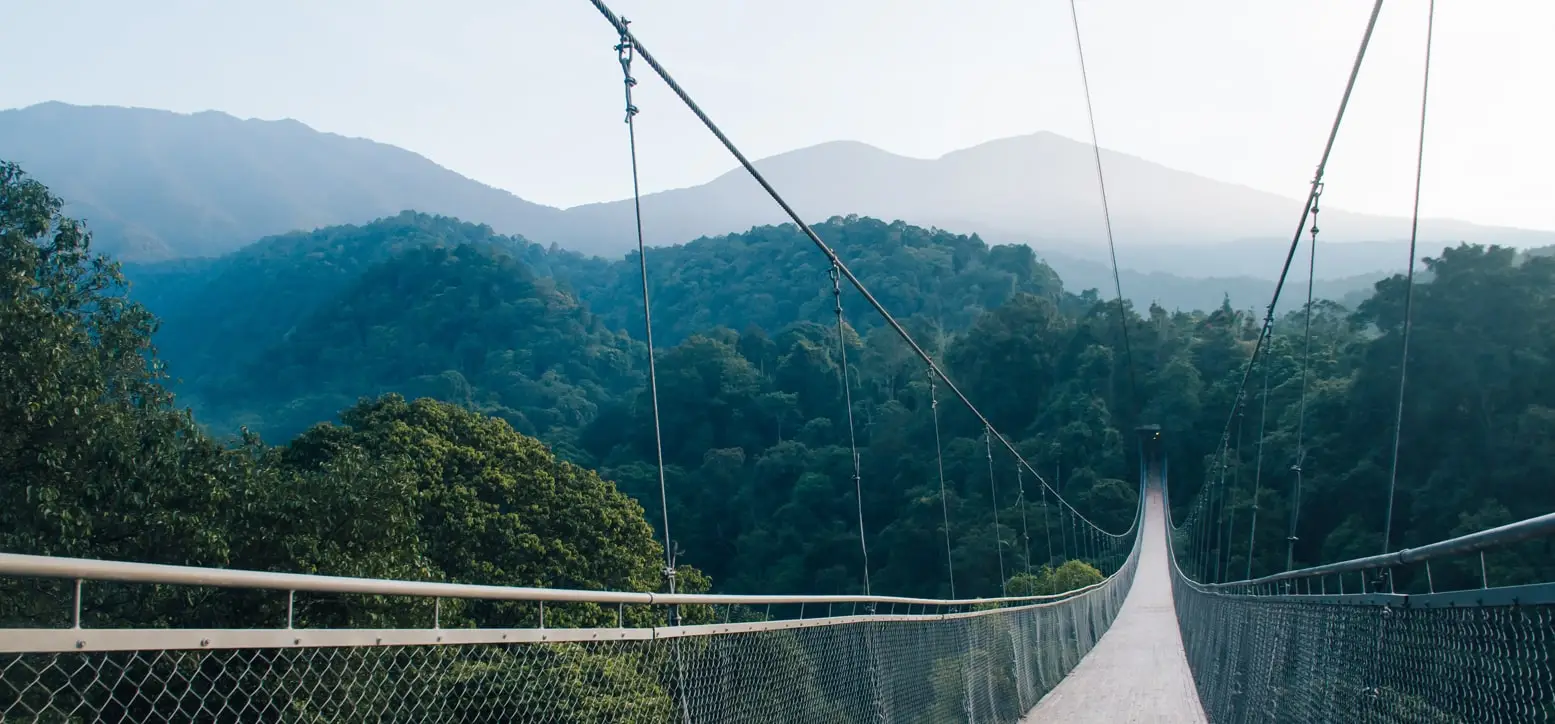
After the crater, the itinerary usually moves to a suspension bridge stretched across a forested valley. It offers a different kind of view: instead of looking into a crater, you are looking out over green hillsides and, on clear days, distant peaks. The bridge is stable and regularly maintained, but like most suspension structures it does sway slightly with foot traffic. Walking slowly and holding the railing makes the crossing more comfortable, especially for anyone uneasy with heights. For photos, midday light tends to flatten the valley colors, so aim for a slightly earlier or later crossing if your schedule allows. Travelers who enjoyed a bridge crossing already may also like the longer trek featured in this rainforest hiking and suspension bridge tour, which pairs a similar structure with a hidden waterfall.
The final stop is where the day slows down. Kawah Putih hot spring pools in the area are fed by geothermal water tied to the same volcanic system as the crater itself, so the warmth is entirely natural rather than heated artificially. Facilities typically include changing rooms, lockers, and open-air pools of varying temperatures. Basic etiquette applies: rinse off before entering the main pools, keep noise reasonable in shared areas, and avoid bringing glass containers near the water. Most travelers spend thirty minutes to an hour here, which is enough to loosen up after a day of walking without eating too far into the drive back.
Knowing what to pack for Kawah Putih makes the day considerably smoother, especially since you are dealing with three different environments: crater, bridge, and hot spring. Here is a practical things to bring white crater tour checklist:
A realistic Kawah Putih day trip itinerary starts early, ideally with departure from Jakarta before dawn to account for highland traffic. Arriving at the crater by mid-morning lets you enjoy clearer views before haze and crowds build up. From there, the suspension bridge crossing typically fits into early afternoon, followed by the hot spring stop in the late afternoon when a warm soak feels most welcome. Budgeting the return drive for evening hours keeps the day from feeling rushed, though travelers should expect a long day overall given the distance between Jakarta and the West Java highlands. Those comparing this route to a shorter volcano-only option may find this Jakarta city tour and Bandung volcano comparison helpful for weighing the tradeoffs.
It is possible to arrange each stop independently, hiring separate transport and buying tickets on site, but coordinating three locations in one day adds real risk of delays, especially with West Java's unpredictable highland traffic. A pre-arranged itinerary bundles transport, entrance coordination, and timing into one smooth flow, which matters more here than on simpler single-stop trips. If you are also considering nearby options, this roundup of scenic places near Jakarta for a refreshing day trip offers useful context on how this itinerary compares to other escapes from the city.
Yes, a light mask or scarf is recommended near the crater lake edge where sulfur odor can be strong, especially on windless days. Many visitors find it more comfortable for photos and walking around the shoreline.
The bridge is stable and regularly maintained, but it does sway slightly with foot traffic and offers open views down to the valley, so those with a fear of heights may want to cross slowly while holding the railing.
Bring a swimsuit or shorts you don't mind getting wet, plus a change of clothes and a towel. Sandals are easier than sneakers since you'll be walking on wet stone paths around the pools.
Yes, with an early departure from Jakarta the crater, bridge, and hot spring can all be covered before evening, though travel time to and from the highlands takes up a significant part of the day.
Yes, the pools are fed by natural geothermal water linked to the same volcanic activity as the crater lake, so temperatures stay warm year-round without artificial heating.
Ready to see the crater, cross the bridge, and soak in the warm springs without juggling transport and tickets yourself? Book the White Crater, Suspension Bridge & Hot Spring tour with Ekaputra Tour and let a full day of West Java's highlands come together smoothly.