Main Navigation
Jakarta's old town rewards travelers who slow down and walk it rather than rushing between sights by car. A well-planned Kota Tua walking route lets you feel the colonial-era grid of Batavia underfoot, watch the harbor come alive with wooden schooners, and stumble across small museums and street food stalls you'd otherwise drive right past. This guide lays out a self-guided Kota Tua walking tour that fits comfortably into a single morning or afternoon, with practical notes on timing, distance, and where to rest along the way.
Kota Tua is compact by nature. Dutch Batavia was built for foot and canal traffic, not cars, so its streets, squares, and warehouses sit close together in a way that rewards walking over driving. A single day is enough to move from the grand colonial square at the heart of the district down to the working harbor that first put Jakarta on the map, and to do it at a pace where you actually notice the architecture, not just glimpse it through a car window.
Walking also connects the dots historically. You start where Dutch administrators once governed the port city, pass through the old warehouse and canal district, and end at Sunda Kelapa, the harbor that predates Batavia itself. Few cities let you trace that kind of timeline on foot in under an hour of actual walking.
The most logical Jakarta old town one day itinerary starts at Fatahillah Square and finishes at Sunda Kelapa Harbor, covering about 2 kilometers one way. The Kota Tua Sunda Kelapa distance is short enough to walk directly in 20-25 minutes, but almost nobody does it that fast, and you shouldn't either. Budget 3-5 hours for the full loop once you factor in museum visits, photo stops, and time to wander the harbor market.
Fatahillah Square is the natural starting point because it's the most recognizable landmark, well-served by rideshare drop-off, and surrounded by the district's best-known museums. From there, the route heads north along Jalan Kunir toward the water. Morning starts work best logistically too, since many museums open around 8 or 9 AM and the square is far more pleasant before tour buses arrive.
Begin at the cobblestone square itself, ringed by Dutch colonial buildings that now house the Jakarta History Museum, the Wayang Museum, and the Fine Art and Ceramic Museum. Even if you only step inside one, the exteriors alone are worth 30-45 minutes of unhurried photography and people-watching. Vintage bicycle rentals and street performers add to the atmosphere, especially on weekends.
For a deeper look at this part of the route, including which museums are worth the entry fee and how to time your visit around crowds, see our complete guide to Taman Fatahillah.
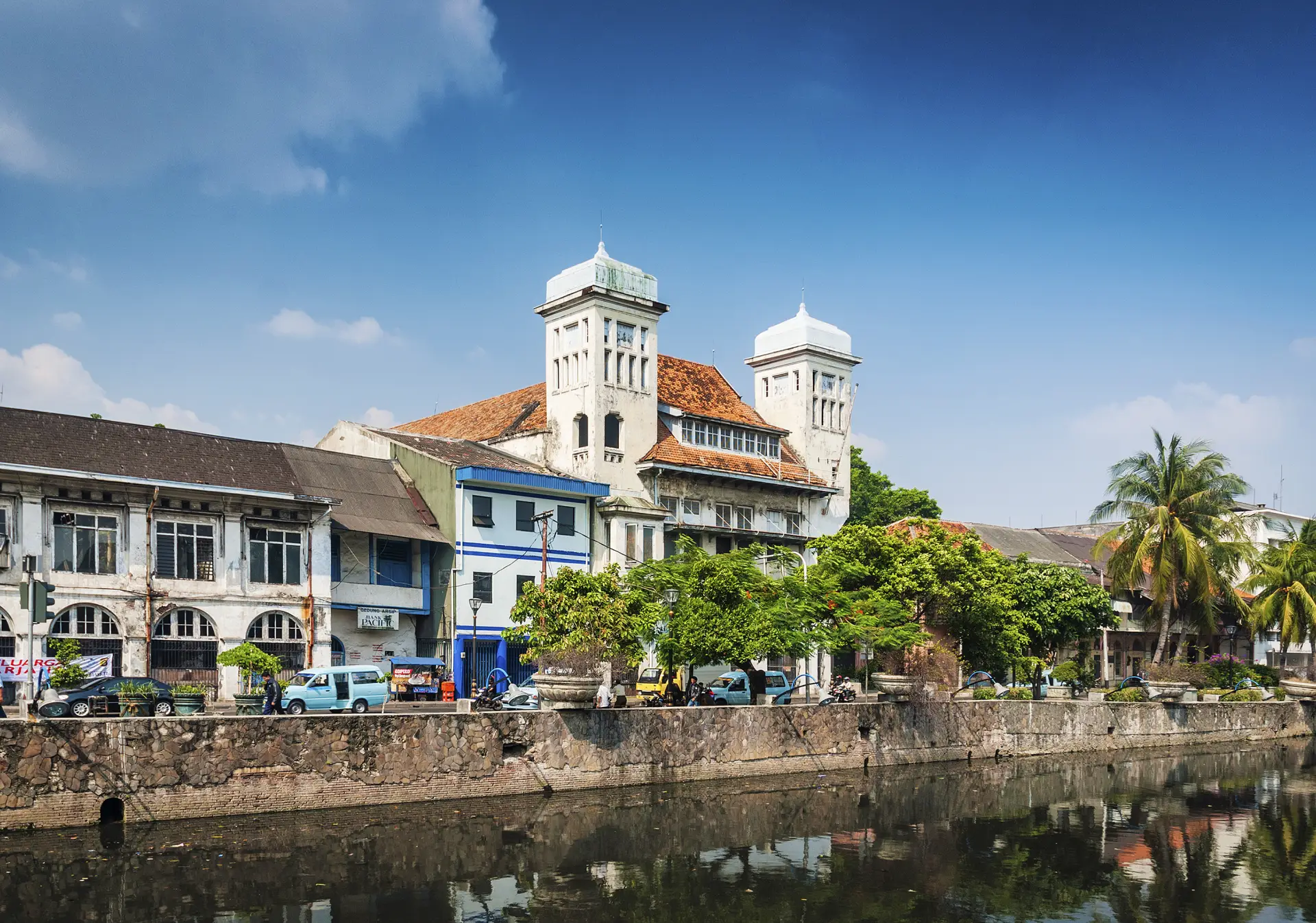
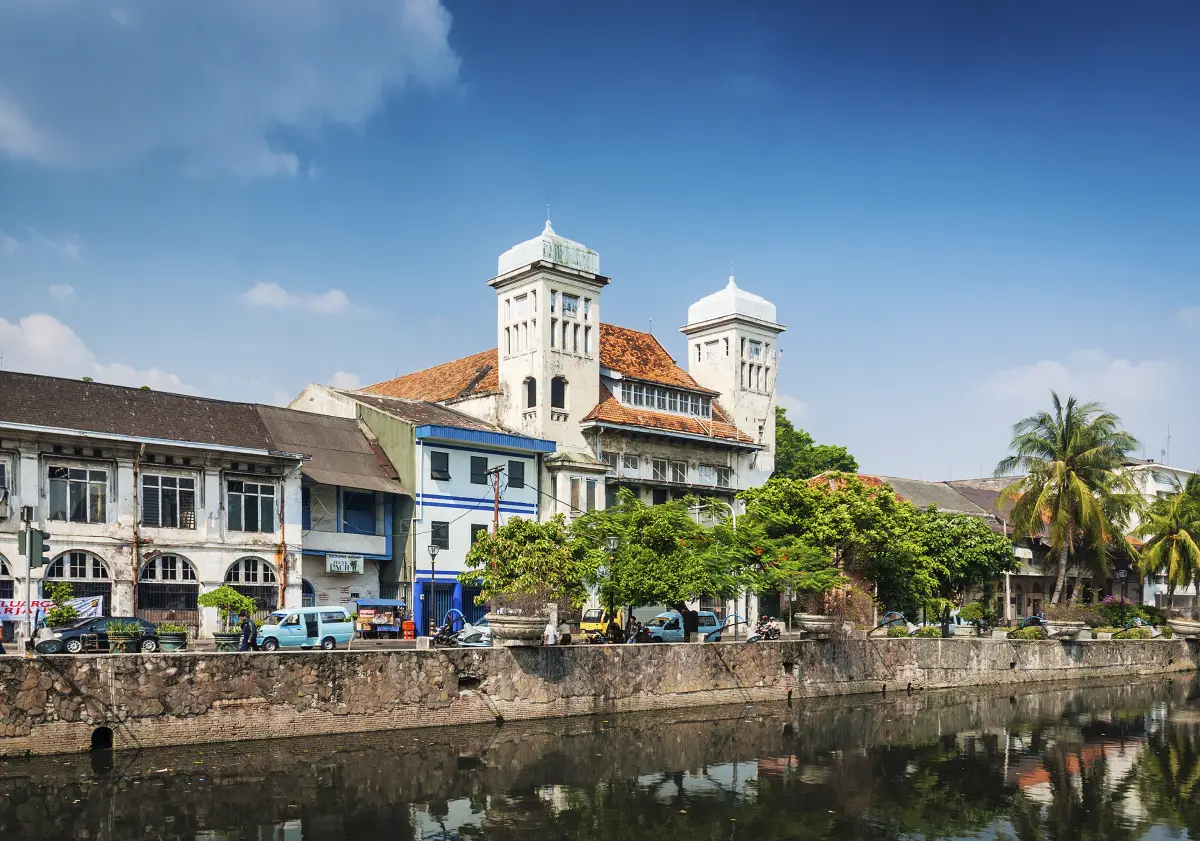
From the square, head north onto Jalan Kunir, a quieter street lined with old shophouses, small warehouses, and glimpses of Kali Besar canal. This stretch is less polished than the square but more atmospheric, with peeling facades and everyday Jakarta life mixing with colonial remnants. It's also where the walk starts to feel more local and less like a tourist stop, as you pass workshops, small eateries, and residents going about their day.
This middle stretch is a good point to slow down rather than rush toward the harbor. If you'd rather have a driver-guide narrate this transition and the history behind it, our private full-day Jakarta highlights tour covers this same corridor along with the city's other major landmarks.
The walk culminates at Sunda Kelapa, Jakarta's old harbor still used by traditional wooden pinisi schooners loading and unloading cargo by hand. Climb the small Menara Syahbandar watchtower nearby for a view over the docks and a sense of how this port once controlled trade routes through the archipelago. Give yourself at least 45 minutes here, more if you enjoy photographing the boats or chatting with dockworkers.
For a broader look at how this harbor fits into Jakarta's history alongside Kota Tua and Monas, our article on Jakarta's hidden side is worth a read before or after your walk.
If you'd like this entire route woven into a longer, professionally guided journey through Jakarta and beyond, our Best of Jakarta 5-day tour includes Old Batavia and Sunda Kelapa Harbor as part of a fuller itinerary.
Walking the whole route is entirely doable and arguably the best way to see it, but you have options if the heat or your feet start to protest. Becak (pedal rickshaws) still operate around Kota Tua and can carry you the final stretch toward Sunda Kelapa for a negotiated fare. Ojek online (motorbike ride-hailing apps) are widely available and useful if you want to skip a section and reserve your energy for the harbor. Neither is necessary on a cool morning, but both are worth knowing about for a hot afternoon.
Fatahillah Square has cafes and warungs facing the plaza, good for a coffee before you start. Along Jalan Kunir, look for small street stalls selling fried snacks, sweet iced drinks, and simple noodle dishes, ideal for a quick, inexpensive break. Near Sunda Kelapa, a handful of modest eateries serve seafood and rice dishes with a harbor view, a fitting way to end the walk before heading back by taxi or rideshare.
Walking directly takes about 20-25 minutes, but with stops at museums and the harbor market it's best to allow 3-5 hours for the whole loop.
Yes, daytime walking is generally safe and well-trafficked, though it's wise to keep valuables secure and avoid the harbor area alone after dark.
Start between 7-9 AM to enjoy cooler temperatures, softer light for photos, and fewer crowds at Fatahillah Square before tour groups arrive.
Yes, the route is straightforward with clear landmarks, though a guide adds historical context you won't get from signage alone, especially at Sunda Kelapa.
It's walkable, but a becak or ojek online ride is a comfortable option if it's hot or you've already covered a lot of ground on foot.
Closed, comfortable walking shoes, breathable clothing, and a hat or sunscreen are recommended since much of the route has little shade.
Ready to explore Old Batavia and Sunda Kelapa without worrying about logistics? Book our private full-day Jakarta highlights tour and let a local guide walk you through Kota Tua's history at a comfortable, well-paced rhythm.