Navigasi Utama
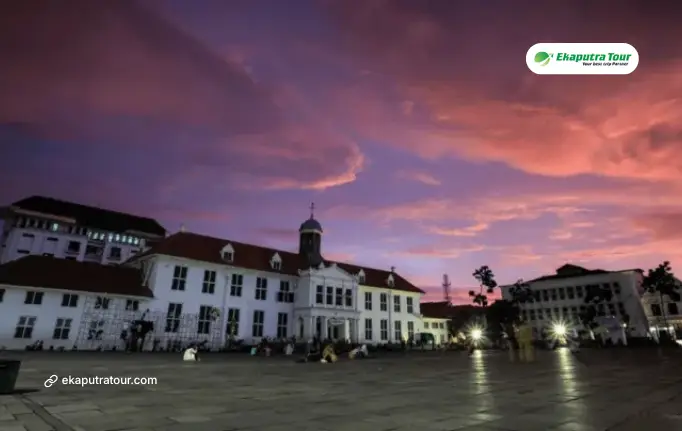
Walking into Kota Tua is like stepping back into a different century. This district, once known as "The Queen of the East,".
Served as the center of the Dutch colonial administration in Asia and remains a preserved sanctuary of 17th century European architecture in the heart of modern Jakarta.
For many international travelers, the transition from Jakarta’s gleaming skyscrapers to these weathered cobblestone squares can be striking.
To understand how this area fits into the bigger picture of the nation's capital, checking a Jakarta city tour guide is the best way to start your heritage journey.
Originally named Batavia, Kota Tua was the headquarters for the Dutch East India Company (VOC).
The grand buildings surrounding the central square were designed to mirror the canals and town halls of Amsterdam, serving as a powerful administrative hub for the global spice trade.

Understanding this history provides the necessary context for the main historical area of the city.
It allows you to see beyond the weathered facades and recognize the monumental impact this port once had on world commerce and the eventual birth of Indonesia.
The square is flanked by three major cultural institutions that are essential for any visitor.
The Fatahillah Museum (Jakarta History Museum) is housed in the former City Hall, while the Wayang Museum showcases the intricate world of Indonesian shadow puppetry.

Nearby, the Fine Arts and Ceramic Museum sits in a stunning building that once served as a colonial court.
Exploring these collections offers unique cultural experiences at sites and deep historical insights.
Each museum provides a different lens through which to view Jakarta's identity, from its artistic soul to its somber administrative past.
Directly facing Fatahillah Square is Café Batavia, a world-renowned restaurant housed in a 19th century building.
With its towering windows, vintage photographs, and classic jazz atmosphere, it offers a sophisticated glimpse into the lifestyle of the colonial elite.

Dining here is a central part of the complete Kota Tua guide experience.
It serves as a perfect midday break where you can enjoy traditional Indonesian delicacies or classic European dishes in an air-conditioned, historic setting.
Kota Tua is a photographer's dream. Beyond the grand buildings, the square is filled with vibrant "Onthel" bikes vintage bicycles painted in bright colors and accompanied by matching wide-brimmed hats which have become a signature icon of the district.

Renting these for a quick lap around the square is one of the most popular visit like locals do activities.
The contrast between the antique architecture and the colorful bicycles creates the perfect travel memory for your social media feed.
Kota Tua is perfectly positioned near other major landmarks that pre-date the colonial era.
To the south lies Glodok, Jakarta’s historic Chinatown, and a short distance to the north is the ancient Sunda Kelapa port where traditional wooden ships still dock.

Planning a visit to the Sunda Kelapa port or a trip to the nearby Chinatown allows you to see the three pillars of Jakarta's heritage in a single day.
This route demonstrates the maritime diversity that has always been the city's greatest strength.
Most museums in Kota Tua are open from 9:00 AM to 3:00 PM and are strictly closed on Mondays.
Entrance fees are very affordable for foreigners, typically ranging from 5,000 to 15,000 IDR per site, making it a budget-friendly destination.
For a stress-free arrival, using guided historical tours transport or taking the Commuter Line train to Jakarta Kota Station is highly recommended.
It drops you off just steps away from the square, allowing you to bypass the heavy city traffic.
To truly appreciate Kota Tua, one must see how it differs from the residential districts established later.
The narrow streets and European flair stand in stark contrast to the Menteng colonial buildings which represent a later, more garden-city style of Dutch planning.
Whether you choose a 3-day historical sites itinerary or a full-day historical tour, this district is essential.
If you want to maximize your time, consider hiring heritage tour operators to plan historical tour from start to finish.