Navigasi Utama
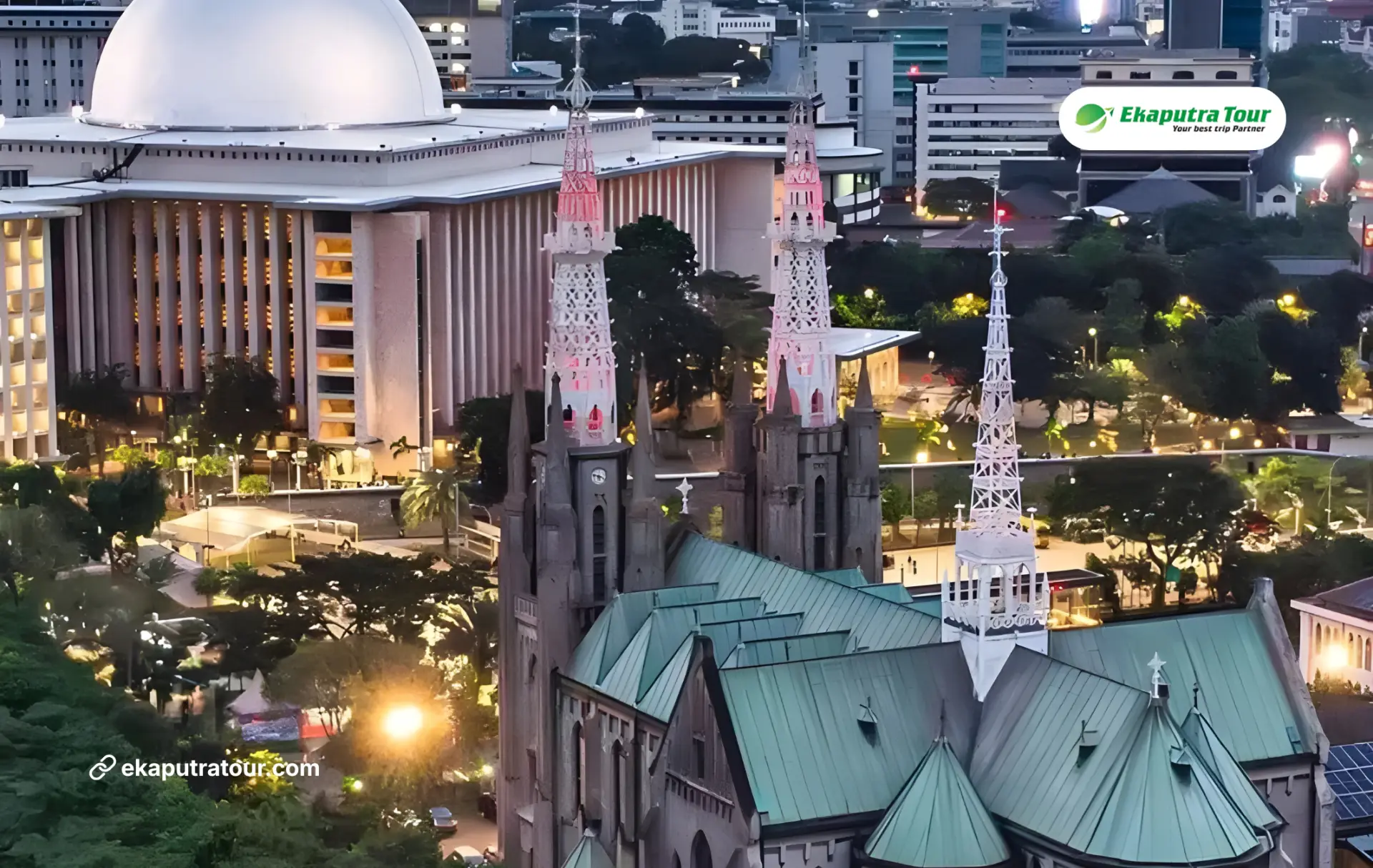
Jakarta is home to two of Indonesia’s most significant religious landmarks: Istiqlal Mosque and Jakarta Cathedral.
Located directly across from one another in the city center, these iconic sites attract visitors not only for their impressive architecture but also for what they represent.
Together, they stand as a symbol of Indonesia’s religious diversity and commitment to mutual respect.
For travelers, visiting these landmarks offers an opportunity to gain a deeper understanding of local culture and traditions. However, because both remain active places of worship, it is important to follow proper etiquette during your visit.
Understanding a few basic customs beforehand will help ensure a respectful and meaningful experience for both visitors and worshippers.
Istiqlal Mosque is the largest mosque in Southeast Asia and one of Indonesia’s most recognizable landmarks.
Built to commemorate the nation's independence, it serves as an important center of worship and a symbol of national pride.
Its vast prayer hall, impressive dome, and modern architectural design draw visitors from around the world.
Just across the street stands Jakarta Cathedral, a stunning neo-Gothic church that has been an important part of the city's religious and cultural landscape for more than a century.

Its soaring spires, stained-glass windows, and intricate details make it one of Jakarta’s most photographed historic buildings.
The unique location of these two religious sites facing each other has become a powerful representation of harmony between faith communities.
Many travelers choose to visit both landmarks in a single trip to better appreciate this aspect of Indonesian culture.
Modest attire is expected when visiting both Istiqlal Mosque and Jakarta Cathedral. As places of worship, visitors should wear clothing that covers the shoulders and knees out of respect for local customs and religious practices.
Lightweight long-sleeved shirts, loose trousers, maxi skirts, and dresses below the knee are all suitable choices. Clothing that is overly revealing, including sleeveless tops and short shorts, should be avoided.
Women entering designated prayer areas at Istiqlal Mosque are generally expected to wear a headscarf.

Visitors who do not bring one may be able to borrow appropriate coverings provided by the mosque. Wearing a headscarf demonstrates respect for local traditions and helps maintain the atmosphere of the sacred space.
Female visitors should also be aware that certain prayer areas may have specific guidelines regarding menstruation. Since policies and practices may vary, it is always best to follow instructions provided by mosque staff or official guides during your visit.
Taking the time to dress appropriately not only helps visitors comply with site requirements but also shows consideration for those who use these spaces for worship.
Respectful behavior is just as important as appropriate clothing when visiting religious sites.
At Istiqlal Mosque, visitors are required to remove their shoes before entering designated prayer areas.
Shoe storage facilities are available, and staff members can direct visitors to the appropriate location before entering the mosque.

Inside both landmarks, visitors should keep conversations quiet and avoid creating unnecessary noise. Mobile phones should be switched to silent mode, particularly during prayer times or religious services.
It is also important to be mindful of worshippers. Avoid walking through active prayer areas, interrupting ceremonies, or gathering in locations that may block access for people attending services. Visitors should remain within public areas and follow any instructions provided by staff, security personnel, or guides.
Even simple gestures such as speaking softly, waiting patiently, and being aware of your surroundings contribute to a respectful atmosphere for everyone.
Photography is one of the highlights of visiting Istiqlal Mosque and Jakarta Cathedral. From grand architectural details to beautiful interior spaces, both landmarks offer countless opportunities for memorable photographs.
However, visitors should remember that these are active places of worship rather than tourist attractions alone.
Photography is generally permitted in visitor areas, but it should never interfere with religious activities. Flash photography should be avoided during prayer sessions, Mass, or other ceremonies, as it may distract worshippers.

Visitors should also be respectful when photographing people. Some worshippers may not feel comfortable appearing in photographs while praying or attending services.
When in doubt, focus on architectural features or ask permission before taking close-up photos of individuals.
By prioritizing respect over getting the perfect image, visitors can capture meaningful memories while helping preserve the peaceful atmosphere of these sacred sites.
While independent visits are certainly possible, many travelers find that exploring Jakarta’s historic landmarks with a local guide provides a deeper understanding of the city’s culture and traditions.
A knowledgeable guide can explain the symbolism behind architectural features, share stories about the history of both sites, and provide useful context that may not be immediately apparent to first-time visitors. They can also help visitors navigate local customs and etiquette with confidence.
Those interested in exploring beyond the city center may also choose to combine religious landmarks with traditional architecture, cultural attractions, and other historical sites throughout Jakarta.
Experiencing these places together often provides a more complete picture of Indonesia’s rich heritage and cultural diversity.
Whether joining a half-day excursion or a more comprehensive city experience, guided visits allow travelers to spend less time planning logistics and more time appreciating the stories behind the destinations they visit.
Visiting Istiqlal Mosque and Jakarta Cathedral offers far more than an opportunity to admire beautiful buildings.
These landmarks provide valuable insight into Indonesia’s history, religious traditions, and spirit of coexistence.
By dressing modestly, respecting local customs, remaining mindful during worship activities, and following visitor guidelines, travelers can enjoy a more rewarding experience while showing consideration for the communities that call these places sacred.
For many visitors, the most memorable part of exploring these landmarks is not only their architecture but also the message they represent. Standing across from one another in the heart of Jakarta, Istiqlal Mosque and Jakarta Cathedral continue to serve as enduring symbols of respect, understanding, and religious harmony in Indonesia.