Navigasi Utama
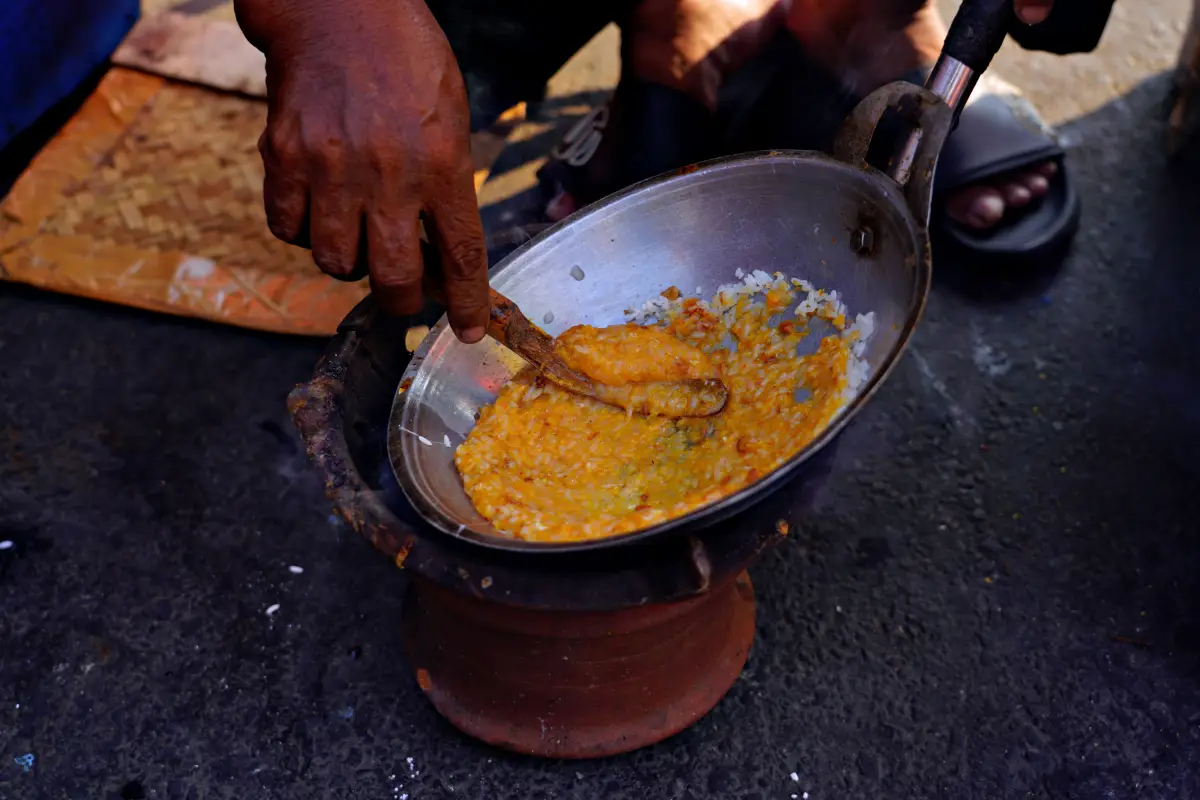
Jakarta's food scene is often stolen by flashy fusion restaurants and viral street stalls, but tucked beneath all that noise is something far more meaningful: the original cuisine of the city's native people, the Betawi. If you want to understand Jakarta beyond its skyscrapers and traffic, traditional Betawi food Jakarta offers one of the most honest windows into the capital's history and identity. This guide walks you through what makes Betawi cuisine special, the dishes worth chasing, and exactly where to find them.
The Betawi people are considered the indigenous inhabitants of Jakarta, descended from a mix of Malay, Sundanese, Javanese, Chinese, Arab, and even Portuguese and Dutch settlers who intermingled in the port city over centuries. That cultural melting pot shows up directly on the plate. Betawi cuisine dishes tend to be rich, often coconut-milk based, layered with aromatic spices, and unafraid of bold combinations like sweet, sour, and savory in a single bowl.
Unlike some regional Indonesian cuisines that lean heavily on fiery chili, Betawi food is generally more balanced and approachable for first-time visitors, while still carrying deep, complex flavor from spice pastes, fried shallots, and fermented condiments. It's comfort food with history baked in.
There are a handful of dishes that define Betawi cuisine and deserve a spot on every food itinerary in the capital.
If you're planning a wider culinary exploration of the city, pairing this list with a look at the best Padang food in Jakarta gives you a nice contrast between native Betawi flavors and the transplanted richness of West Sumatra.
If there's one place that captures traditional Betawi food Jakarta in its most authentic form, it's Setu Babakan Culinary Village in South Jakarta. Built around a peaceful lake, this cultural village was established specifically to preserve Betawi heritage, from traditional wooden houses and silat performances to dozens of food stalls run by locals who have been cooking these recipes for generations.
Walking through Setu Babakan feels like stepping into a version of Jakarta that existed long before the high-rises. You'll find kerak telor being made fresh over charcoal, bowls of soto Betawi served with crackers, and sweet snacks like dodol and kue cucur sold from small stands along the water. It's relaxed, family-friendly, and genuinely one of the best half-day trips for food-focused travelers.
Beyond Setu Babakan, some of the city's oldest neighborhoods still hold onto their culinary roots. Menteng and Condet, in particular, are known for warungs that have passed recipes down through families for decades, often serving soto Betawi or nasi uduk that locals swear by over anything found in a mall food court.
These smaller, older establishments tend to prioritize flavor over presentation, and that's exactly the point. If you're serious about finding where to eat Betawi food in Jakarta, ask locals or your guide for their personal favorite warung rather than relying purely on online rankings, since the best spots are often unmarked or tucked down side streets.
For travelers who prefer a guided approach that blends food with shopping and market culture, a structured culinary day out can take the guesswork out of hunting down authentic spots.
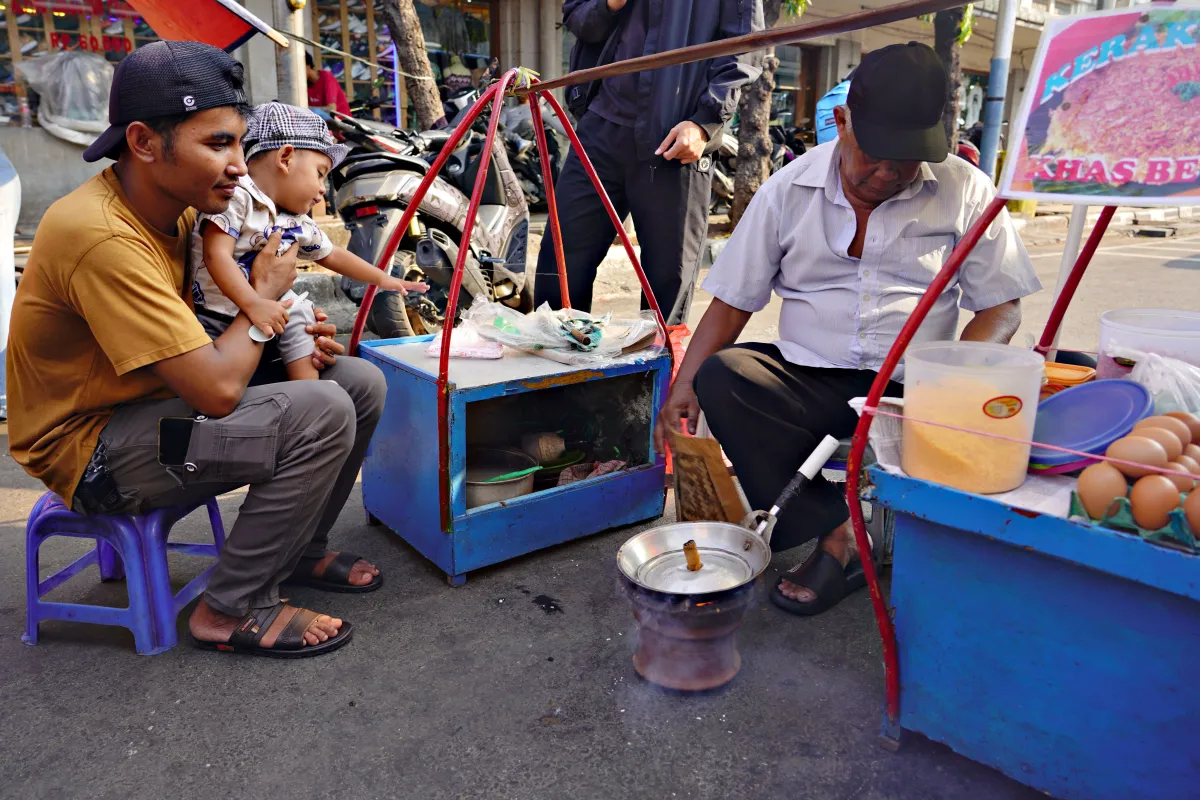
Street food is where Betawi cuisine really shows its playful side. Beyond the sit-down dishes, keep an eye out for these snacks as you wander the city:
These snacks pair naturally with a broader wander through the city's markets, which is exactly the territory covered in our guide to traditional markets in Jakarta.
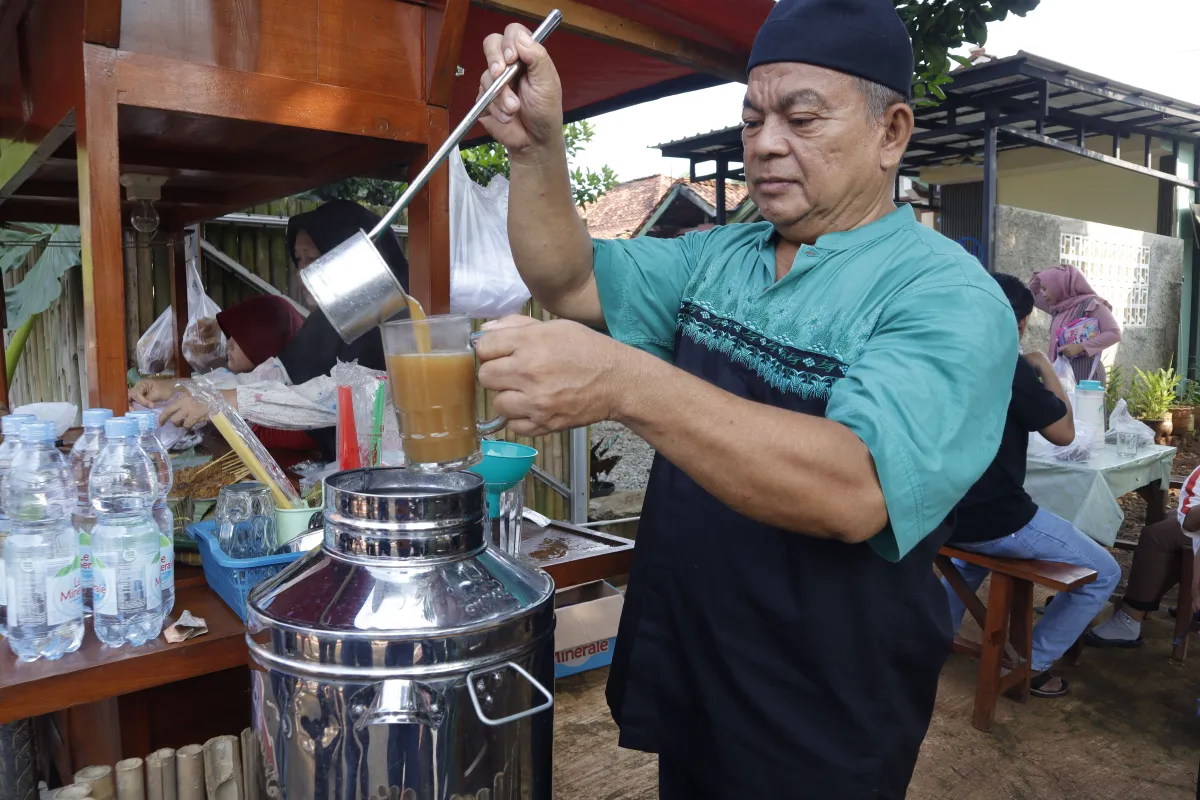
No exploration of Betawi cuisine dishes is complete without the sweet side of the table. Bir Pletok, despite its name suggesting beer, is a non-alcoholic spiced drink made from ginger, cinnamon, and other warming spices, traditionally dyed red with secang wood. It's the perfect antidote to Jakarta's humidity.
On the dessert side, dodol Betawi, a chewy, slow-cooked confection made from glutinous rice flour, coconut milk, and palm sugar, is a festive treat often made during celebrations. Kue cucur, a fried rice-flour pancake with a crispy edge and soft, gooey center, is another beloved sweet snack found across Betawi food stalls.
A few practical pointers will help you get the most out of your Betawi food adventure:
Curious travelers who also want the cultural context behind these dishes will enjoy reading more in our Jakarta culture and traditional house tour itinerary, which pairs nicely with a day of Betawi food exploration.
Soto Betawi, a rich coconut-milk beef soup, and kerak telor, a spiced egg-and-rice omelet, are the two dishes most associated with Betawi cuisine and Jakarta's identity.
Yes, most traditional Betawi dishes are halal since Betawi culture is predominantly Muslim, though it's always wise to confirm at smaller street stalls.
Setu Babakan Cultural Village, along with older neighborhoods like Menteng and Condet, are the best places to find multi-generational Betawi warungs and food stalls.
Betawi food is Jakarta's native cuisine, often coconut-based and mildly spiced, while Padang food comes from West Sumatra and is known for its rich, chili-heavy curries served buffet-style.
Yes, it combines an authentic Betawi village atmosphere with dozens of food stalls, making it worthwhile even beyond the culinary experience.
Try kerak telor, toge goreng, asinan Betawi, and dodol Betawi for a mix of savory and sweet street food flavors.
Ready to taste Jakarta's most authentic flavors without the guesswork? Book the Jakarta Full-day Shopping & Food Culinary Tour with Ekaputra Tour and let a local guide lead you straight to the city's best traditional Betawi food.