メインナビゲーション
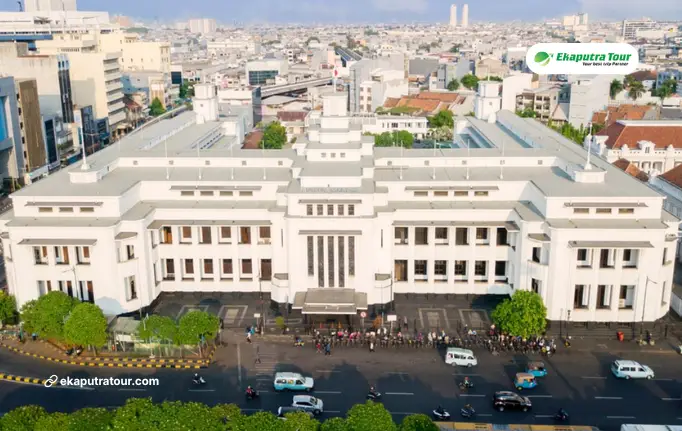
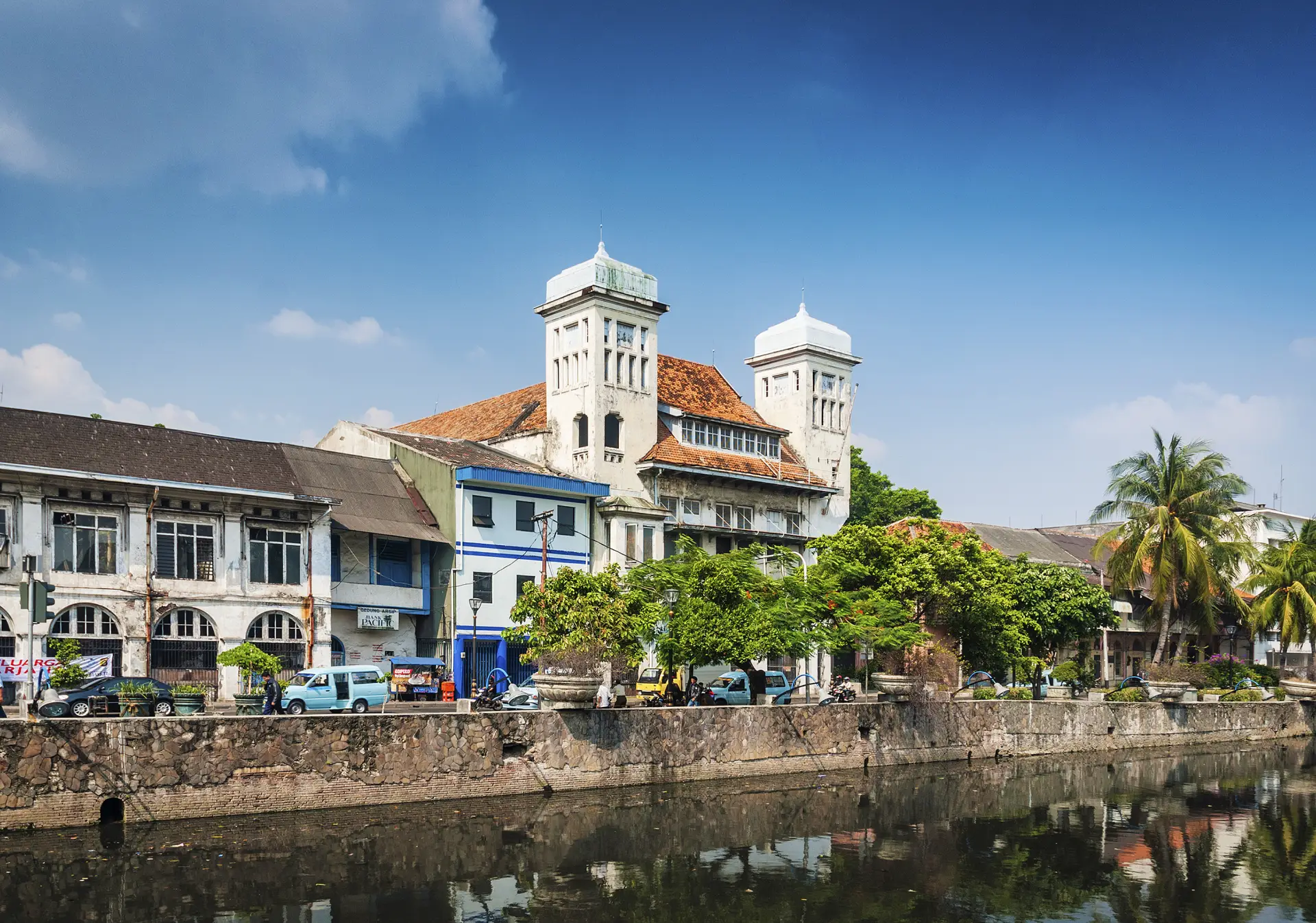
Jakarta's Kota Tua district is lined with colonial-era buildings, but few tell a story as specific and compelling as Museum Mandiri.
While most visitors to Old Town Jakarta head straight to Fatahillah Square, this former Dutch banking headquarters quietly holds one of the country's most underrated collections: a full chronological record of Indonesia's financial history, preserved inside a landmark Art Deco building that has stood since 1929.
This guide covers everything you need before visiting and how to combine your trip with a wider Kota Tua itinerary.
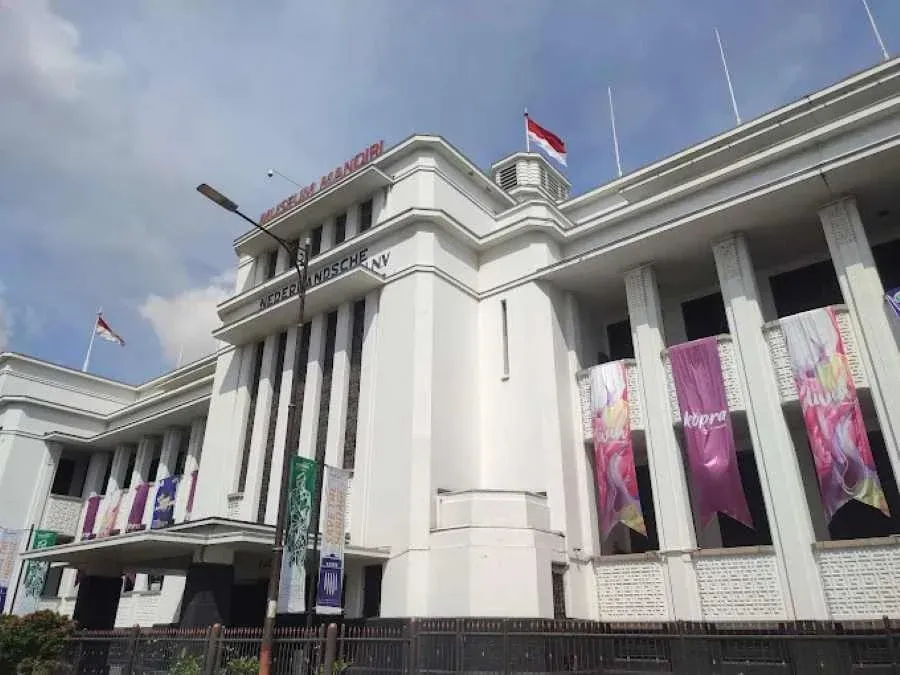
Museum Mandiri's story begins in 1929, when the building was commissioned as the headquarters of Nederlandsch-Indische Handelsbank (NIHB), a Dutch commercial bank operating across the Netherlands East Indies.
During the colonial era, NIHB was one of the most influential financial institutions in the archipelago, handling trade financing, foreign exchange, and commercial credit for Dutch and indigenous merchants alike.
The decision to build a grand permanent headquarters in Batavia (present-day Jakarta) reflected the bank's ambitions and the overall economic confidence of the late 1920s, just before the Great Depression reshaped the global financial order.
Following Indonesia's independence in 1945, the building changed ownership and function multiple times, each transition mirroring the country's broader economic and political shifts.
By the mid-20th century, the property had been repurposed as the central office of Bank Ekspor Impor Indonesia (Bank Exim), a state-owned institution tasked with facilitating the young republic's export and import financing needs.
The building served this role for several decades, accumulating decades of institutional memory within its walls.
In 1998, following the merger that created Bank Mandiri, the historic building was officially converted into Museum Mandiri.
Rather than demolishing or renovating the interiors beyond recognition, Bank Mandiri took the decision to preserve the original fittings and transform the space into a museum dedicated to Indonesia's banking heritage.
This was a significant cultural commitment. The museum now functions as both a public educational institution and a living record of how modern banking took root in the Indonesian archipelago, from colonial trade finance to the contemporary state banking system.
Museum Mandiri is widely regarded as one of the finest surviving examples of late-colonial Dutch architecture in Jakarta.
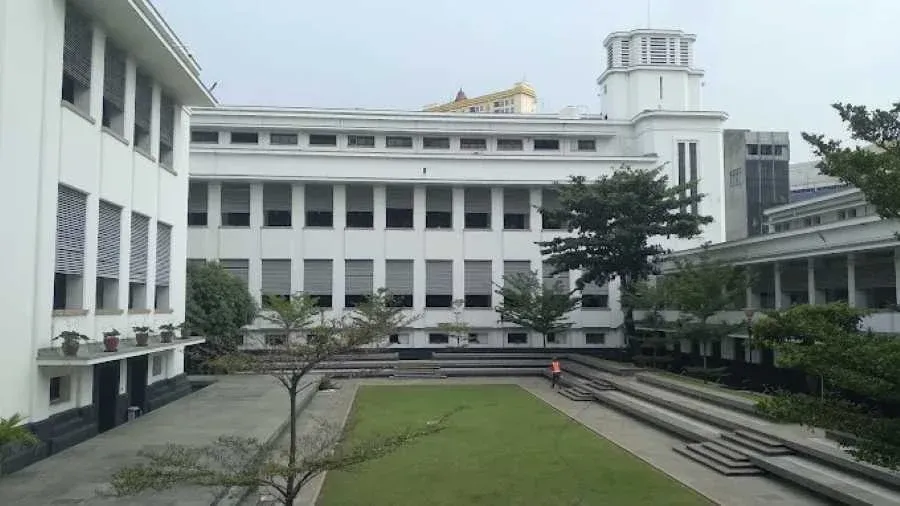
Understanding what to look for when you walk through the building adds significant depth to the experience.
The Exterior: Symmetry and Colonial Authority
The building's facade follows a strict symmetrical composition, a deliberate architectural choice that was meant to project authority, permanence, and financial credibility.
Tall rectangular windows, a clean horizontal cornice line, and a robust concrete structure are all characteristic of the Art Deco movement that swept through Europe and its colonial territories during the 1920s and 1930s.
Unlike some other colonial buildings in Kota Tua that have been altered over the years, Museum Mandiri retains its original exterior profile almost intact, making it a rare and genuine example of the period.
The Interior: Where Craftsmanship Tells the Story
Step inside and the scale of the building's original ambition becomes clear. Grand hallways flanked by towering columns create a sense of institutional gravitas that was entirely intentional.
Banks of this era were built to look impregnable and important, and Museum Mandiri delivers exactly that impression.
Key interior features worth noting include:
Original teller counters: The carved wooden counters with metal grilles and polished brass fittings remain in place. These are not reproductions.
They are the actual counters where financial transactions took place during the Dutch colonial period, later maintained through the Bank Exim years.
Ornate ironwork and stained glass: The decorative metalwork on staircases and balustrades showcases the 1920s aesthetic sensibility, where functional architecture was expected to carry artistic weight.
The stained glass elements introduce color and light in ways that feel deliberately composed.
Marble floors and spiral staircases: The polished marble flooring and the sweeping staircases are among the most photographed elements in the museum.
They are also some of the best-preserved, giving a clear picture of the quality of materials used during construction.
Vintage chandeliers: The original lighting fixtures reinforce the atmosphere and help visitors understand the scale of investment that went into this building nearly a century ago.
For photography enthusiasts, Museum Mandiri offers exceptional opportunities throughout.
The combination of natural light through tall windows, original surfaces, and strong architectural geometry makes nearly every room a strong compositional subject.
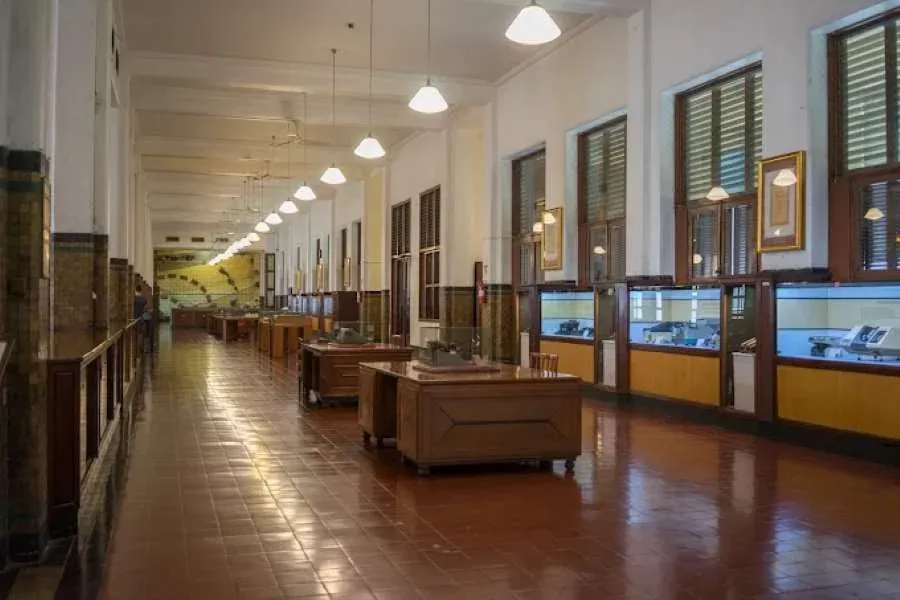
Museum Mandiri's collection is organized thematically across multiple floors, covering the full arc of Indonesia's financial history. Here is a detailed breakdown of what to expect.
This collection showcases the physical tools that made early 20th-century banking possible: cast-iron typewriters, mechanical adding machines, manual cash registers, and ledger books.
Each item is a reminder that banking before digital systems was an intensely manual, paper-driven process requiring precision and a large workforce.
The antique equipment section is especially interesting for visitors who want to understand how clerical banking work was done before computers existed.
The mechanical calculators in particular are impressive in their complexity and craftsmanship.
Among the most memorable experiences at Museum Mandiri is the opportunity to walk inside original Dutch-era bank vaults.
These vaults feature heavy iron doors with multi-point locking mechanisms, thick steel walls, and ventilation systems that were considered state-of-the-art security technology in the early 20th century.
Standing inside the vault provides a tangible sense of how financial institutions approached asset security before electronic surveillance, biometrics, and digital access controls existed.
The sheer physical mass of the doors and walls communicates the level of trust that clients were expected to place in these structures.
The numismatic collection is one of the highlights for history enthusiasts. It traces the full lineage of currency used in the Indonesian archipelago from Dutch colonial scrip through the Japanese occupation currency issued during World War II, early Republic of Indonesia banknotes, and the evolution of the Rupiah to its current form.
Each currency series reflects the political circumstances of its era. The transition from Dutch guilder-denominated notes to Rupiah-denominated currency, for example, is not just a monetary story. It represents a declaration of economic sovereignty by the new republic.
This life-size reconstruction of a mid-century banking hall is one of the most interactive elements in the museum.
The replica includes a fully furnished manager's office, client-facing teller stations, and back-office desk arrangements, all furnished with period-accurate equipment.
Visitors can examine how spatial hierarchy was organized in a colonial-era bank: the physical layout deliberately separated different levels of staff and reflected the social structures of the time.
This exhibit is particularly well-suited for students studying economic or social history.
For those with an interest in the documentary side of financial history, Museum Mandiri houses original ledgers, transaction records, correspondence files, and banking licenses from the Dutch colonial period through the early decades of Indonesian independence.
These documents are primary historical sources. They record actual economic activity: trade financing, lending decisions, foreign exchange transactions, and the mechanics of capital allocation in the colonial economy.
Access to original records of this type in a public museum context is unusual and genuinely valuable.
Beyond currency, Museum Mandiri maintains a collection of financial stamps, bond certificates, and share documents from the colonial period.
These items, while niche in appeal, offer a broader picture of how capital markets and state finance were organized during the late colonial era and early Indonesian republic.
A visit to Museum Mandiri naturally fits within a broader exploration of Jakarta's history and culture.
For visitors who want a structured, guided experience that connects Kota Tua with other key Jakarta landmarks, the Jakarta City Tour by Ekaputra Tour offers a convenient and informative option.
The program is led by experienced local guides and covers a curated selection of Jakarta's most significant historical, cultural, and modern attractions in a single day.
Whether you are visiting Jakarta for the first time or looking to deepen your understanding of a city you have visited before, having a knowledgeable guide adds context that is difficult to replicate independently.
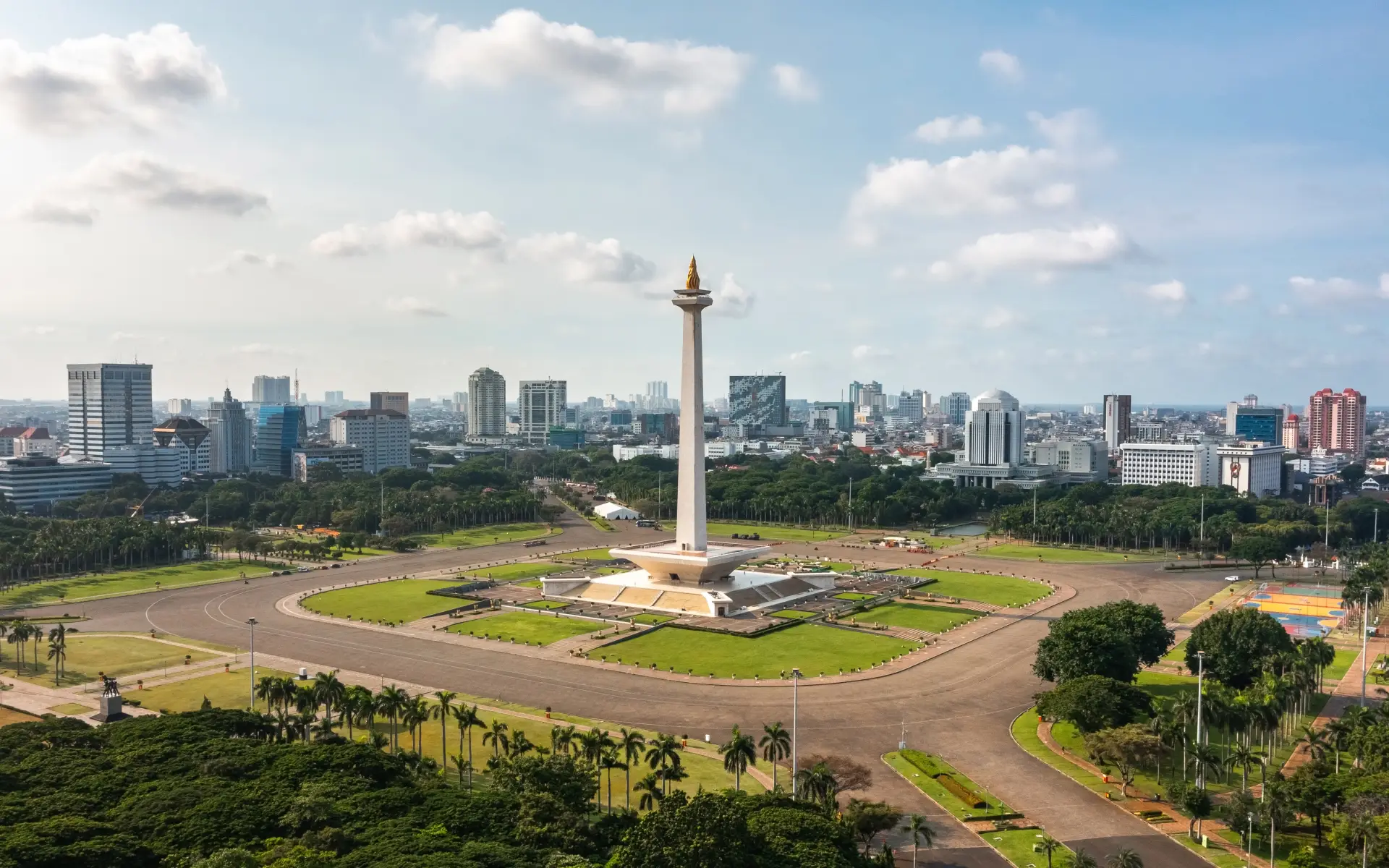
The tour covers locations including the National Monument (Monas), Sunda Kelapa historic harbor, Kota Tua, and other key sites, giving visitors a complete picture of how Jakarta has developed from a Dutch colonial trading port to one of Southeast Asia's largest and most dynamic cities.