メインナビゲーション
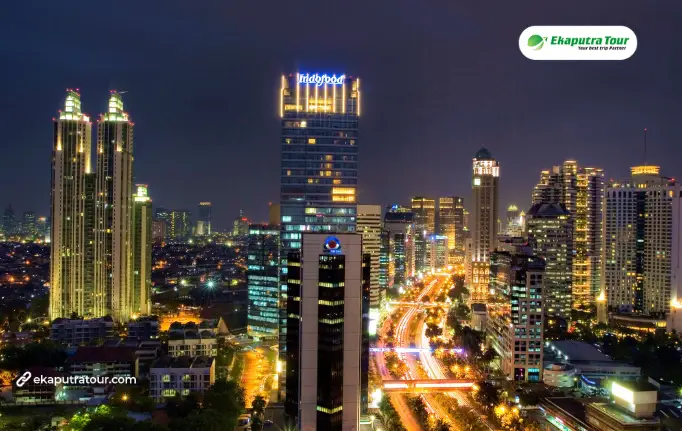
Stepping into Central Jakarta (Jakarta Pusat) puts you directly where Indonesia’s national story is displayed in stone, steel, and civic space. While other parts of the capital cater to coastal shipping, colonial heritage, or sprawling residential suburbs, Central Jakarta is where the institutions, monuments, and avenues that define modern Indonesia converge.
Central Jakarta is best known for housing the iconic Monas (National Monument) and Merdeka Square, the seat of Indonesia's national government, major national museums, historic religious sites like Istiqlal Mosque and Jakarta Cathedral, and the gleaming commercial skyscrapers along Jalan M.H. Thamrin and Jalan J.S. Sudirman.
Rather than serving merely as a financial core or a tourist district, Central Jakarta functions as the symbolic center of the republic—a place where post-independence architectural scale meets street-level culinary traditions and high-end urban retail.
For first-time international visitors, Central Jakarta is defined by several core features:

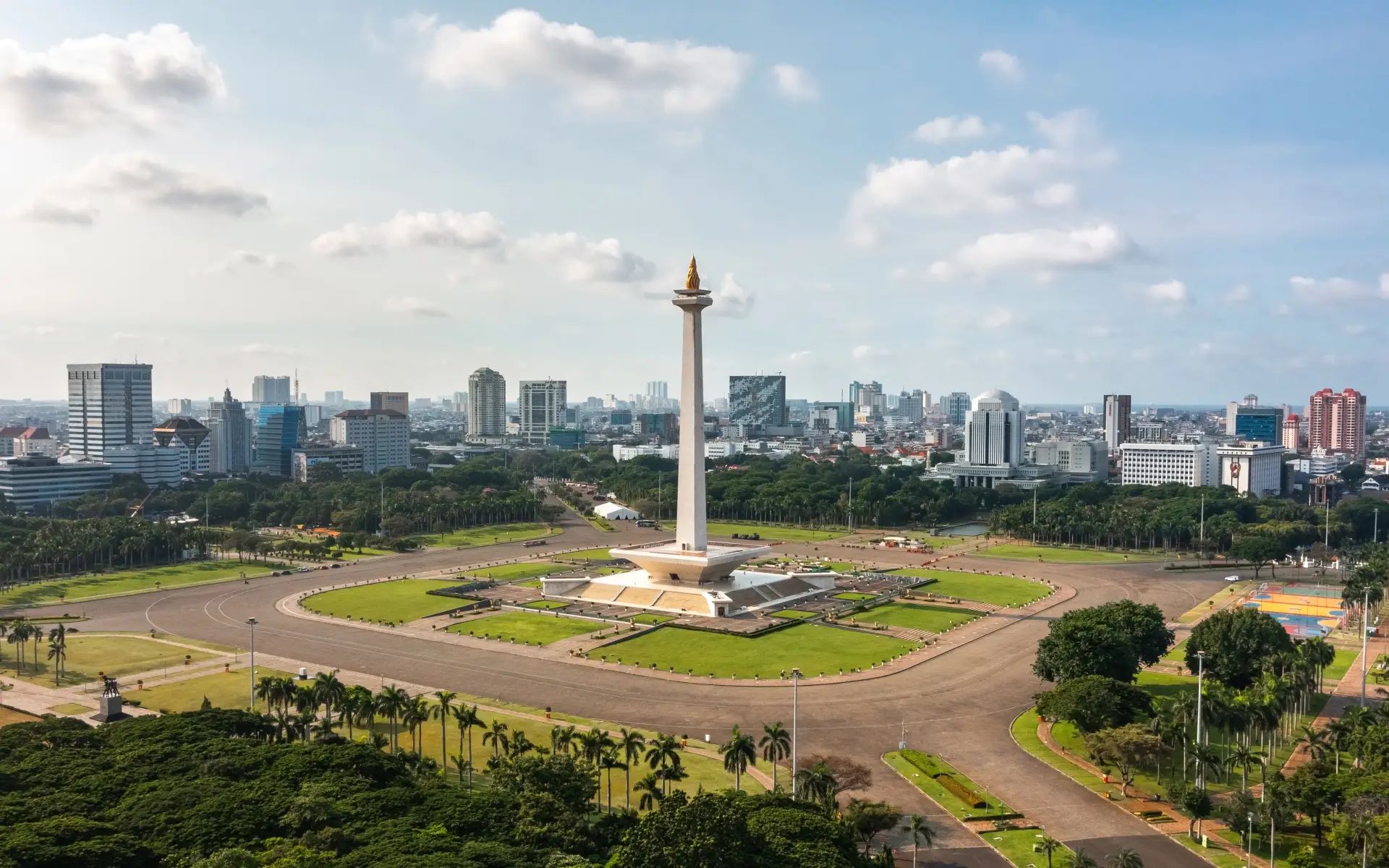
No single structure defines Central Jakarta more than Monas (Monumen Nasional). Rising 132 meters above Merdeka Square (Lapangan Merdeka), this marble obelisk topped with a gold-leaf flame was commissioned by Indonesia’s first president, Sukarno, to symbolize the nation’s independence struggle.
Merdeka Square itself is one of the largest public squares in the world, spanning roughly 75 hectares. The vast open lawns surrounding the monument serve as an urban gathering space where locals jog, hold public events, and escape the high-rise concrete of the surrounding city. Beneath the monument lies the National History Museum, housing a series of three-dimensional dioramas that detail the Indonesian archipelago's history from prehistoric times through the anti-colonial resistance to the modern era.
Visiting Monas gives travelers a immediate sense of how Indonesia views its own statehood: expansive, monumental, and deliberately grand in vision.
Surrounding Merdeka Square is the administrative engine of the Indonesian state. Central Jakarta hosts the nation's core executive, judicial, and diplomatic infrastructure.
While tourists rarely tour the interiors of these government offices, walking or driving along the broad perimeter avenues reveals mid-20th-century civic architecture and immaculate public lawns. This concentration of government infrastructure is why Central Jakarta remains the primary stage for national parades, political demonstrations, and diplomatic state visits.
Central Jakarta contains the highest concentration of cultural and historical museums in the capital. These institutions record the cultural diversity, struggle for independence, and artistic heritage of the world's fourth most populous nation.
Central Jakarta is home to two of the country’s most significant places of worship, positioned directly across from one another on Jalan Veteran: Istiqlal Mosque and Jakarta Cathedral.
The proximity of these two sites is not accidental. A subterranean tunnel, the "Tunnel of Friendship" (Trowongan Silaturahmi), connects the grounds of the mosque and cathedral, serving as a physical representation of Indonesia's national motto, Bhinneka Tunggal Ika (Unity in Diversity).
Moving south from Merdeka Square leads onto Jalan M.H. Thamrin and Jalan J.S. Sudirman, the major arterial avenues that form Jakarta’s main business corridor.
This financial spine is defined by towering glass skyscrapers, multi-national corporate headquarters, international luxury hotels, and high-density commercial developments. At the intersection of Thamrin and Sudirman lies Bundaran HI (Hotel Indonesia Roundabout), featuring a large ornamental water basin and the Selamat Datang Monument (Welcome Monument), built in 1962 to greet visiting athletes for the fourth Asian Games.
On weekends, particularly during Sunday morning Car-Free Days, this entire multi-lane avenue is closed to motor vehicles, turning the commercial core into a vast pedestrian park filled with cyclists, runners, and street food vendors.
Shopping in Central Jakarta ranges from international high-fashion flagship stores to multi-story retail hubs dedicated to indigenous craftsmanship and street food markets.
Beyond government plazas and commercial avenues, Central Jakarta contains Menteng, one of the city's oldest planned residential neighborhoods.
Developed during the early 20th century as a garden suburb, Menteng features wide, tree-lined avenues, Art Deco residential architecture, quiet public parks (such as Taman Suropati and Taman Menteng), foreign ambassadorial residences, and boutique dining options. Menteng offers a tranquil, walkable environment that contrasts sharply with the surrounding urban traffic gridlock.
Central Jakarta is also home to major commercial market hubs that drive regional commerce.
These high-volume commercial centers showcase the everyday economic hustle of Jakarta's resident working population.
Central Jakarta is generally considered the best base for first-time visitors to the capital due to its central location, transport connectivity, and access to key sights.
| Advantages | Considerations |
| High concentration of major landmarks & museums | Heavy road traffic during weekday peak hours |
| Direct access to MRT Jakarta rail line & TransJakarta | Long walking distances between major blocks |
| Wide selection of luxury, mid-range, and business hotels | High summer heat and humidity during mid-day |
| Diverse dining options from street stalls to fine dining | Requires using footbridges or underpasses to cross avenues |
To explore Central Jakarta efficiently without getting stuck in traffic jams, combine attractions based on geographic proximity.
While Central Jakarta appears compact on paper, the physical scale of building blocks, multi-lane roads, and tropical heat makes pure walking impractical for long distances.
To understand where Central Jakarta fits within the wider metropolis, compare its characteristics with the capital's other four administrative cities:
| District | Primary Identity & Features |
| Central Jakarta (Jakarta Pusat) | Civic & Symbol Core: National monuments, government institutions, museums, high-end commercial avenues, and interfaith landmarks. |
| West Jakarta (Jakarta Barat) | Historic & Commercial Trade: Kota Tua (Old Town), Chinatown (Glodok), historic Dutch colonial squares, and electronics trade hubs. |
| South Jakarta (Jakarta Selatan) | Lifestyle & Residential: Hip dining corridors (Senopati, Kemang), leafy residential enclaves, boutique cafés, and nightlife. |
| North Jakarta (Jakarta Utara) | Coastal & Entertainment: Maritime ports, seafood markets, historic harbour areas (Sundak Kelapa), and the Ancol coastal resort area. |
| East Jakarta (Jakarta Timur) | Residential & Transit: Broad residential neighborhoods, industrial parks, domestic airport connections (Halim Perdanakusuma), and cultural parks (Taman Mini Indonesia Indah). |
If you are planning a tight schedule in the city, see our detailed guide: 24 Hours in Jakarta.
Timing your sightseeing effectively makes navigating Central Jakarta far more enjoyable.
Central Jakarta is not merely a geographic location on a map; it is where the Indonesian state presents its national identity to the world. By combining large civic spaces, historic museums, diverse places of worship, and modern corporate towers, Central Jakarta compresses the story of modern Indonesia into a single district. For any traveler looking to understand what makes Jakarta the capital of Southeast Asia’s largest economy, Central Jakarta is the place to start. Explore Central Jakarta with Eka Putra Tour. Whether you are visiting for a single day or looking for a curated multi-day heritage itinerary, our expert local guides and comfortable private transport take the stress out of navigating the capital