Main Navigation
If you've been searching for a clear picture of what a kawah putih day trip from jakarta what to expect actually involves, this guide walks through the whole experience: the drive, the first look at the crater, the shifting colors, the weather, the crowds, and whether it lives up to the photos you've seen online.
Getting to Kawah Putih means heading south into the highlands beyond Bandung, and the drive itself is part of the experience. Expect roughly 2 to 2.5 hours from Jakarta to the Bandung area on a good day, followed by a final stretch climbing into the hills of Ciwidey. The scenery shifts gradually from city traffic to rice paddies and tea plantations as the road gains elevation, and the temperature drops noticeably the higher you go. Most guided itineraries schedule an early departure from Jakarta, which helps beat both traffic and the midday crowds at the crater itself.
For travelers who want the logistics fully handled, including pickup, an air-conditioned vehicle, and a driver who knows the route well, joining a structured tour rather than self-driving tends to make the day noticeably smoother. If you're still comparing routes and timing options, this detailed breakdown of routes and costs is worth a look before booking.
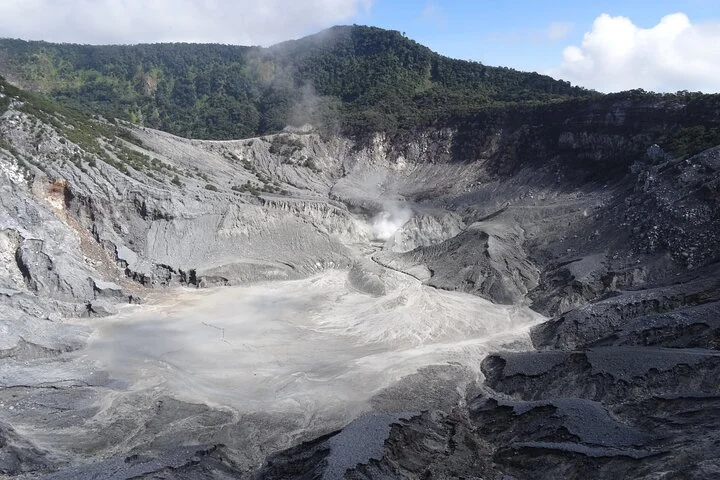
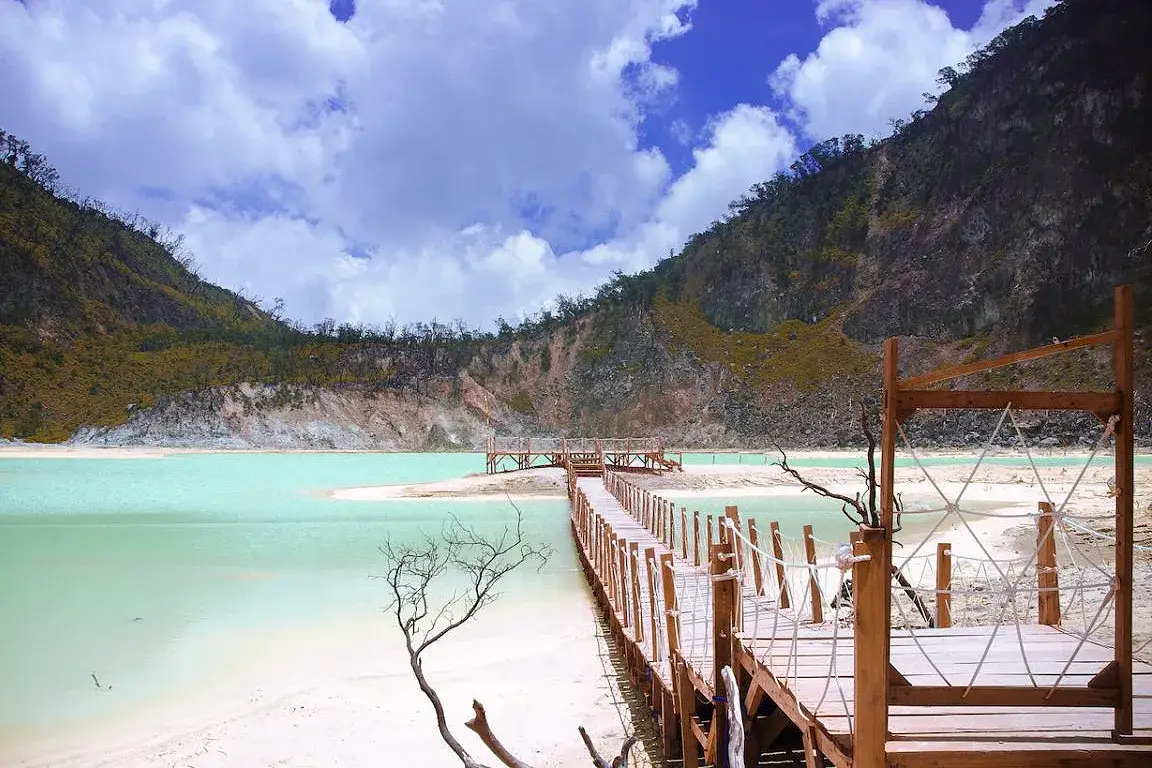
The moment most visitors remember is the walk from the parking area to the crater rim. There's often a light haze in the air, and the smell of sulfur reaches you before the lake itself comes into view. Then the landscape opens up: a wide, pale lake ringed by bare, whitish crater walls, with wisps of steam or mist drifting across the surface depending on the time of day. It's a stark, almost otherworldly scene, especially compared to the greenery you passed on the drive up.
Many first-time visitors are surprised by how large the crater actually is. Wooden walkways and paths let you explore different vantage points along the rim, and the light changes constantly as clouds move overhight, which is part of what makes the kawah putih experience feel different depending on exactly when you arrive.
One of the most talked-about aspects of Kawah Putih is that no two visits look quite the same. The lake is often described as a white crater color changing lake, and that reputation is well earned. Sunlight angle, cloud cover, mineral content, and recent rainfall all affect how the water appears, sometimes milky white, sometimes a soft pale green, and at other times a striking turquoise. Morning light tends to bring out cooler, bluer tones, while overcast conditions can flatten the color into a more uniform grey-white.
This is one reason repeat visitors and photographers often say the lake never gets old. So if you're wondering what does kawah putih look like based on someone else's photos, the honest answer is that your own visit may look noticeably different, and that's part of the appeal rather than a downside.
Kawah Putih sits at a significant elevation, and the kawah putih weather and altitude combination catches some visitors off guard. Even on a hot Jakarta morning, the crater area can feel distinctly cool, sometimes cold enough to want a light jacket or sweater, particularly early in the day or if it's been raining. Mist and light drizzle aren't unusual, so a compact rain layer is worth packing regardless of season.
The other sensory element to prepare for is the smell. Sulfur is naturally present in volcanic craters, and on humid or still days the odor near the water's edge can be fairly strong. It's not dangerous for a short visit, but travelers with sensitive respiratory systems may want to keep a scarf or mask handy and limit time right at the shoreline.
Anyone researching kawah putih crowds best time to visit will find a consistent pattern: weekends, school holidays, and Indonesian long weekends bring large numbers of domestic and international visitors, which can mean queues at the most popular photo spots along the rim. Weekday visits, or arriving as close to opening time as possible, make a noticeable difference in how relaxed the experience feels.
On a typical guided day trip, most travelers spend somewhere between 45 minutes and 1.5 hours at the crater itself, enough time to walk the main paths, take photos from a few different angles, and soak in the atmosphere before moving on to the next stop.
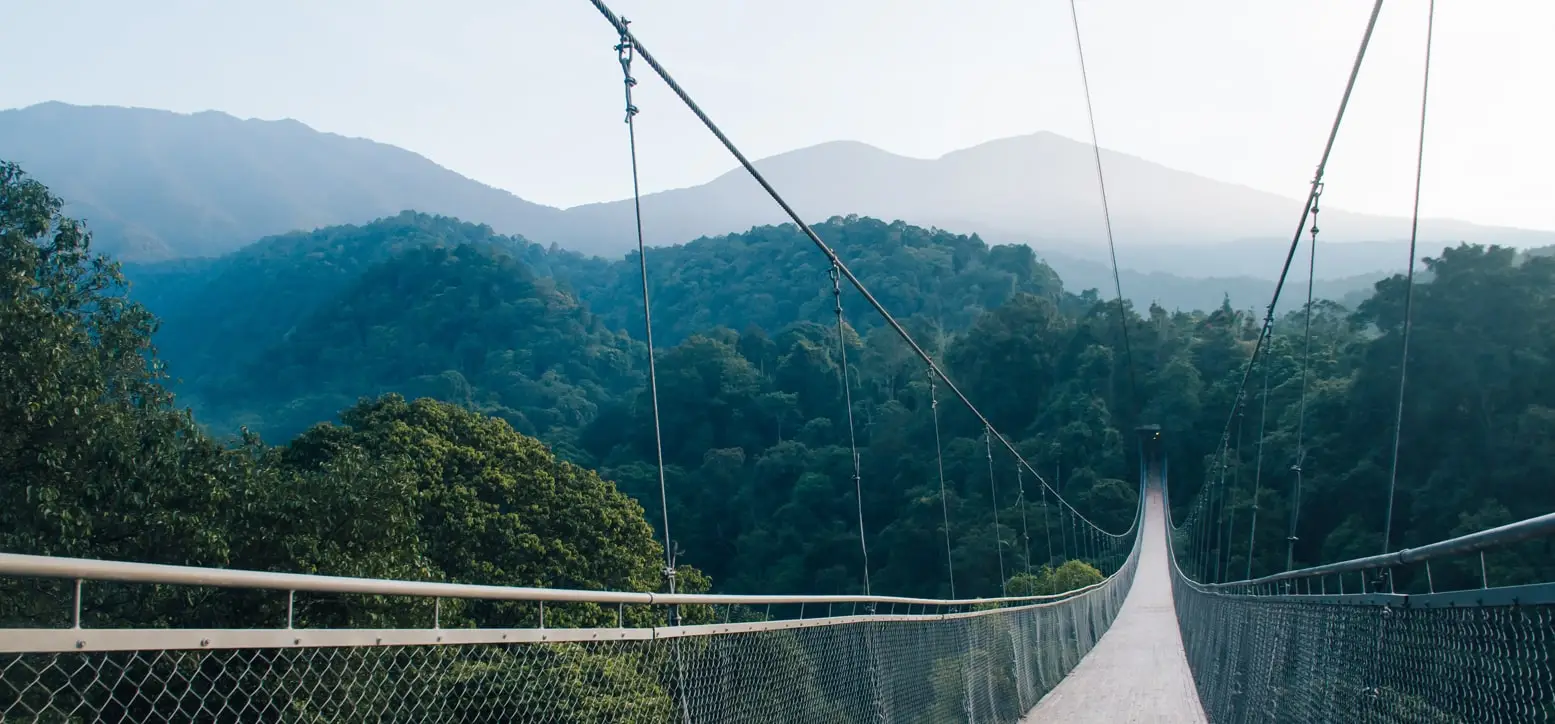
Because Kawah Putih is only one part of the Ciwidey area's appeal, many day trips extend the itinerary to include a suspension bridge crossing with scenic valley views and a stop at a natural hot spring to relax tired legs afterward. This combination is popular enough that it's become a standard addition on guided tours, rather than an optional extra.
The White Crater, Suspension Bridge & Hot Spring tour is built around exactly this flow, moving from the crater to the bridge and finishing at the hot spring, so the whole day feels well-paced rather than rushed. If you want a deeper look at what to bring for the bridge walk and the soak afterward, this packing guide for the full itinerary covers it in detail.
Set against the hype of viral photos, Kawah Putih generally holds up well in person, though it helps to arrive with realistic expectations. The lake's color can be more muted on overcast days, the crowds can be real on weekends, and the walk from parking to the rim takes a bit of effort. What consistently impresses visitors, though, is the sheer strangeness of the landscape: a pale, steaming lake framed by bare crater walls, unlike anywhere else on a typical Bandung itinerary.
For travelers building a longer West Java itinerary, Kawah Putih also fits naturally into a broader route; this Jakarta to Bandung road trip guide shows how it can anchor a multi-day plan rather than just a single-day visit.
It's a pale, milky-colored volcanic lake ringed by bare, whitish crater walls, often with drifting mist. The exact shade shifts between white, pale green, and turquoise depending on sunlight and recent weather.
Most visitors on a guided day trip spend 45 minutes to 1.5 hours walking the rim and taking photos before continuing to other stops like a suspension bridge or hot spring.
It's noticeably cool due to the high altitude, often requiring a light jacket, while the sulfur smell near the water can be strong on humid days.
Weekends, school holidays, and Indonesian long weekends draw large crowds and can mean queues for photos. Weekday visits or early morning arrivals feel noticeably calmer.
Yes, many travelers pair the crater with a nearby suspension bridge walk and a hot spring soak, which is a common addition on guided day trips from Jakarta.
The main viewing areas are accessible via short, mostly flat paths, making it manageable for most ages, though the altitude and walking can be tiring for those with mobility limitations.
Ready to see the color-changing crater for yourself? Book the White Crater, Suspension Bridge & Hot Spring day trip with Ekaputra Tour and let a local guide handle the drive, timing, and stops while you enjoy the views.