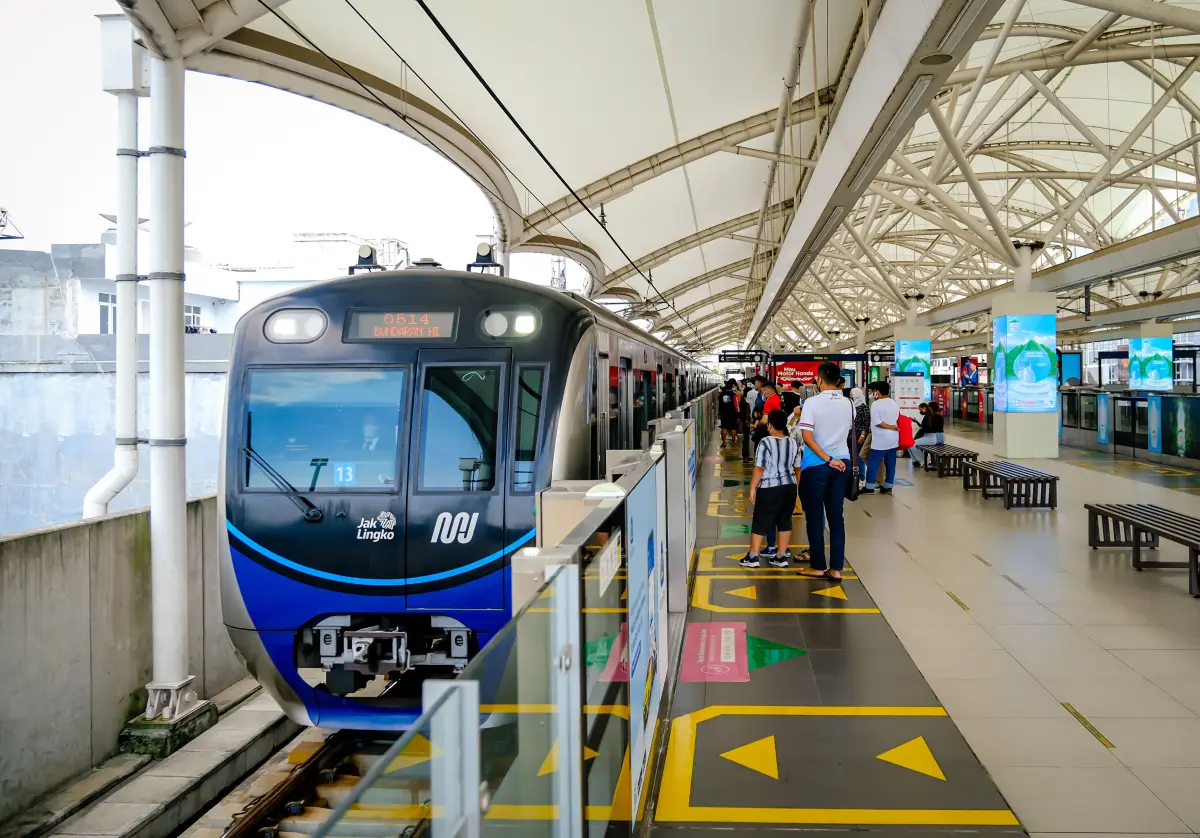
If you're landing in Jakarta without a JakLingko card or a local e-money card, don't worry: the Jakarta MRT is one of the most tourist-friendly parts of the city's transport system. You can hop on with cash, a single-trip ticket, and in some cases even a contactless bank card. This guide breaks down exactly how to ride the Jakarta MRT without a local card, so you can spend less time figuring out fare gates and more time exploring.
The Jakarta MRT (Mass Rapid Transit) runs a modern, air-conditioned line connecting the southern suburbs to the city center, making it one of the fastest ways to dodge Jakarta's notorious traffic. For tourists, the good news is that you don't need to pre-register or own a local transit card before you can ride. Every station is equipped with ticket vending machines and staffed counters that cater specifically to one-time or short-term riders.
This matters because Jakarta's public transport ecosystem includes several overlapping card systems, most of which are designed for daily commuters, not travelers passing through for a few days. Thankfully, the MRT operator built in a simple workaround for exactly this situation.
There are three main ways locals and visitors pay for the Jakarta MRT, and knowing the difference helps you avoid confusion at the gate:
For most tourists, the single-trip card is simply the most convenient option since it requires no registration and no leftover balance to worry about after you leave.
Buying a single-trip ticket is straightforward, even if it's your first time using Southeast Asian public transit:
The whole process usually takes under two minutes once you know what you're looking for, and station staff are generally happy to help confused first-timers.
Some MRT stations have started accepting contactless international Visa and Mastercard cards directly at the tap gates, which is a welcome development for travelers who prefer not to deal with cash. However, this feature isn't yet available at every station, so it shouldn't be your only plan. QRIS-based payments, which are widely used across Indonesia for everything from street food to parking, are not yet standard at MRT fare gates either. Until adoption becomes universal, treat the single-trip card as your reliable fallback rather than an afterthought.
This is a common question, especially since GoPay and OVO feel like they're everywhere in Jakarta. Unfortunately, these e-wallets are not currently integrated with MRT fare gates. They work brilliantly for ride-hailing, food delivery, and many retail purchases, but not for tapping into the train system. If you're relying heavily on your phone for payments elsewhere in the city, just remember to carry a bit of cash or a bank card specifically for MRT rides.
A few small missteps trip up first-time riders more than anything else:
If you're also sorting out connectivity for maps and payment apps during your trip, it's worth reading up on getting a local SIM card and internet access before you land, or comparing it with an eSIM option for tourists in Indonesia.
Once you've got the ticketing sorted, the MRT becomes a genuinely useful tool for exploring Jakarta efficiently. Many visitors use it to reach the starting point of a guided city tour without worrying about traffic delays. If you want a well-rounded introduction to the city, a private half-day tour with a local host in Jakarta pairs nicely with a quick MRT ride into the city center. For food lovers, the MRT also makes it easy to reach areas known for classic dishes, like this guide on where to try authentic gado-gado in Jakarta, or a wander through the stalls covered in this local guide to Jakarta's traditional markets.
No. Tourists can buy a single-trip card directly from vending machines or ticket counters at any MRT station without owning a JakLingko or e-money card.
It's a disposable card you buy for one journey based on your destination station. You tap in and tap out, then return the card at the exit gate, where a small deposit is refunded.
Contactless international Visa or Mastercard cards work at some tap gates, but not all stations support them yet, so a single-trip card is the most reliable backup option.
Yes, ticket vending machines and staffed counters accept Indonesian Rupiah cash, making it easy for visitors without a local bank card or e-wallet.
Currently these e-wallets are not directly integrated with MRT fare gates, so tourists should rely on single-trip cards, contactless bank cards, or cash instead.
Yes, it's fast, air-conditioned, and avoids traffic, making it ideal for reaching key districts before or after a guided city tour.
Ready to make the most of your time in the city? Book the Jakarta half-day guided tour with a private fun local host and let a friendly expert handle the logistics while you focus on the experience.