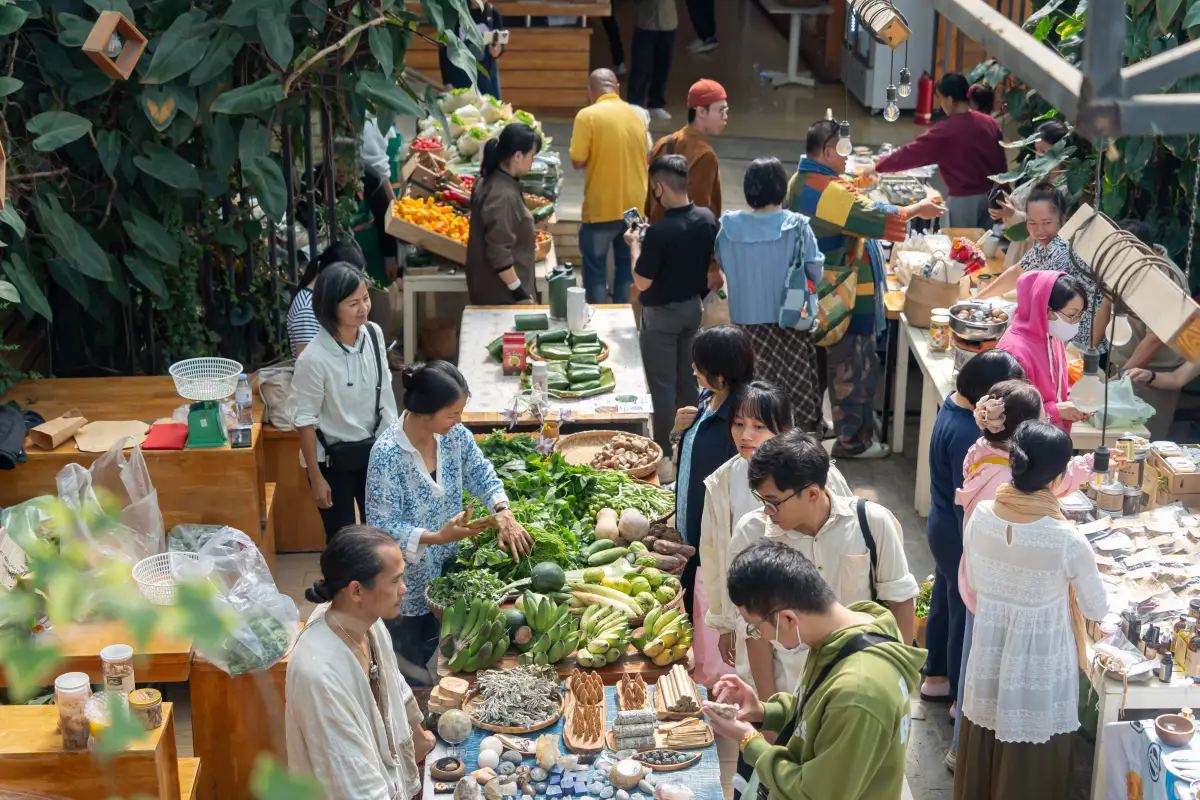
If you want to understand a city beyond its cafes and viewpoints, its markets will tell you everything. A traditional market Bandung visit reveals the rhythm of daily life here: vendors calling out prices, the smell of fried snacks drifting between stalls, and mountains of fabric in every color imaginable. This is where locals actually shop, eat, and catch up with neighbors, and it is one of the most rewarding ways to experience the city's character.
Bandung has long been known as Indonesia's textile capital, and its markets reflect that heritage in a very tangible way. Beyond shopping, these markets are living cultural spaces where you can observe how trade, food, and community intersect. For travelers who have already explored Bandung's colonial architecture or tea plantations, a market visit adds a grounded, human layer to the trip. It is also simply good value: prices are lower than in malls, and the variety is often far greater.
If you are coming from Jakarta, you may already be familiar with the concept from a visit to Jakarta's traditional markets, but Bandung's version has its own distinct flavor, shaped heavily by the garment and textile trade.
No Bandung local market guide would be complete without starting at Pasar Baru Bandung. Spread across several floors in a large building near the city center, this market is a genuine institution. The lower levels tend to focus on fresh produce, snacks, and household goods, while the upper floors are dedicated almost entirely to clothing, batik, textiles, and accessories.
What makes Pasar Baru Bandung stand out is the sheer scale of choice. Whole sections are devoted to specific product types, so you can compare styles and prices from dozens of vendors within a few minutes of walking. Many stalls sell at semi-wholesale rates even for smaller quantities, which is part of why it remains so popular with both tourists and local resellers.
For a more industrial, business-oriented experience, Pasar Andir is worth a visit. This market leans heavily toward wholesale trading, particularly for fabrics, ready-made garments, and household textiles. It attracts shop owners from across West Java who come to restock inventory, so prices are often at their lowest here.
As a casual visitor, you can still browse and buy in smaller amounts, though the atmosphere is noticeably more transactional than at tourist-friendly stalls. Other wholesale-style markets around Bandung follow a similar pattern: less polished presentation, but genuinely better prices if you are willing to navigate a slightly less curated shopping environment.
Beyond the big names, Bandung is dotted with smaller neighborhood markets, or pasar tradisional, that serve local residents day to day. These markets are less about souvenirs and more about produce, spices, fresh fish, and everyday necessities. Visiting one gives you a quieter, more candid look at how Bandung families actually shop and cook.
These smaller markets are also great places to strike up conversations with vendors, many of whom are happy to explain unfamiliar fruits, vegetables, or snacks. If you are curious how a similar neighborhood market experience plays out elsewhere in Java, the Ngasem Traditional Market guide in Yogyakarta offers a useful point of comparison.
When it comes to what to buy at Bandung market stalls, textiles are the clear highlight. Batik fabric, both stamped and hand-drawn, is widely available at a range of price points, along with ready-to-wear batik shirts and dresses. Bandung is also known for factory-outlet-style clothing, and traditional markets often sell overstock or slightly imperfect pieces at a fraction of retail price.
Beyond fabric, look out for:
Quality varies from stall to stall, so it helps to compare a few vendors before committing to a purchase, especially for batik and textiles.
Markets in Bandung are as much about eating as they are about shopping. Expect stalls selling siomay, batagor, fried tofu, and an array of traditional sweets, often prepared right in front of you. Produce sections overflow with tropical fruit, and it is common to see vendors offering samples before you buy.
If you enjoy this side of market culture, it pairs beautifully with a countryside day trip. Tours such as the Active Volcano, Rice Field, Hot Spring, Fruit Market, Tea Plantation tour include a stop at a local fruit market, giving you a taste of rural market life alongside Bandung's natural landmarks.
A little preparation goes a long way when navigating these bustling spaces. Keep these Bandung market shopping tips in mind:
If you are relying on public transport to get around, it is worth reviewing the Bandung public transport guide for tourists before heading out, since some markets sit slightly outside the main tourist corridors.
Traditional markets fit naturally into a broader Bandung itinerary, whether you are visiting for a single day or as part of a longer West Java trip. Many travelers combine a morning market visit with an afternoon exploring volcanoes, tea plantations, or colonial architecture.
For those arriving from Jakarta, a multi-day route often works best, allowing enough time to enjoy both cities without rushing. If you are planning that leg of the journey, it helps to check the Jakarta to Bandung train guide for scheduling details, and if you plan to continue onward afterward, the Bandung to Yogyakarta train guide is a handy reference for the next stretch of your trip.
Pasar Baru Bandung is the most well-known, offering multiple floors of textiles, batik, clothing, and accessories at wholesale-friendly prices.
Yes, these markets are generally safe during daytime hours. As with any crowded area, keep valuables secure and stay aware of your surroundings.
Bargaining is common and expected, especially for clothing, textiles, and souvenirs. Starting at 50-60% of the initial price is a reasonable approach.
Most markets open early, around 6-7 AM, with the busiest and freshest offerings available before 10 AM, especially for produce and food stalls.
Cash is still the primary payment method at most stalls, so it's best to carry small denominations of Indonesian Rupiah for smoother transactions.
Some multi-day Bandung tours include stops at fruit or produce markets alongside nature attractions, offering a well-rounded cultural experience.
Ready to see Bandung's markets alongside its most iconic natural landscapes? Book the Active Volcano, Rice Field, Hot Spring, Fruit Market, Tea Plantation tour with Ekaputra Tour and experience West Java's culture, cuisine, and scenery in a single unforgettable day.