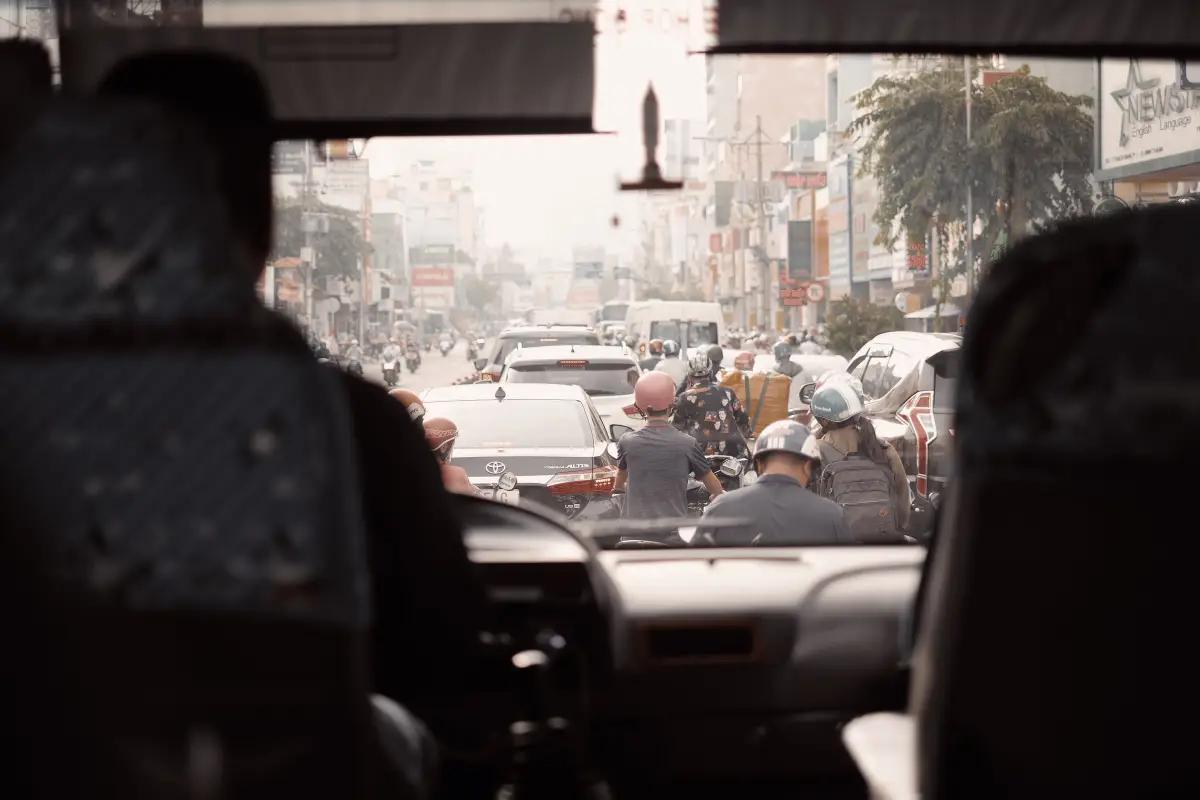
If you've just landed in Yogyakarta and you're wondering how locals get around without renting a scooter or hailing a car every ten minutes, the answer is usually Trans Jogja. This city bus system is affordable, surprisingly easy to navigate once you get the hang of it, and a great way to see the city like someone who actually lives there. This guide walks you through Trans Jogja routes, fares, ticketing, and how to combine it with other transport options so you can explore Yogyakarta without stress.
Trans Jogja is Yogyakarta's Bus Rapid Transit style public transport system, run with dedicated corridors, fixed stops, and scheduled departures. Think of it as the city's answer to Jakarta's TransJakarta, just smaller in scale and easier to figure out for first-timers. The buses are air-conditioned, reasonably clean, and run frequently enough during the day to be a practical option rather than just a novelty.
For tourists, the appeal is simple: it's cheap, it covers most of the central tourist zone, and it lets you avoid haggling over prices the way you might with an andong (horse cart) or unmetered taxi. If you're staying near Malioboro, which is where most travelers base themselves, Trans Jogja bus stops are conveniently close to your hotel and to the city's biggest landmarks.
The Trans Jogja network has several numbered corridors, but as a visitor you'll likely only need two or three of them. Corridor 1A and 1B loop through the Malioboro area, Tugu Station, and toward the eastern part of the city, while Corridor 2A and 2B swing past Kraton (the Sultan's Palace) and continue out toward Prambanan's outer perimeter. Corridor 3A serves the southern part of the city and links up with the Giwangan bus terminal, useful if you're connecting to intercity buses.
Routes do shift occasionally as the local transport authority tweaks the network, so it's worth double-checking current corridor maps at any Trans Jogja shelter or via the official app before you set off. That said, the core tourist-friendly corridors have remained fairly stable for years, which is good news if you're planning your day around them.
One of the best things about Trans Jogja fare is how uncomplicated it is. You pay a flat rate of around IDR 3,600 per trip no matter how far you're going or how many corridors you transfer through, as long as it's within the same journey window. That means a short hop from Malioboro to Kraton costs the same as a longer ride out toward the eastern suburbs.
This flat-fare structure makes budgeting easy, especially for travelers who are used to metered fares elsewhere. There's no need to calculate distance or negotiate anything, you just tap in and go.
Gone are the days of buying a paper ticket from a conductor on Trans Jogja. Most buses now expect a tap card such as Jak Lingko, a contactless bank debit card, or a QRIS-based mobile payment. If you don't already have one, you can usually purchase and top up a tap card at major terminals like Giwangan or at select convenience stores around the city.
It's smart to load a bit more credit than you think you'll need, since running out mid-trip with no cash backup can leave you stranded at a stop. If you're arriving from outside the city, our transport guide from Yogyakarta Airport to Malioboro covers how to get into town first before you start hopping on local buses.
Once you've got your card sorted, riding Trans Jogja is straightforward:
It's a system that rewards a little patience on your first ride and becomes second nature by your second or third trip.
For most travelers, the priority stops are Malioboro Street, Kraton (Sultan's Palace), and Taman Sari Water Castle, all of which are reachable via Corridors 1A, 1B, 2A, and 2B with a short walk from the nearest shelter. These three spots alone can fill a full day of exploring on foot once you've arrived by bus.
Corridor 1A is particularly useful if you're heading toward Prambanan, since it stops near the temple's outer area. Keep in mind you'll still need a short walk, becak, or ojek to reach the actual ticket counter and entrance. If Prambanan and Borobudur are both on your list, though, public transport starts to feel limiting, since Borobudur sits well outside the city in Magelang and isn't served by Trans Jogja at all.
This is where a guided option becomes genuinely useful rather than just a convenience. If you'd rather skip the transfers and walking altogether, a full day trip covering both temples handles the logistics for you.
Both of these itineraries take care of transport, entrance coordination, and timing, which matters a lot at Borobudur if you're hoping to catch it in softer morning light.
Trans Jogja isn't the only way to get around, and it's worth knowing when to use something else. Grab and Gojek are ride-hailing apps that work well for door-to-door convenience, especially late at night or when you're carrying luggage. They cost more than Trans Jogja but save time and hassle, particularly if you're not confident navigating bus corridors yet.
Andong, the traditional horse-drawn carts, are more of an experience than a practical transport choice these days. They're lovely for a short scenic ride around Kraton or Malioboro but not something you'd rely on to get across town efficiently.
In practice, many travelers end up mixing all three: Trans Jogja for budget-friendly city hopping, Grab or Gojek for convenience or late-night trips, and andong for a nostalgic photo-worthy ride. If you're planning your broader Yogyakarta itinerary, it's also worth reading up on how to get from Jakarta to Yogyakarta so your intercity travel lines up smoothly with your local transport plans once you arrive.
A few small habits make the Trans Jogja experience noticeably smoother:
If you're visiting during a specific season, it's also worth checking our Ramadan travel guide for Jakarta and Yogyakarta, since bus schedules and opening hours around attractions can shift slightly during that period.
Trans Jogja route 1A stops near Prambanan Temple's outer area, but reaching the actual entrance still requires a short walk or local transport. Borobudur is not served directly by Trans Jogja since it's outside Yogyakarta city in Magelang; a shuttle bus from Jombor terminal or a private tour is more practical.
A single trip costs a flat rate of around IDR 3,600, regardless of how far you travel or how many transfers you make within the same journey window, making it one of the cheapest ways to explore Yogyakarta.
Most Trans Jogja buses now require a tap card such as Jak Lingko, a bank debit card with NFC, or QRIS payment through an app. Cash payment is being phased out on many routes, so it's best to prepare a tap card beforehand.
Yes, Trans Jogja buses are air-conditioned, have designated seats, and operate on fixed schedules, making them a safe and affordable option for solo travelers or budget-conscious visitors exploring central Yogyakarta.
Trans Jogja typically operates from around 5:30 AM to 9:30 PM daily, though frequency drops significantly in early morning and evening hours, so plan around midday for the most reliable service.
Trans Jogja works well for city attractions like Malioboro, Kraton, and Taman Sari, but for temple complexes like Borobudur and Prambanan, a private tour saves time, includes skip-the-line access, and covers transport gaps that public buses don't reach directly.
Ready to see Yogyakarta's biggest highlights without worrying about bus corridors or temple logistics? Check out the Best of Yogyakarta Tour - 3 Days for a well-paced itinerary that covers Borobudur, Prambanan, Kraton, and more with all transport handled for you.