Sweet, fragrant, and deeply tied to the city's identity, this jackfruit stew has been simmering in home kitchens and roadside warungs for generations, this dish that defines a trip to Yogyakarta. It's gudeg.
And if you're staying anywhere near Malioboro, the good news is that some of the best gudeg in the city is only a short stroll away. This guide covers where to eat gudeg near Malioboro, how to order it like a local, and how to build it into a fuller day of exploring Yogyakarta.
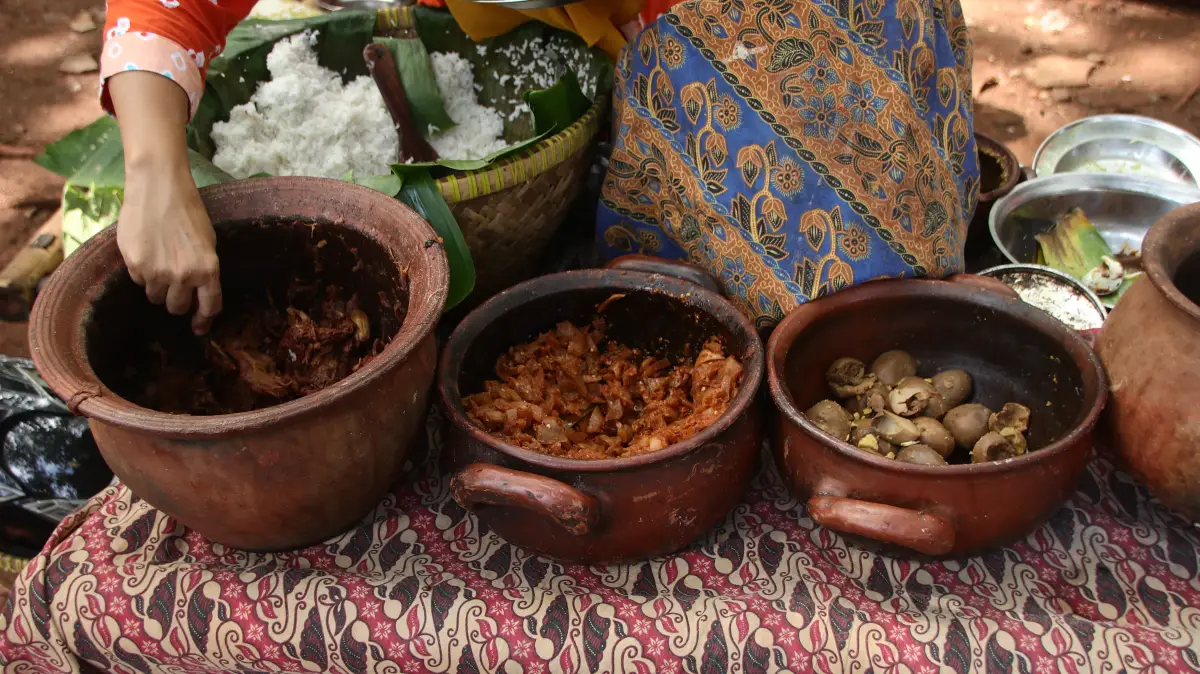
Gudeg is young jackfruit slow-cooked for hours with palm sugar, coconut milk, and a blend of aromatic spices until it turns tender, dark, and subtly sweet. It's typically served with rice, shredded chicken, boiled egg, tofu or tempeh, and a spicy side of krecek (beef skin cooked in chili sauce) to balance out the sweetness. Yogyakarta has earned the nickname "Kota Gudeg" (Gudeg City) because the dish has been cooked here for centuries, with recipes passed down through families who still run their original stalls today. Eating gudeg in Yogyakarta isn't just about the food, it's a taste of the city's Javanese royal heritage, since the dish is said to have originated in the kitchens surrounding the Kraton, the Sultan's palace.
Malioboro Street is the beating heart of Yogyakarta's tourist area, and it's also surrounded by pockets of excellent, no-frills gudeg warungs. Many of these are tucked into side streets just a few minutes' walk from the main strip, making them easy to reach between shopping stops. Look for small eateries with plastic stools, handwritten menus, and steaming pots of gudeg simmering out front, that's usually a sign of the real deal. Portions are generous, prices are low, and the atmosphere is refreshingly unpretentious compared to sit-down restaurants elsewhere in the city. If you're already exploring the area for souvenirs, it pairs naturally with a stop detailed in our guide on where to buy batik in Yogyakarta, since many batik shops sit just a block or two from these gudeg stalls.
For a deeper dive into gudeg culture, head to Wijilan, a narrow street just east of the Kraton and roughly a 15 to 20 minute walk (or quick becak ride) from Malioboro. This alley is lined almost entirely with gudeg restaurants, some of which have been run by the same families for over 50 years. Gudeg Wijilan is where you'll find the dish served in its most traditional form, often packaged in the classic besek (woven bamboo basket) for travelers to take home. The concentration of vendors here means you can compare a few stalls before settling in, and the historic atmosphere alone makes the short detour worthwhile for anyone serious about traditional Javanese food in Yogyakarta.
One of the most charming quirks of Yogyakarta's food scene is gudeg's popularity as a late-night meal. Several stalls near Malioboro and around Wijilan stay open well past midnight, catering to night owls, street vendors, and travelers arriving on late trains. This tradition of "gudeg malam" (night gudeg) is worth experiencing at least once, since the quieter streets and lantern-lit stalls give the meal a completely different feel compared to a busy lunchtime crowd. If your schedule has you exploring Malioboro after dark, hunting down a 24-hour gudeg spot is a memorable way to cap off the night.
Once you're standing in front of a gudeg stall, a few extra words will help you order with confidence. The first choice is texture: gudeg kering is the drier version, cooked longer until the sauce thickens and clings to the jackfruit, while gudeg basah is saucier and softer, closer to a stew. Locals often mix and match proteins, choosing between ayam (chicken), telur (egg), or a combination of both, alongside tahu (tofu) and tempe. Then there's krecek, the spicy beef skin side dish that adds heat to an otherwise sweet plate, you can ask for it mild, on the side, or skip it entirely if you're sensitive to spice. Don't be afraid to point at what other diners are eating or simply say "yang biasa" (the usual) and let the vendor guide you.
A proper gudeg meal is rarely eaten alone. Rice is the obvious base, but many vendors also offer bubur (rice porridge) as an alternative for a softer breakfast option. For drinks, try es teh manis (sweet iced tea), a cooling contrast to the rich, sweet stew, or wedang uwuh, a spiced herbal drink popular in the cooler evening hours. Some stalls also sell crackers or fried tempeh chips on the side, perfect for adding crunch to an otherwise soft, saucy dish. If you're building a full culinary day around Yogyakarta, it's worth pairing your gudeg stop with a visit to shops highlighted in our guide on where to buy Javanese traditional clothing, since many are within easy walking distance of the same food streets.
Gudeg's sweetness can catch first-timers off guard, since it's noticeably different from the savory, spicy flavors common elsewhere in Indonesia. Start with a smaller portion or a mixed plate so you can taste the balance of sweet jackfruit, rich coconut milk, and spicy krecek before committing to a full bowl. It's also worth trying both gudeg kering and gudeg basah on separate visits, since the texture difference genuinely changes the experience. Lastly, don't judge a warung by its appearance, some of the most humble-looking stalls near Malioboro serve gudeg that's been perfected over decades.
Gudeg makes an excellent anchor for a day that also includes temple visits, batik shopping, and wandering the Kraton grounds. Many travelers eat gudeg for breakfast in Yogyakarta before heading out to Borobudur and Prambanan, then return in the evening for another round at a night stall near Malioboro. If you're planning your itinerary around the city's biggest sights, our Yogyakarta Sunrise Borobudur & Prambanan Temple tour pairs naturally with a gudeg breakfast beforehand or a late gudeg dinner once you're back in town.
No, a plate of gudeg near Malioboro typically costs between 20,000 and 35,000 rupiah, making it an affordable local meal even at popular stalls.
Gudeg kering is the drier version cooked longer with thicker sauce, while gudeg basah has more liquid and a softer, saucier texture. Both are found at most stalls near Malioboro.
The base of jackfruit stew is vegetarian, but it's usually served with chicken, egg, or krecek (spicy beef skin), so ask the vendor to serve it without meat if needed.
Gudeg itself is sweet, not spicy, since it's slow-cooked with palm sugar and coconut milk. The heat comes from the optional krecek side, which you can request mild or omit.
Most gudeg warungs near Malioboro are casual and don't take reservations, though popular spots may have a short queue during peak lunch or dinner hours.
Many traditional stalls open early, around 6-7am for breakfast, while some at Gudeg Wijilan stay open into the late evening or overnight.
Ready to turn your gudeg hunt into a full Yogyakarta adventure? Book the Sunrise Borobudur & Prambanan Temple tour with Ekaputra Tour and pair a memorable morning at two UNESCO sites with an unforgettable plate of gudeg back in the city.