Main Navigation
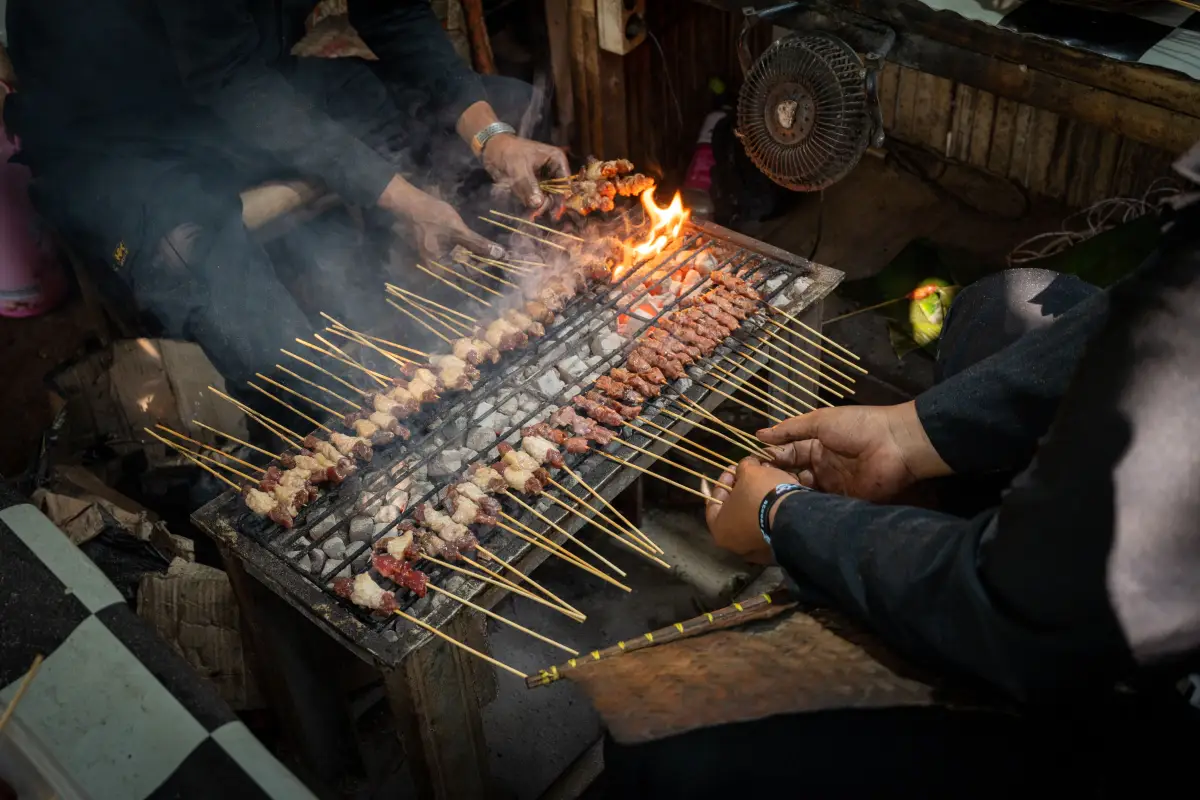
There is something about Malioboro after sunset that feels almost cinematic. The shophouses dim their daytime bustle, the becaks slow their pace, and suddenly the street corners fill with the smell of charcoal smoke and sweet soy glaze. If you are chasing late night food near Malioboro, this is the golden hour, and it stretches far longer than you might expect.
Malioboro by day is a shopping street. Malioboro by night is a completely different animal. As the batik shops close their shutters, folding tables and low benches start appearing on the pavement, and portable carts with kerosene lamps roll into position. Locals treat this transition as a signal: it is time to eat. Students, office workers, becak drivers, and tourists all converge on the same stretch of sidewalk, turning it into one of the most democratic dining scenes in Indonesia. Nobody is dressed up, nobody is rushing, and the food is priced so reasonably that ordering five things at once feels perfectly normal.
This nightly ritual is not a tourist gimmick either. It has been part of Yogyakarta's identity for generations, tied closely to the city's status as a hub for students and creatives who keep unusual hours. That is partly why where to eat late night Yogyakarta so often points people straight back to Malioboro.
The word lesehan refers to the low, floor-level seating style you will find at these sidewalk setups, usually a woven mat or plastic stool arrangement facing the street. Malioboro lesehan food stalls typically specialize in grilled dishes: ayam bakar, gudeg, and seafood cooked over open charcoal right in front of you. The vendors usually set up shop from early evening, and by 9 or 10 PM the whole stretch feels like an open-air food court.
What makes lesehan dining special is the pace. There is no rush to turn over tables, so people linger, chat, and order another round of iced tea. It is casual in the best way, and it pairs perfectly with people-watching as the street performers and vendors roll by.
If lesehan is the sit-down experience, angkringan Malioboro carts are the grab-a-stool version, and honestly the more iconic one. An angkringan is a simple wheeled cart lit by a single lamp, stacked with small wrapped portions of rice and a rack of skewered snacks. The vendor, often called a bapak angkringan, ladles hot tea or sweet ginger drinks while customers pick whatever catches their eye.
This format has become shorthand for Yogyakarta's night food identity. It is cheap, communal, and endlessly flexible: you can eat a light snack or build a full meal from a handful of small dishes. Many first-time visitors are surprised at how social these carts are. Strangers end up sharing a bench and trading recommendations on what to order next.
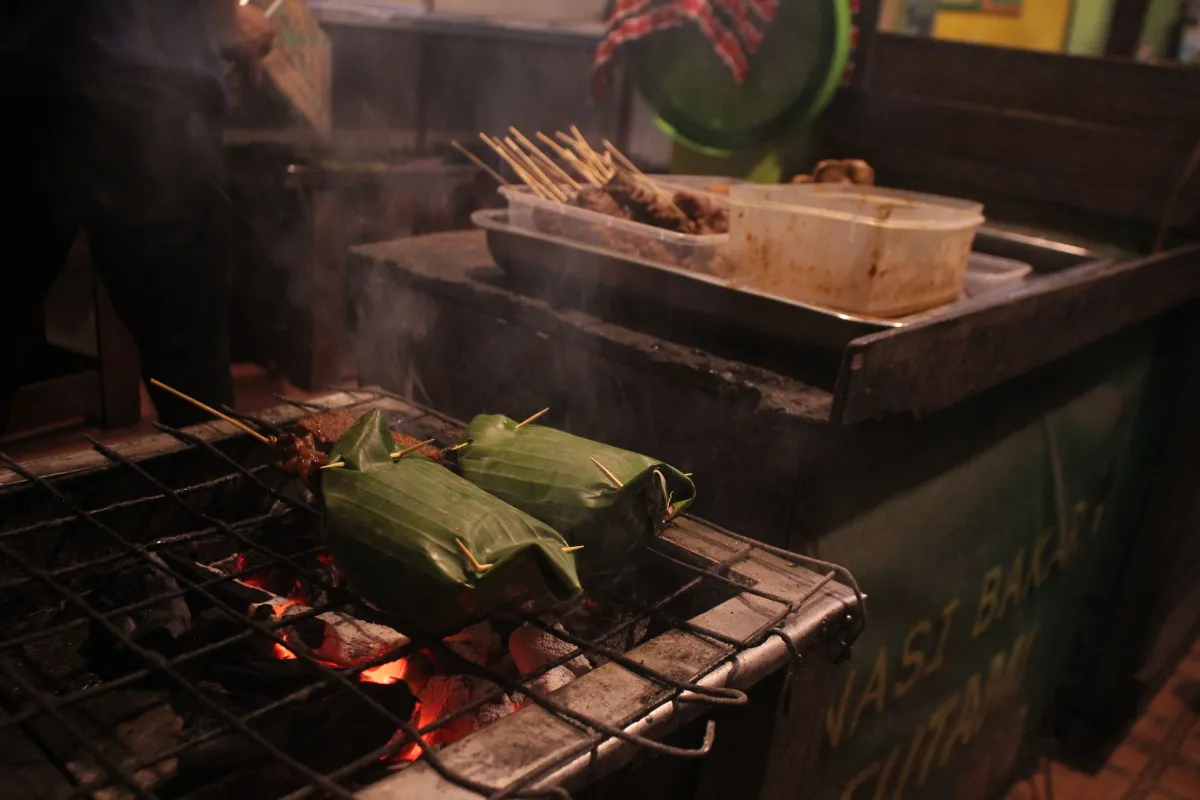
Once you are seated at an angkringan or lesehan stall, the menu can feel overwhelming in its variety despite the humble setup. Here are the dishes worth prioritizing:
Ordering at these stalls is refreshingly simple: pick what looks good, and the vendor tallies it up at the end based on how many wrappers and skewers are on your table.
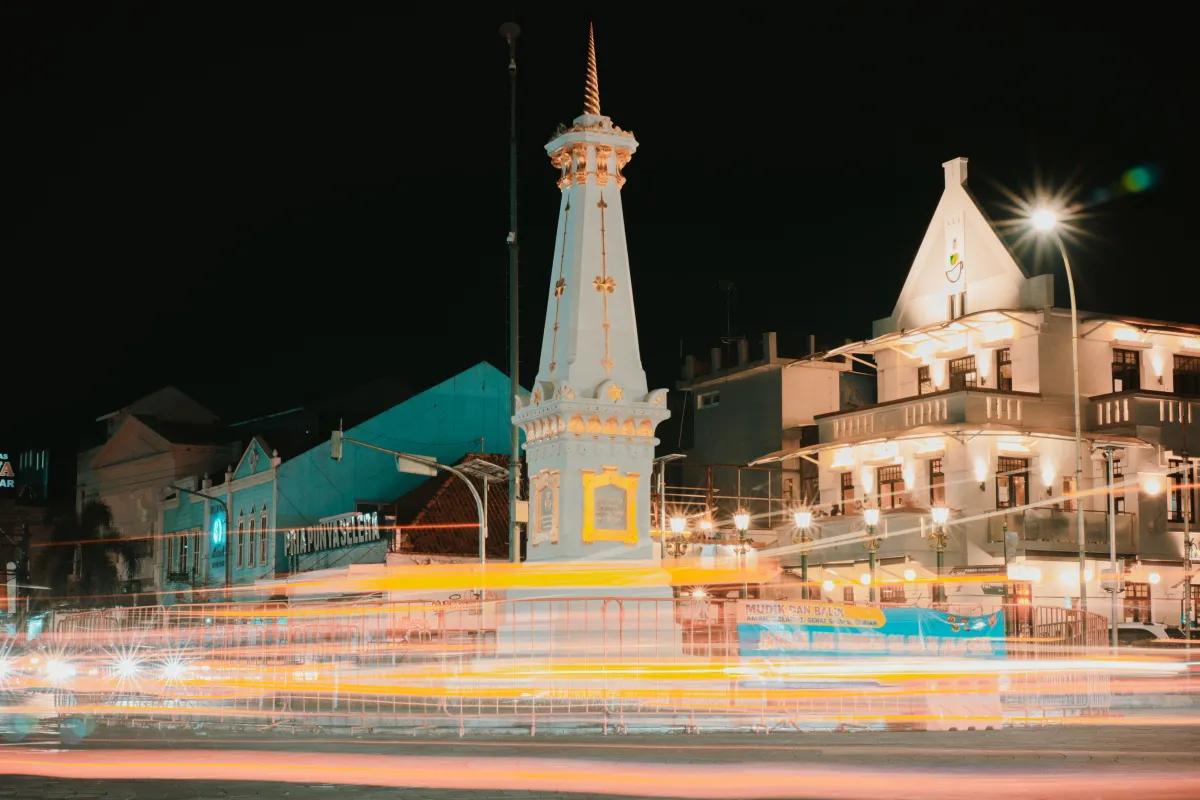
For genuine 24 hour food Yogyakarta options, the area near Yogyakarta's Tugu train station tends to be your best bet. Because trains arrive and depart at odd hours, a handful of warungs and angkringan carts near the station stay open right through the night, catering to travelers and night-shift workers alike.
Along Malioboro itself, peak energy runs from about 7 PM to midnight, with things thinning out but not disappearing by 1 or 2 AM. If you are craving something at 3 AM, station-adjacent spots and a few 24-hour warung nasi are your most reliable options. It is worth asking your hotel staff or becak driver for the current go-to late spot, since exact vendors rotate over time.
If you are planning your trip around Jakarta as well, it helps to line up transport logistics early. Travelers who arrive into the capital late can check tips in this guide on late-night arrivals from CGK Airport before continuing on to Yogyakarta.
A few practical notes make the experience smoother. First, most vendors deal strictly in cash, so keep a stock of small rupiah notes rather than large bills that are hard to break. Second, watch for stalls with visible turnover and freshly cooked skewers rather than ones sitting out for hours, a simple way to eat smart without being overly cautious. Third, it is polite to keep your wrappers and skewer sticks stacked neatly on the table since the vendor counts them to calculate your bill.
Tipping is not expected but always appreciated, and striking up a bit of small talk with vendors is welcomed rather than seen as an intrusion. Malioboro's night food culture runs on friendliness as much as flavor.
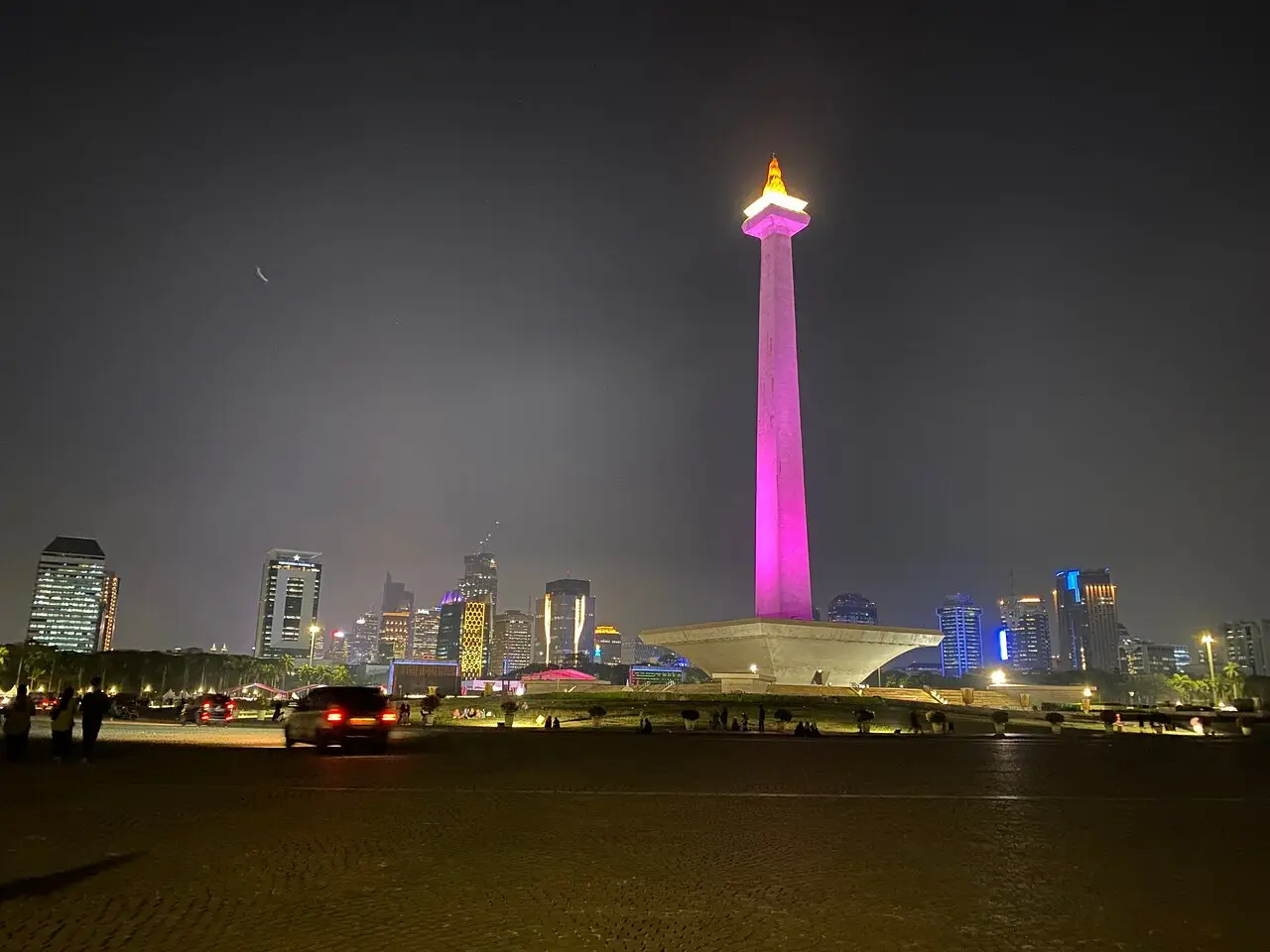
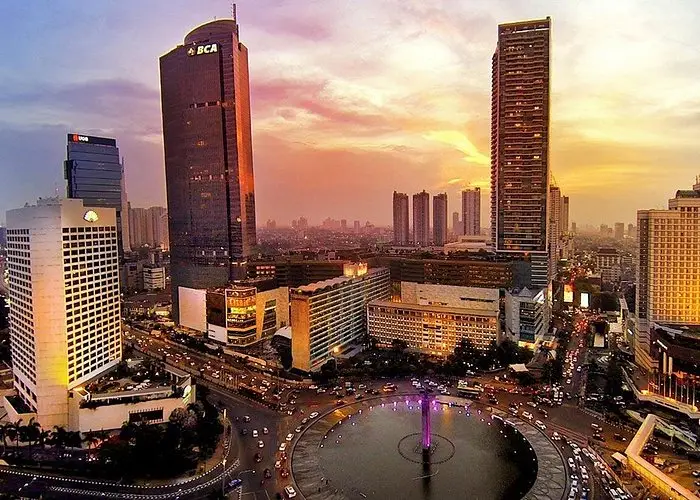
Many travelers treat Yogyakarta and Jakarta as two halves of the same food-driven trip. After soaking in Malioboro's angkringan scene, it is easy to fly into Jakarta and continue the after-dark eating adventure there. A guided Jakarta night tour covers illuminated landmarks like Monas along with some of the city's best nocturnal energy, while a dedicated evening food tasting walk in Jakarta lets you sample the capital's own street food specialties with a local guide leading the way.
For those who want a fuller culinary itinerary, the Jakarta full-day shopping and food culinary tour blends markets, malls, and local eats into one day, a nice complement to the more laid-back, sidewalk style of Malioboro's night scene. And if logistics are a concern, sorting out an airport transfer service to and from Jakarta ahead of time keeps the transition between cities stress-free.
Curious travelers who want more inspiration before mapping out their route can also browse unforgettable things to do in Jakarta at night or check out ideas for spending one day exploring Jakarta's old streets and night food scene.
Most angkringan carts and lesehan stalls operate from around 6 PM until 1-2 AM, with some staying open until sunrise near the train station area.
Yes, the area is well-lit and busy with locals and tourists, though it's wise to choose stalls with visible turnover and fresh ingredients.
Try nasi kucing (small rice portions with sambal), sate telur puyuh (quail egg skewers), tempeh bacem, and warm wedang ronde for dessert.
Most vendors only accept cash, so carrying small rupiah bills is recommended since digital payments are rarely available.
Yes, tempeh, tofu, and vegetable-based bacem dishes are common and easy to find at most angkringan carts.
Many travelers pair both cities in one itinerary, using a guided evening food walk or night tour in Jakarta before or after visiting Malioboro.
Ready to turn your after-dark cravings into a full itinerary? Book the Jakarta Night Tour with Ekaputra Tour and let a local guide show you how the capital eats and glows after sunset, the perfect bookend to your Malioboro night food adventure.