Indonesia is a country known for its incredible cultural diversity.
With more than 17,000 islands and hundreds of ethnic groups, it is no surprise that traditional architecture varies significantly from one region to another.
Among the country's most fascinating cultural treasures are its traditional houses, known as rumah adat.
Far more than simple dwellings, traditional houses reflect the history, beliefs, environment, and social values of the communities that built them.
For travelers visiting Indonesia, learning about these architectural landmarks can provide a deeper understanding of the country's rich cultural heritage.
Whether encountered in remote villages, cultural sites, or museums, traditional houses reveal stories that have been preserved for generations.
Traditional houses play an important role in preserving Indonesia's cultural identity.
For many communities, these structures serve as symbols of ancestry, social organization, and local traditions that continue to influence daily life.
The design of each house is often shaped by its surrounding environment. Communities living in coastal areas, mountains, forests, or flood-prone regions developed architectural solutions that suited their specific conditions.
As a result, traditional houses are excellent examples of how culture and nature work together.
Many houses also have ceremonial and social functions. They may host family gatherings, community discussions, religious activities, or important cultural celebrations.
Even as modern buildings become more common, traditional houses remain valuable reminders of Indonesia's diverse heritage.
Travelers exploring Indonesia will discover a remarkable variety of traditional houses. Each one showcases unique architectural styles and cultural influences that reflect the region where it originated.
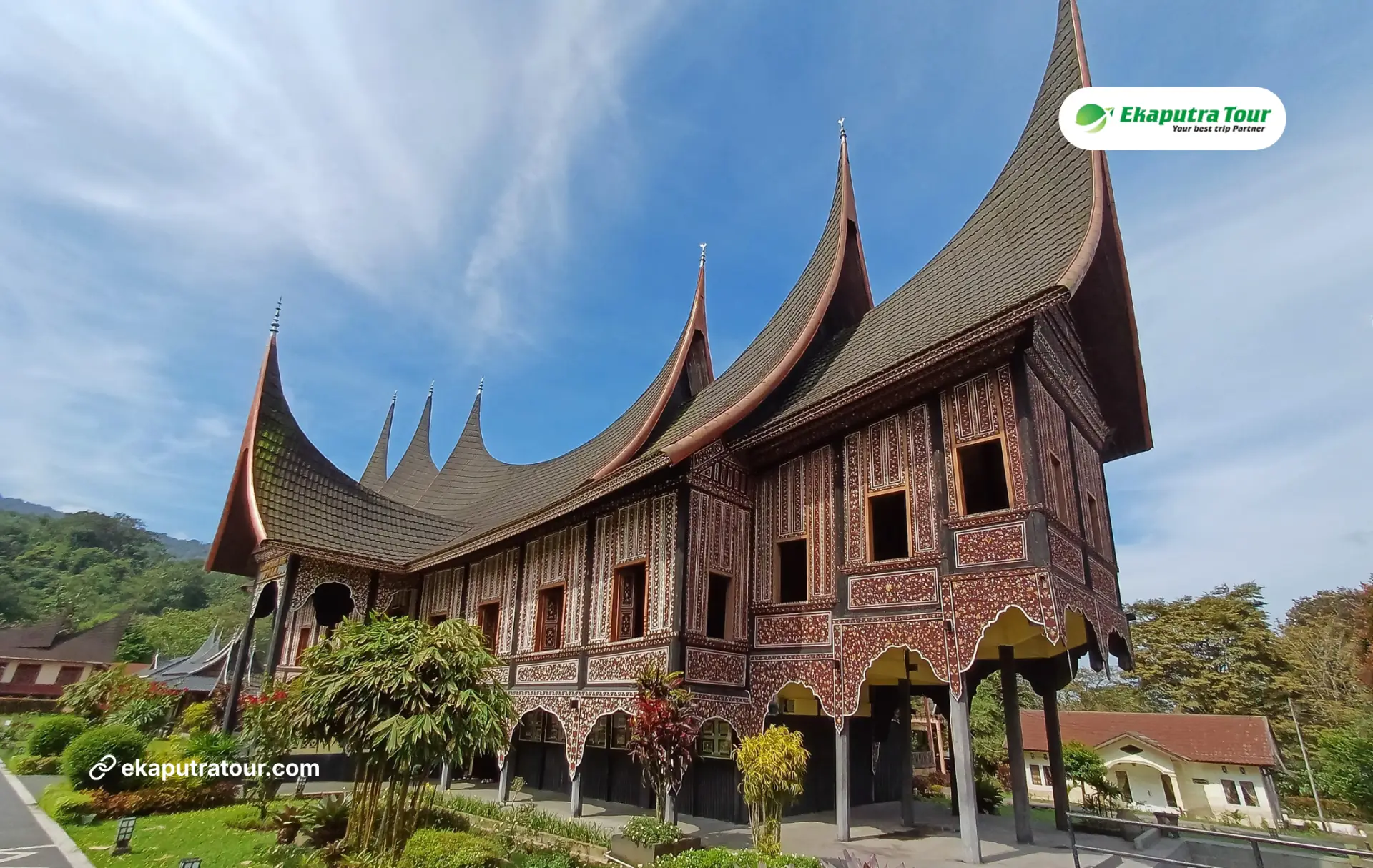
The Rumah Gadang is the traditional house of the Minangkabau people in West Sumatra.
Its most distinctive feature is the dramatic roof that curves upward like buffalo horns, creating one of Indonesia's most recognizable architectural silhouettes.
Traditionally, the Rumah Gadang served as a communal home for extended families.
The spacious structure reflects the strong family ties that are central to Minangkabau culture.
Beyond its visual appeal, every element of the building carries symbolic meaning connected to local customs and traditions.
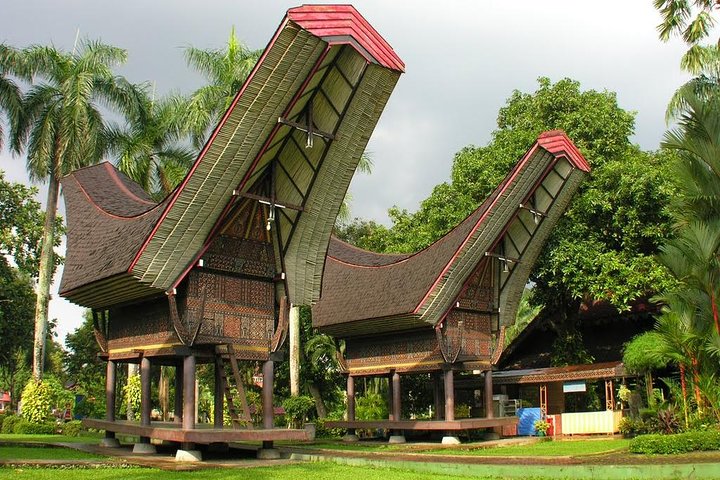
In South Sulawesi, the Torajan people are known for the Tongkonan, a traditional house with a large curved roof that resembles a boat.
The Tongkonan holds deep cultural significance and is often associated with family lineage and social status.
These houses play an important role during ceremonies and community gatherings, making them more than simply residential buildings.
Visitors to Tana Toraja often consider the sight of multiple Tongkonan houses standing together one of the most memorable cultural experiences in Indonesia.
The Joglo is one of the most elegant forms of traditional Javanese architecture.
Characterized by its spacious layout and distinctive roof supported by strong central pillars, it has historically been associated with noble families and respected members of society.
Today, many Joglo buildings can still be found throughout Central Java and Yogyakarta.
Some have been preserved as cultural landmarks, while others have been adapted into museums, hotels, and restaurants that allow visitors to appreciate their timeless beauty.
Unlike many traditional houses elsewhere in Indonesia, Balinese homes are typically arranged as a collection of separate buildings within a shared family compound.
These structures are commonly referred to as Bale.
The layout follows principles rooted in Balinese Hindu philosophy, emphasizing harmony between people, nature, and spirituality.
Open-air designs, natural ventilation, and carefully organized spaces create a living environment that feels both functional and deeply connected to cultural beliefs.
The Honai is a traditional house found in the highlands of Papua. Its circular shape and thick thatched roof make it highly distinctive compared to other Indonesian houses.
Designed to retain warmth in cooler mountain climates, the Honai demonstrates how indigenous communities adapted their architecture to local environmental conditions.
Despite its relatively simple appearance, the structure represents generations of practical knowledge and craftsmanship.
While traditional houses differ from region to region, several architectural characteristics appear throughout Indonesia and reveal how communities adapted to their surroundings.
Many traditional Indonesian houses are built on stilts or raised platforms.
This design helps protect the structure from flooding, improves air circulation, and reduces exposure to animals and ground moisture.
For travelers, these elevated structures provide a fascinating example of how architecture can respond to the challenges of tropical environments while remaining practical and comfortable.
Traditional houses are often constructed using materials readily available in the surrounding landscape.
Wood, bamboo, palm fibers, and thatch are among the most commonly used building materials.
These natural resources allow houses to blend harmoniously with their environment while showcasing sustainable construction techniques that have been refined over centuries.
The craftsmanship involved in assembling these materials is often as impressive as the final structure itself.
Many traditional houses feature detailed carvings, painted motifs, and ornamental decorations.
These artistic elements are not merely decorative but often carry symbolic meanings related to beliefs, social status, local legends, or ancestral traditions.
Taking time to observe these details can help travelers better understand the cultural values and stories embedded within each structure.
Not every traveler has the opportunity to visit multiple islands across Indonesia. Fortunately, one destination in Jakarta offers an accessible introduction to the country's architectural diversity.
Taman Mini Indonesia Indah, often known as TMII, showcases pavilions representing provinces from across the archipelago.
Many of these pavilions feature traditional houses inspired by authentic regional designs, allowing visitors to explore Indonesia's cultural heritage in a single location.
A visit to TMII provides the opportunity to compare architectural styles from different regions side by side.
For first-time visitors to Indonesia, TMII serves as an excellent introduction to the country's remarkable cultural diversity. It offers valuable context that can enrich future trips to destinations throughout the archipelago.
Traditional houses are more than architectural landmarks. They are living expressions of the cultures, traditions, and histories that have shaped Indonesia for centuries.
With Ekaputra Tour, travelers can explore Indonesia beyond its famous attractions and gain a deeper appreciation for the country's cultural heritage.
Whether visiting historical sites, cultural landmarks, or destinations that showcase traditional architecture, every journey becomes an opportunity to connect with the diverse communities that make Indonesia such a fascinating place to discover.
Understanding traditional houses adds meaning to that experience, transforming a simple sightseeing trip into a richer cultural adventure.